Animals' Frustrating Ending Explained & Why It Leaves So Much Unanswered
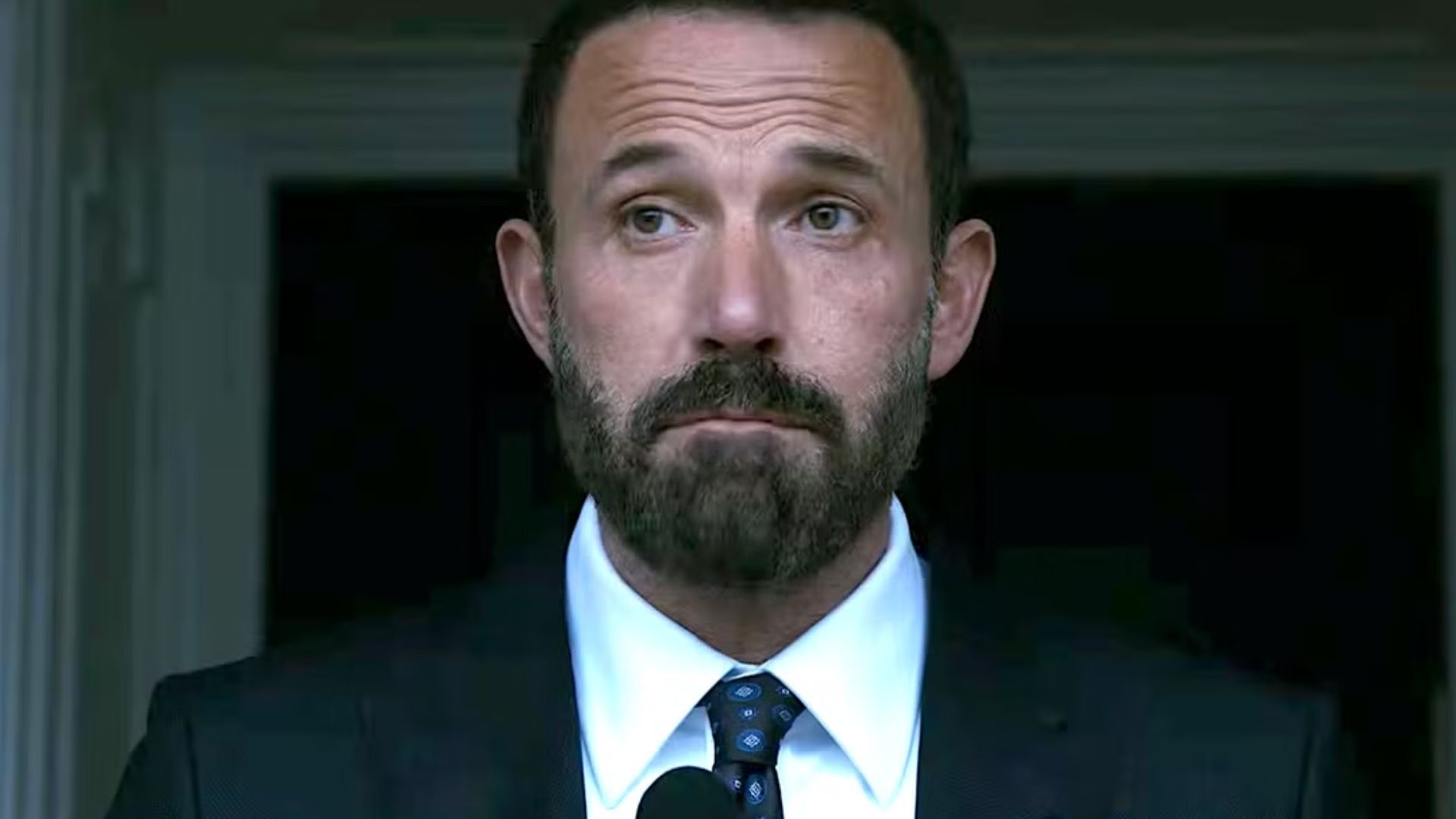

Simon Gallagher has worked in movie and TV journalism for more than 17 years. He has written more than 6000 articles and reviews, and edited thousands more. He is an expert in the entertainment industry, particularly in the golden age of screen superheroes. Simon is also a Rotten Tomatoes approved critic.
Warning: This article contains SPOILERS for Animals.
Ben Affleck has finally returned to thriller film-making, 14 years after the excellent Argo further cemented his name as one of the great new directors of the 2010s. Since then, he’s been surprisingly quite, with only the disappointing Live By The Night and Air, which were received very differently. Animals is a little closer to the former than the latter in quality.
Animals is essentially a marriage of neo-noir tropes and the foundation of a political thriller, in which Affleck’s mayoral candidate faces a moral reckoning when his son is kidnapped as his campaign reaches a key point, and he’s forced to take less-than-conventionally legal measures to save him. The kidnapping brings up old ghosts, a hidden family schism, and class privilege, and on paper it should be very interesting.
Oddly, Animals doesn’t really deliver on its promise, thanks to a defiant, unconventional approach to storytelling that leaves frustrating unresolved questions, and half-baked ideas that aren’t clearly spelled out. In other words, it’s the kind of movie that might seem straightforward, but in its self-conscious vagueness, requires a deep dive.
What Happens In Animals Ending

Affleck uses Kimball's political career - and his apparent moral inegrity - as the springboard to try and shake up the usual kidnapping thriller formula. His power and wealth gives him access to a political fixer, Dayle - played with uncharacteristically robotic delivery by Gillian Anderson - who will make problems go away that even the political parties shy away from.
She facilitates the ransom money in exchange for a fee and literally no narrative inquisition, either from Kimball or Affleck as the writer, and offers Kimball a Faustian bargain: she can make the kidnappers disappear entirely, without impacting his political career or freedom, in exchange for double her fee. After searching his morals, Kimball decides he wants the kidnappers dead, despite the fact that they didn't actually kidnap his son - they took the son of the family's Mexican nanny (Adriana Paz).
Why Kimball Decides To Kill The Kidnappers
Kimball's motivation is not spelled out particularly loudly, but there's a big hint, as Animals also reveals that his wife (Scandal's Kerry Washington) is having an affair (with Ray Fisher's undernourished teacher). He discovers this just as the fixer offers her deadly solution, and - seemingly emasculated - seeks to regain some control of his life by doing what he believes is right. Ignoring the fact that Dayle has talked at him endlessly about leverage, and he'll be exposing himself to a major vulnerability.
In the climax, Kimball takes the ransom to the agreed meeting place, double-crosses the kidnappers thanks to Dayle's driver/hitman, which goes badly, because her assumption that there are two kidnappers (based solely on vibes at this point) is wrong. The third, largest kidnapper then kills the driver, the fixer (who charges into the scene without checking for clearance), and threatens to kill Kimball and the child, before the child's father turns up and saves the day by killing him from an improbable distance.
Kimball then cleans up the scene, by apparently hiding the bodies, except for one, and concocting the fake story that the kidnapped child's illegal immigrant father was the one who went to make the drop, thanks to money Kimball donated, and Kimball killed the kidnapper when he realized the plan was to kill both child and father. That exonerates the father, who would have gone to prison for possessing a gun as an illegal, gets Kimball a slap on the wrist, and a flash forward to a year later reveals he won the election, and intends to clean up Los Angeles.
Who Actually Kidnapped Denny Kimball?

Traditionally, an old-school adult thriller like Animals would either show the perspective of the kidnappers (as Ransom does), or reveal that the kidnappers were part of the victim’s world. There’s even a point very early into the ordeal where Steven Yeun’s Sam says in “most cases” the kidnapper is someone from the victim’s household. Animals then gently throws in some ideas about who could have been behind the crime without ever really interrogating them.
Could it have been Sam? He seems quick to suggest it’s a scam or a test of fortitude by political opponents. Could it have been Ron, Ray Fisher’s cheating husband who is having an affair with Abigail Kimball? Maybe his disgruntled wife? How about the fixer, who is suspiciously quick to come up with $7 million, and who offers to kill the kidnappers stunningly quick? Could it have been extortion all along? Nope, not one of those fairly reasonable ideas is the truth.
In reality, the identity of the kidnappers doesn’t actually matter: brief flashes of the lead kidnapper reveals they seemingly once worked for or owned a small business that was forced to close because of Kimball’s work as a lawyer and activist. So we're to believe that they’re nobodies: there’s no big twist, and when the kidnapper is unmasked, it’s not someone famous or notable from appearing elsewhere in the movie.
So why does Animals do this? It’s frustrating, but it comes down to what Dayle says about leverage and the impact of one’s actions. She dangles the murder of the kidnappers over Kimball as her Faustian bargain, but warns of the consequences of leverage: her part in things will be protected by her evidence of his involvement. Kimball weighs up the potential cost of his choice: he could end up in prison, his adulterous wife could leave him and use the knowledge of the killings against him, his political career could be ruined…
It seems that the whole point of the kidnapping is that it’s also a result of what Kimball did. In the case of his legal work, the outcome was presented as a triumph of his career, and part of why he ascended so quickly. In reality, though, it ruined people’s lives to the point they took dramatic action as revenge. It’s not a particularly eloquent point, but the commentary is on cause and effect rather than personal prejudices.
Everything Else Animals Fails To Answer (& Why It Doesn’t Bother)

Animals isn’t really a mystery box thriller: it doesn’t revel in its grand reveal, and instead seems happy to avoid offering too many satisfying conclusions along the way to giving Kimball his happy ending. As a result, it also leaves some things unanswered and introduces some major issues with the logic of the story. The kidnappers not being clearly explained is a problem, for instance, because there’s no suggestion of how they were able to plan the crime. It’s presented simultaneously as intricately orchestrated and opportunistic.
Dayle is also a total mystery. Who she actually is, what organization she works for, how she has access to such major capital… All remain unanswered in service of making her feel like a mythological figure (like Quentin Tarantino’s Wolf, played by Harvey Keitel in Pulp Fiction). Her motivations are also unclear beyond money, and quite how Sam came to be aware of her as a campaign manager for an independent mayoral candidate is equally so. Are all aspiring political power makers given the card of shady underground concierge figures? Am I merely imagining something interesting in place of the movie’s complete lack of believable build up to a Deep State black ops world? Possibly.
She’s also not great at her job: she tells Kimball that there are probably two kidnappers because she feels it in her gut, then ends up dead because a) she got that wrong and b) she charges into a battlefield without checking with her hitman/driver type that he managed to take out his target. Apparently, nobody has any means to communicate long distance they could use during a complex mission to take out criminals.
Also, where did the $7 million come from, and why was it just fine for Kimball to give it to Ramon to rebuild his life in Mexico? Are we to believe that Dayle actually just worked alone, and could still access such massive amounts of money in the middle of the night? To be honest, all of the final sequence where Kimball reveals he was the one who shot the kidnappers makes little sense: are we to believe the police just accepted everything? They didn’t further investigate Dayle’s burnt out car? Nonsense.
And then there’s the question of the kidnappers and Dayle and her sidekick’s bodies. What exactly did Kimball and Ramon do with them? There’s a brief mention that the area of LA that was chosen as the drop point was identified because of low police presence, but Kimball’s story zeroed the focus. Why didn’t the bodies turn up? Why weren’t they then easily linked back to Kimball? Dayle was literally on his security system’s video feed. In offering no suitable answer, Animals opens itself up to scrutiny and, inevitably, criticism.
What The Final Shot Of Animals Means
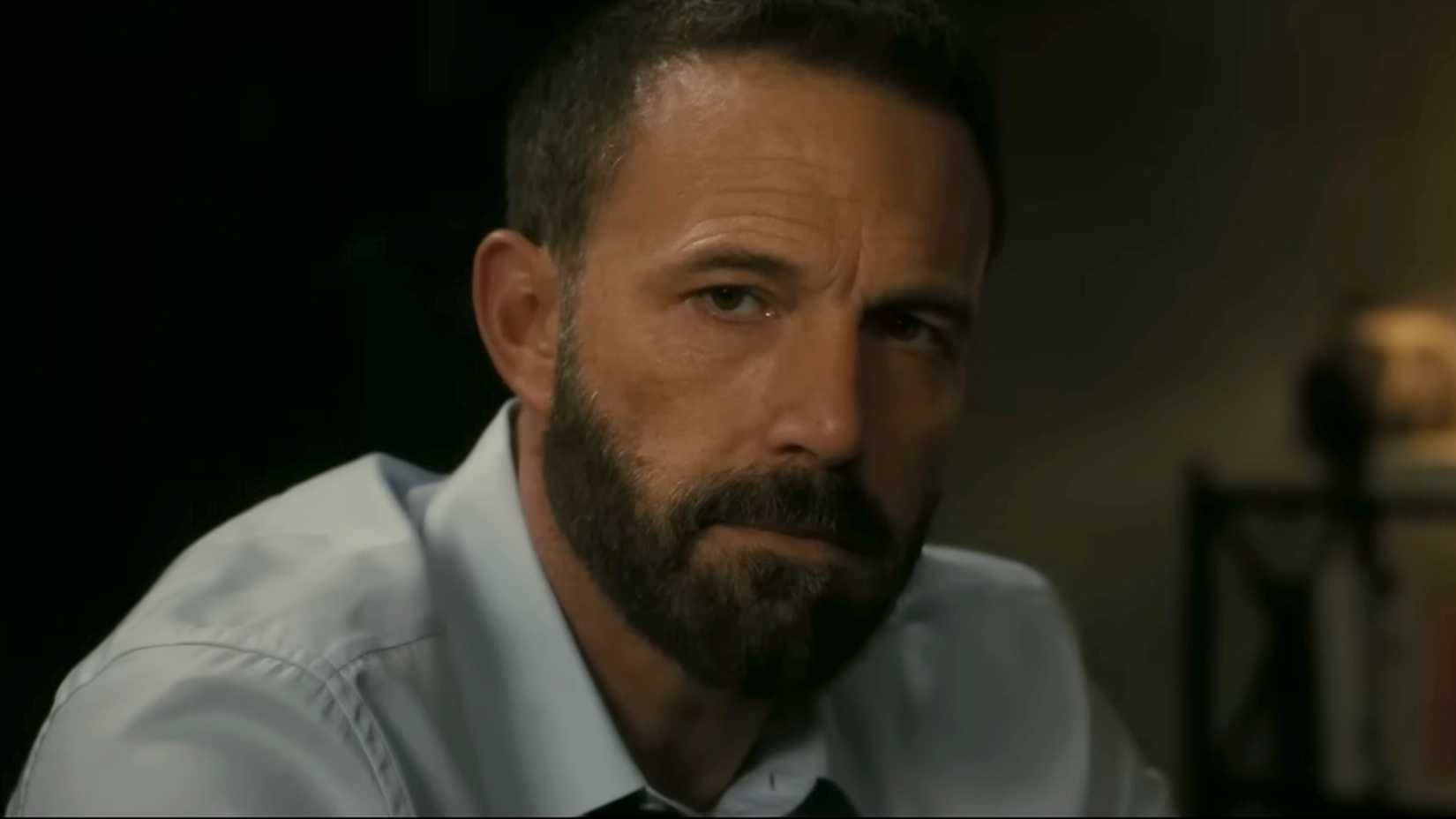
The point about the police accepting Kimball’s story with no friction is actually an important one that rather inelegantly underlines one of the biggest points of Animals’ ending. It’s a movie as much about privilege as it is about a kidnapping.
Kimball is powerful because of his position, he has put a target on his back because of his activism and political work even before he became a candidate, but he believes himself completely free of enemies. He’s an idealist who reveals he was able to pay off a staff member who accused him of sexual harrassment (the movie again provides zero scrutiny of the truth here). And because of his power, he also has immediate access to Dayle when he believes Denny has been kidnapped.
$7 million? No problem. You just need to pay $1.4m on top as her fee. Also, apparently not a problem. Kimball’s financial position is precarious because he’s self-funded his campaign, but recovering that money will also be no issue when he wins. In stark contrast, Cici the nanny’s husband Ramon cannot get a job - including with the Kimballs who see even being associated with an illegal migrant as ruinous to his public image - and fears he cannot even report his own son as kidnapped in case he’s deported. The whole reason Cici and Ramon exist appears to be to confront Kimball with his own privilege, which he never really goes into. He does use his privilege to help, though: first offering to pay the ransom for Hector, and then when the drop turns bloody, taking the rap for killing the kidnapper.
Kimball gets a slap on the wrist for killing the kidnapper and for holding a firearm with no serial number, is given a community service order for a year, and still gets elected mayor, using his protection of a Latino migrant family (and willingness to pay the ransom) to swing the key Latino vote towards himself. He ends up using Dayle’s idea of leverage to realize his dream of becoming mayor, despite the fact that he was an inconvenience to him just days before.
There’s a strange sinister note to how Animals ends: Kimball gets his happy ending, and promises to clean up LA, but he’s effectively corrupted himself in the process. He decided to kill the kidnappers because he was emasculated, hid several bodies, torched a car, commited perjury, aided and abetted a crime (the movement of $7m over the border), and used the story to manipulate the populous. Are we supposed to believe the shots of him on his victory press tour at the end are condemnation of him? Or is his success and Ramon and Abigail’s family being safe supposed to be evidence that the right people are allowed to do bad things for the greater good?
Animals is streaming on Netflix now.

Animals
- Release Date
- October 9, 2026
- Runtime
- 106 minutes
- Director
- Ben Affleck
- Writers
- Billy Ray, Ben Affleck, Connor O. McIntyre
KioskNews shows a cleaned-up reading view extracted from the publisher’s page — the original always lives on their site, not ours.