Straightforward tribute tells inside story of fashion world’s great eccentric Karl Lagerfeld
By Cath Clarke / The Guardian


Karl Lagerfeld had never set foot inside a supermarket before he had one built on a catwalk in 2014, featuring models browsing aisles with baskets shopping for Chanel-branded fromage. It was classic Lagerfeld: very silly but a stroke of genius. The fashion designer was easy to poke fun at, with his white bouffant-plus-ponytail hairstyle and black leather gloves. But behind the persona was a man who spoke four languages fluently, a workaholic still running Chanel, Fendi and his own label Karl Lagerfeld into his 80s.
This dutiful, uncontroversial documentary is based on William Middleton’s biography Paradise Now: The Extraordinary Life of Karl Lagerfeld. As well as archive footage of Lagerfeld, film-maker Nick Hooker gets access to the designer’s inner circle, but ultimately his documentary fails to chip away at the persona. (This is no criticism: I once interviewed Lagerfeld, a frustrating 30 minutes during which the dark glasses stayed on and he answered questions with bon mot witticisms but gave nothing away.) In a clip at the start of the film, Lagerfeld admits that he has spent so long performing a role that not even those closest to him really know who he is.
Growing up in Germany, his mother was cold and distant, which seems to have left him with a life-long aversion to intimacy. At 19, he left for Paris, and after a long stint at Chloe took over Chanel in 1983, at a time when the legendary fashion house was dusty and on its uppers. He lost the great love of his life, partner Jacques de Bascher, to an Aids-related illness in 1989. Later in life, his smash hit collaboration with H&M gave Lagerfeld celebrity status, which he clearly adored. But glance away and you’ll miss the very quick reference to his controversial fatphobic comments.
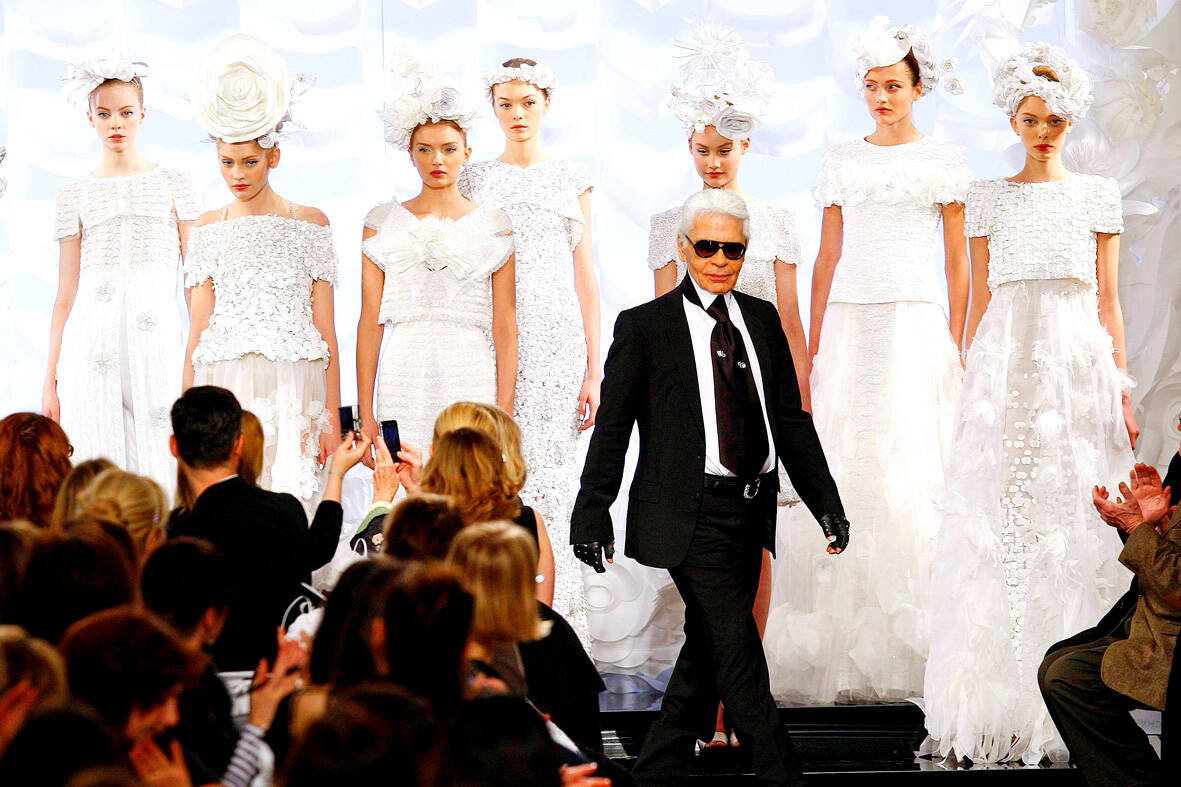
German designer Karl Lagerfeld in January 2009 appears at the end of his Spring-Summer Haute Couture 2009 fashion show for French fashion house Chanel in Paris, France.
Photo: Reuters
Of the interviews here, Lagerfeld’s famous pals Tilda Swinton and Penelope Cruz are all blather and platitudes, but more insightful are his collaborators, including Amanda Harlech, his right-hand woman at Chanel. I found it telling how well liked Lagerfeld was by his staff; the seamstress who worked for him for 50 years turning his sketches into clothes describes him as “the creme de la creme of men.” His longtime bodyguard says he was like a father. (Though, if Lagerfeld had actually been his dad there were times he’d have told him to “go fuck yourself.”) Overall, this is a diligent, if not definitive, profile.
KioskNews shows a cleaned-up reading view extracted from the publisher’s page — the original always lives on their site, not ours.