2026 Elections: DPP warns against Chinese election interference
FIFTH COLUMNISTS: The DPP warned against things like discounted or free trips to China or financial coercion through collaborating Chinese spouse organizations
With local elections on Saturday, Democratic Progressive Party (DPP) lawmakers yesterday warned voters to be aware of Chinese interference tactics before casting their ballots, including illicit campaign funding, subsidized tours and discounted flights aimed at compromising Taiwanese voters.
DPP caucus secretary-general Fan Yun (范雲) and deputy chief executive Chen Pei-yu (陳培瑜) cited data compiled by national security agencies and the Mainland Affairs Council (MAC) at a news conference in Taipei detailing Beijing’s efforts to influence the polls.
Chen said the Chinese Communist Party has developed five new transportation-related strategies to mobilize voters for specific candidates.
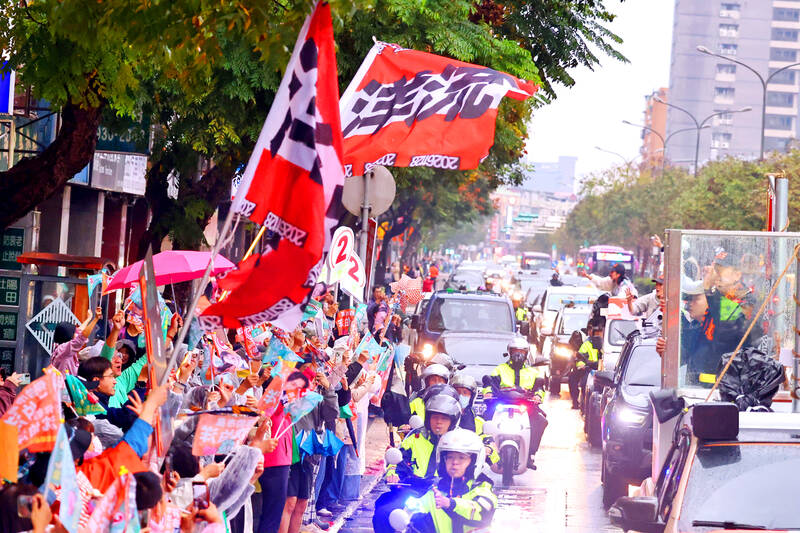
Supporters wave at a motorcade carrying Democratic Progressive Party Taipei mayoral candidate Puma Shen yesterday, joined by Legislator Fan Yun and city councilor candidates running in the city’s Daan and Wenshan districts.
Photo: Chen Yi-kuan, Taipei Times
First, China’s Taiwan Affairs Office and local branches coordinate with travel agencies and airlines to offer discounted airfares and subsidies to Taiwanese businesspeople and their families to return home and vote, she said.
Second, if subsidies are not enticing enough, Beijing works through cooperating Chinese spouse organizations to survey voting intentions, compile lists and distribute free round-trip tickets, Chen said.
Third, authorities deliberately lower airfare prices and provide airport VIP lounge access and shuttle services to make returning to vote appear virtually cost-free, she said.
Fourth, China uses state-controlled airlines to reserve large blocks of seats on Taiwan-bound flights so supporters are not deterred by a lack of available tickets, she said.
Fifth, Beijing coordinates transit via the “small three links” routes connecting China to Kinmen and Lienchiang counties to facilitate travel back to Taiwan proper — a tactic used in past elections, Chen added.
When China employs these methods to back specific candidates, it indicates those candidates could align their future policies with Beijing’s agenda, Chen said, urging voters to recognize these tactics before casting their ballots.
Fan said Chinese tactics include funneling illegal funds to specific candidates or political groups to cover campaign expenses, referring to an investigation into Taiwan People’s Party Taoyuan city councilor candidate Chou Hsiao-yun (周曉芸), alongside subsidized hospitality tours in China.
Chou was indicted on Friday last week on suspicion of accepting Chinese funding and support for her campaign.
Other tactics include spreading disinformation, conducting cognitive warfare and launching cyberattacks to steal campaign intelligence, Fan said.
Beijing uses selective economic inducements — such as lifting import bans on agricultural products from specific cities and counties to tie trade benefits to political support among farmers — and intimidation tactics, Fan said.
Publicly blacklisting candidates and supporters while sending record numbers of Chinese military aircraft near Taiwan is designed to frighten voters into believing that supporting certain parties would bring heightened military threats, she added.
KioskNews shows a cleaned-up reading view extracted from the publisher’s page — the original always lives on their site, not ours.