Prime Video’s 62-Episode Sci-Fi Masterpiece Quietly Fills The Void Left By District 9

Dhruv is a Lead Writer in Screen Rant's New TV division. He has been consistently contributing to the website for over two years and has written thousands of articles covering streaming trends, movie/TV analysis, and pop culture breakdowns.
Before Screen Rant, he was a Senior Writer for The Cinemaholic, covering everything from anime to television, from reality TV to movies.
After high school, he was on his way to become a Civil Engineer. However, he soon realized that writing was his true calling. As a result, he took a leap and never looked back.
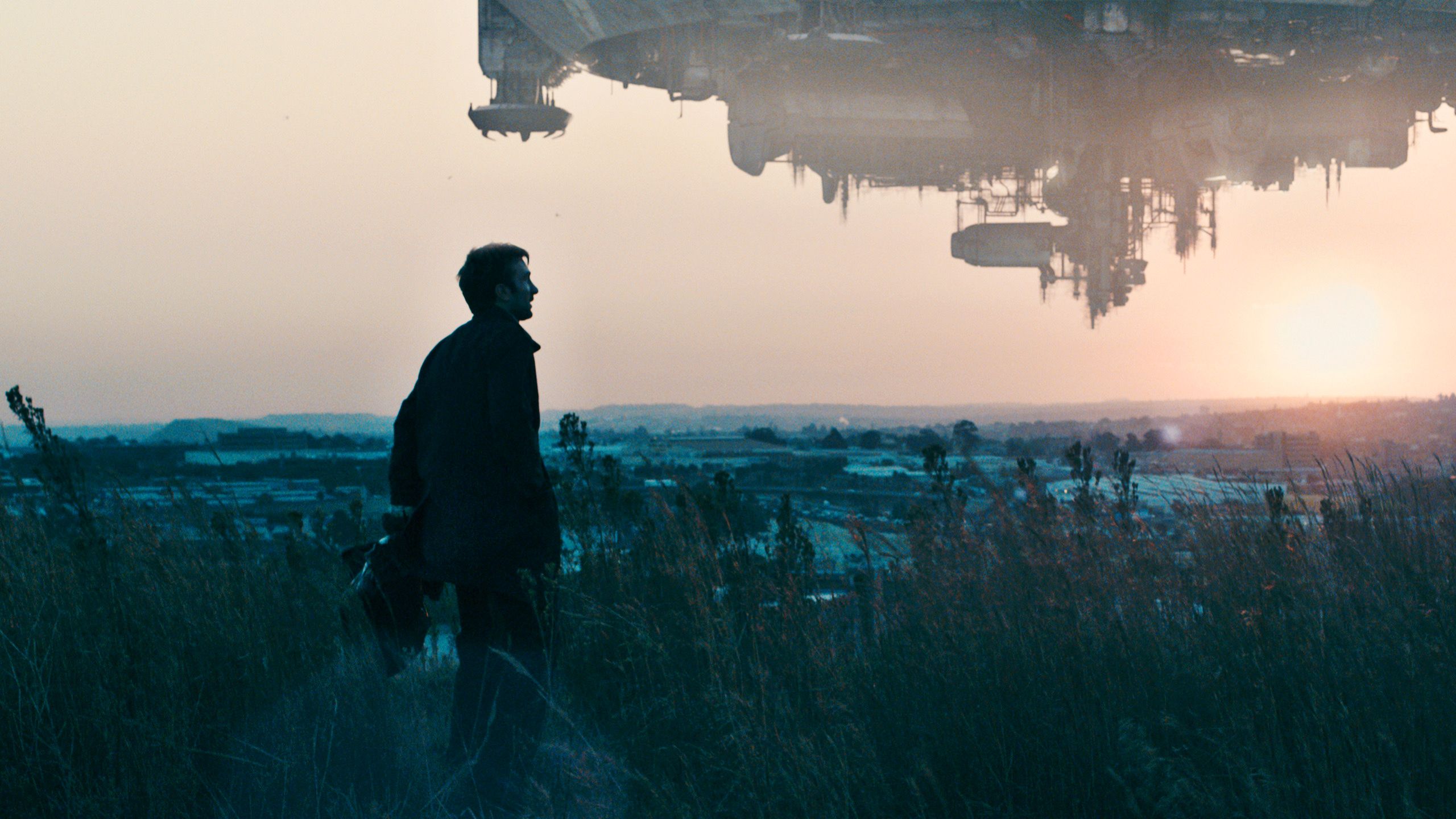
Quite a few older sci-fi movies, when revisited, do not seem to have aged too well. Neill Blomkamp's District 9, however, is a rare genre masterpiece that is still as good as one remembers. It premiered back in 2009, but everything from its visuals to its hard-hitting themes of xenophobia and racism hit harder than ever.
No sci-fi movie or TV show has been able to match what District 9 brought to the table. Even a direct sequel of the movie, titled District 10, was long-anticipated but never saw the light of day. While there is no true replacement or sequel to District 9, one highly ambitious sci-fi adaptation on Prime Video dabbles with many similar ideas and story beats.
The show in question, The Expanse, is based on James S. A. Corey's bestselling book series of the same name. In terms of its sci-fi vision, The Expanse is far more vast and far-reaching in scope. On the surface, it is less about humanity's relationship with aliens and more about its expansion into the solar system. Yet, beneath its sprawling political conflicts, The Expanse, too, asks similar questions about human nature.
The Expanse’s Belter Slums Mirror District 9’s Alien Ghettos

To expose the systemic oppression in their respective worlds, both The Expanse and District 9 make good use of spatial design. In District 9, spatial segregation is explicitly portrayed through a fenced slum in Johannesburg where non-human creatures called "Prawns" are forced to live.
Even some of the basic resources like health care and food are rationed to the region through corrupt corporate entities like Multi-National United (MNU).
The Expanse displays similar divides in its population without having a physical "fence" to separate them. Gravity, in itself, is portrayed as a "fence" that allows the Inners to live in spacious gravity quarters while the Belters are forced to endure the extreme conditions of their low G and low oxygen alleyways.
Unlike the "Prawns" in District 9, the Belters in The Expanse are not aliens. Yet, their appearances, like District 9's aliens, are marked by extreme physical deformations. They have elongated and brittle bones and experience extreme muscle atrophy due to their low G condition. Like the "Prawns," they, too, are given derogatory terms like the "Skinnies."
The desperation of the aliens in District 9 is exploited by local gang networks who trade black market weapons and cat food. Instead of regulating crime in the region, the Multi-National United merely turns away. Factions in The Expanse do something similar by controlling everything from water distribution to black market ship docks.

In both District 9 and The Expanse, the overarching visual aesthetic is intentionally left unpolished and industrialized. The "used future" aesthetic was heavily popularized by sci-fi shows and movies like Alien and Star Wars. District 9 and The Expanse leverage it to highlight the decay and rot that has marred their respective worlds.
District 9 draws a clear visual contrast between the MNU's high-tech headquarters and the dusty, crumbling slums of District 9. Even the central alien technology that can vaporize biological mass is portrayed as a rusty dried fluid. The Expanse captures a similar contrast between the living conditions of those of Earth's high-command officers and the Belters' ships like the Canterbury.
Despite all their parallels, District 9 and The Expanse are undeniably distinct additions to the sci-fi genre. However, since it seems unlikely that District 9's long speculated sequel will ever happen, The Expanse is the perfect sci-fi series for viewers who loved the movie's hard-hitting social allegories.
-

The Expanse

10/10
- Release Date
- 2015 - 2022-00-00
- Network
- SyFy, Prime Video
-

Steven Strait
Jim Holden
-

Dominique Tipper
Naomi Nagata
The Expanse is a sci-fi series set in the distant future where humanity has spread out across the solar system, but the alliances between the three most potent governing bodies have reached a state of cold war. A mixed-up crew finds themselves at the center of a dangerous intergalactic conspiracy that threatens to bring war to the colonized worlds.
-

District 9
9/10
- Release Date
- August 5, 2009
- Runtime
- 112 minutes
-

Wikus van de Merwe
-

Jason Cope
Christopher Johnson / Grey Bradnam / Trent
Neill Blomkamp's District 9 combines sci-fi with social commentary in an alternate history in which humans and aliens eke out a tentative coexistence. When a large alien ship appears outside of Johannesburg, humans find it full of sickly and malnourished extraterrestrials they name "Prawns." After housing the aliens in a slum named District 9, one human finds himself far closer to the Prawn community than he bargained for.

KioskNews shows a cleaned-up reading view extracted from the publisher’s page — the original always lives on their site, not ours.