Dutch minister heads to China as Nvidia saga revives US push for tougher ASML curbs
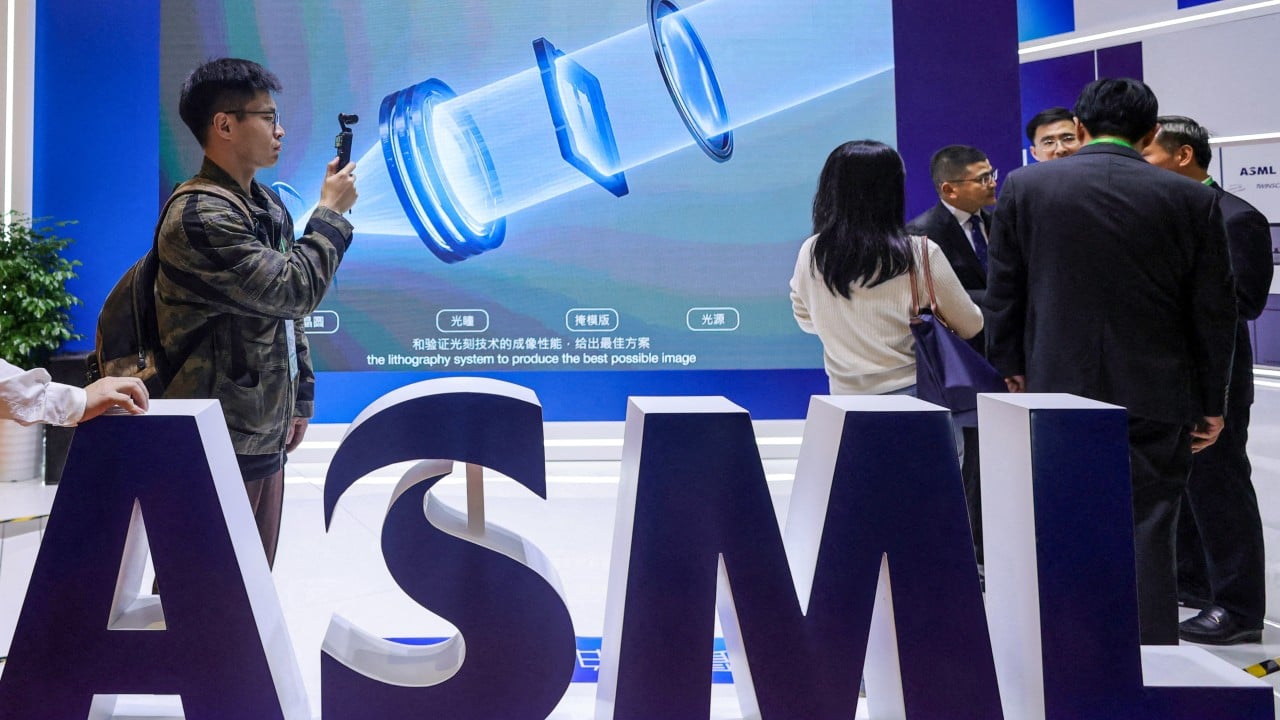
Dutch Foreign Minister Tom Berendsen’s visit to China this week comes amid a shifting dynamic in the Netherlands’ efforts to fend off further US restrictions on ASML sales to Beijing following the Nvidia saga, analysts say, with some suggesting it could strengthen the Dutch case against the proposed measures despite mounting pressure from Washington.
“Because of the Nvidia [saga], there is a renewed push for the Match Act in the US Congress,” said Frans-Paul van der Putten, founder of ChinaGeopolitics, a Netherlands-based research and advisory firm specialising in China and economic security.
“Last week, the Dutch government made it … even more clear that it opposes the Match Act.”
Republican US senator Pete Ricketts, sponsor of the Multilateral Alignment of Technology Controls in Hardware (Match) Act, which seeks to further restrict exports of semiconductor manufacturing equipment and components to China, called for the bill to be passed earlier this month amid the fallout surrounding Nvidia.
Dutch chip equipment maker ASML, already barred from selling its most advanced extreme ultraviolet (EUV) machines to China, has renewed its opposition to the proposal.
If enacted, the bill would effectively prevent ASML from selling its less advanced deep ultraviolet (DUV) immersion machines to China and servicing equipment already installed at Chinese customers’ facilities.
The US is always acting like ‘small’ Netherlands cannot protect such an important company as ASML, [saying] ‘Follow us, we know how’. And now they show that they actually cannot
Servicing provided a way to maintain visibility and control over the company’s machines, ASML CEO Christophe Fouquet said on November 16 at a Silicon Valley event, alongside US Undersecretary of State for Economic Affairs Jacob Helberg.
“If we step out of our Chinese customers’ factories and we do not service our tools, I promise you the minute after we do that someone will still service the system with a different badge,” he said, adding that similar situations had occurred with other companies’ products in the market.
Fouquet stressed that chip fabrication would continue even if the servicing stopped.
“Remember, export control is about control,” he added.
According to Sanne van der Lugt, a China specialist at Netherlands-based think tank Leiden Asia Centre, the Nvidia saga could also help strengthen the Dutch side’s negotiating position because the US had historically shielded its own companies at the expense of foreign firms when it came to export controls.
“The US is always acting like ‘small’ Netherlands cannot protect such an important company as ASML … [saying] ‘Follow us, we know how to protect such an important company’,” van der Lugt said. “And now they show that they actually cannot.”
She also echoed Fouquet’s view that forcing ASML to leave the Chinese market would merely accelerate China’s efforts to develop domestic alternatives by giving local firms more incentives to catch up.
Berendsen’s visit, at Beijing’s invitation, could also send a positive signal by showing that China supports Dutch efforts to resist the Match Act, according to van der Lugt.
Because the bill had not appeared in readouts from the three summits between President Xi Jinping and US President Donald Trump this year, there had been concerns in the Netherlands that China might eventually deprioritise ASML or develop reservations similar to those it expressed over Nvidia’s H200 chips, she said.
The Dutch opposition to the proposed legislation was also unlikely to be affected by political turbulence at home, according to van der Lugt. Dutch Prime Minister Rob Jetten narrowly avoided the collapse of his minority government earlier this month after crisis talks over a tax plan, but she said there was broad consensus across Dutch parties that Washington had overreached with the bill.
On another thorny issue in the relationship between Beijing and The Hague – the struggle over the ownership of Nexperia – van der Putten saw little room for the Dutch government to manoeuvre because the case remained before the Dutch Enterprise Chamber, a specialised corporate court in Amsterdam.
Nexperia and its Chinese parent, Wingtech, have been locked in a legal battle, suing each other for billions of euros in damages.
KioskNews shows a cleaned-up reading view extracted from the publisher’s page — the original always lives on their site, not ours.