Alaska teen survives 62 hours at sea: How the 15-year-old fought hypothermia
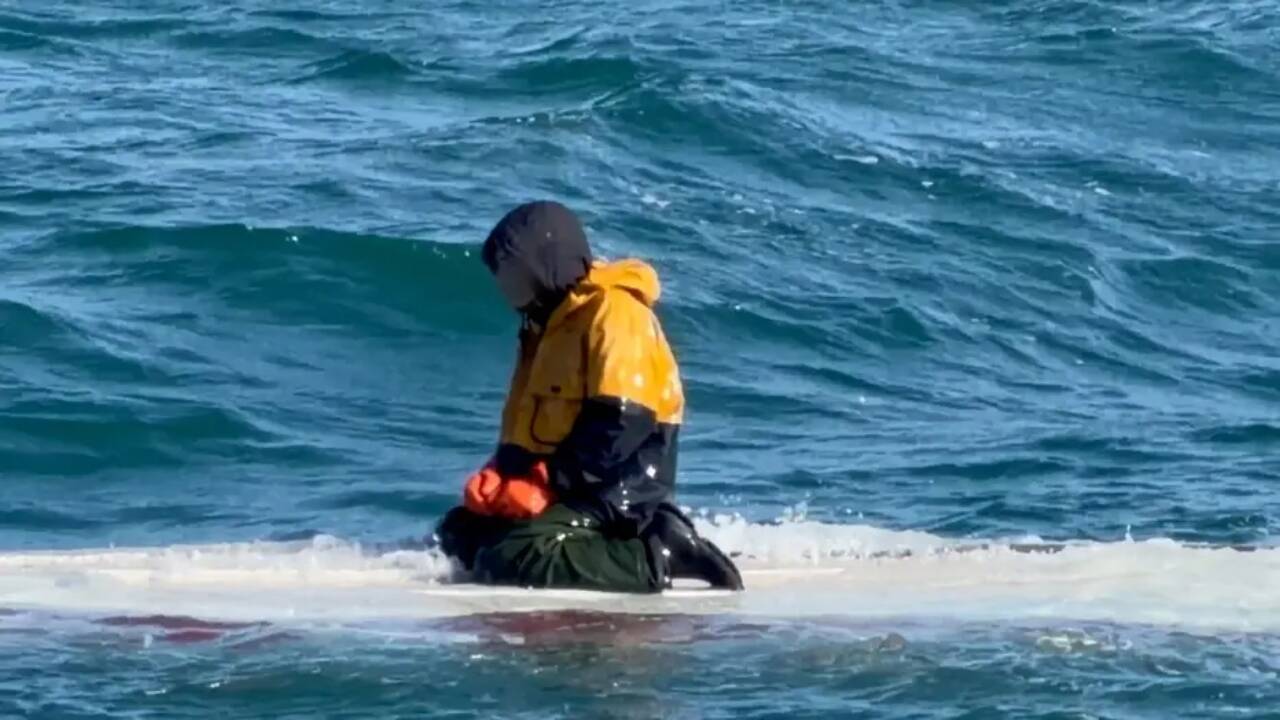
Alaska teen survives 62 hours at sea after fishing boat capsizes: How the 15-year-old survived hypothermia
Imagine being fifteen, adrift on the open Bering Sea, your only lifeline an overturned fishing skiff, and holding on for more than two days, alone!That was reality for Derek Parker Aghnaanga, as reported by AP News.
He spent 62 hours stranded, with no shelter, no food, no fresh water, and the freezing Alaskan wind in his face. His brother was gone, his cousin too, swallowed by those cold, endless waves.This isn’t some dark fairy tale. It happened, but it’s almost hard to believe Derek survived at all.
The tragic trip: What happened?
The trip started like so many others for families in Savoonga, a tiny village on St. Lawrence Island, a remote Alaskan island closer to Russia than mainland Alaska.
On September 4, Derek headed out with his brother Sidney Kulowiyi, 35, and cousin Barton Rookok, 34, chasing halibut in an 18-foot skiff. The three were expected home early on September 6.However, the weather turned, and what was supposed to be a routine trip quickly turned into something terrifying. They never returned.What happened next became a desperate search-and-rescue operation, as well as a tragedy for the families involved.
The fishing trip that turned into a fight for survival
Something went wrong with the fishing line: it got tangled in the motor. Suddenly, the boat flipped, and Sidney was dragged underwater, never to return. Barton held on for a while, but exhaustion and cold eventually claimed him, too. By all rights, Derek should have been lost with them. But he clung to the upturned hull for two and a half days, waiting — barely alive.Back home, his family and the whole village watched the horizon, hoping for news.
The Coast Guard and Alaska State Troopers joined in, combing the ocean, but the Bering Sea is huge, and the weather didn’t cooperate. At one point, rescuers weren’t sure what they were even looking at: a flash of color on the water, a smudge against the gray waves. But when the fishing vessel Northwest Explorer got a little closer, they saw him: a yellow jacket, a kid, and the impossible evidence that hope isn’t always a fantasy.
The horrifying revelation after his rescue
Derek was shivering uncontrollably when they pulled him in. He had hypothermia, but was talking. For the unversed, hypothermia is a medical emergency that happens when the body loses heat faster than it can produce it, causing a dangerously low core body temperature below 35°C (95°F).Through chattering teeth, he told them what had happened: Sidney was gone, under the boat. Barton had slipped away the night before.
Derek tried to hold on to both as long as he could. There aren’t words for that kind of grief, especially when you’re just fifteen.
So how did he survive?
Well, the Bering Sea in September hovers around 50 degrees Fahrenheit. That’s cold enough to kill a grown adult in a matter of hours if they’re in the water. But Derek managed to stay on the upside-down boat, keeping as much of his body out of the water as he could. He was lucky, yes, and stubborn, definitely.
Without the boat, and without that flash of his yellow jacket catching the eye of a passing vessel, things almost certainly would have ended differently.When word finally reached Savoonga, it was like a collective breath finally released: a teenager was rescued alive.But the relief came tangled up with heartbreak. Sidney Kulowiyi, who had been like a father to Derek since they lost their own dad, was gone. Barton, too.Derek’s story isn’t just about survival. It’s about unimaginable loss, the split-second decisions that mean life or death at sea, and what it means for a family and a community when someone comes home, when two others don’t.He survived those 62 hours thanks to sheer will, a bit of luck, and the determined strangers who refused to give up the search. But it will probably take much longer for Derek and his family to recover from what the sea took from them.
KioskNews shows a cleaned-up reading view extracted from the publisher’s page — the original always lives on their site, not ours.