Exclusive-Japan's currency diplomat Mimura urges markets to heed 'very clear' warning on yen
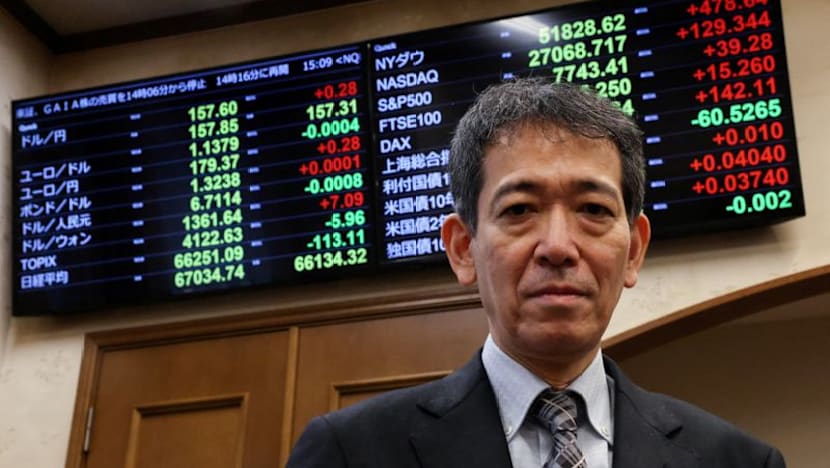
TOKYO, Sept 28 : Japan's top currency diplomat Atsushi Mimura said on Monday markets should take at face value the "very clear" message Tokyo and Washington delivered last week on the yen, signalling his resolve to act against excessive falls in the currency.
US President Donald Trump raised concerns about yen weakness at a summit with Japanese Prime Minister Sanae Takaichi, Japan's Finance Minister Satsuki Katayama said on Friday, offering an unusually detailed account of the leaders' talks on currencies.
"Japan's prime minister, finance minister and the US have sent a very clear message. Markets should take that message at face value," Mimura said in an interview with Reuters on the yen's recent declines. "I will be watching closely whether markets will continue to take (the message) at face value."
While he declined to comment on whether Japan could intervene again to prop up the yen, Mimura said he remained neither satisfied nor reassured over the yen's recent moves, suggesting that Tokyo remained on guard against the risk of renewed declines in the currency.
In a sign of Tokyo and Washington's shared determination to address the weak yen, Katayama and her US counterpart Scott Bessent reaffirmed that the yen's undervaluation is a matter of concern in phone talks on Friday.
Asked whether Japan stood ready to conduct solo or coordinated yen-buying intervention again, Mimura said: "I have nothing to comment on how we could act."
He brushed aside the view, held by some market players, that funding constraints could limit Japan's ability to step into the market again, saying: "I have absolutely no such concern."
The yen spiked against the dollar after Mimura's remarks, breaking through the 157 line to trade around 156.75.
'VERY GOOD' BILATERAL RELATIONSHIP
A weak yen has become a source of concern for Japanese policymakers by pushing up the cost of imports, including for fuel, which has spiked due to the Middle East war.
Wary of the inflationary impact from a weak yen, the Bank of Japan raised interest rates to a 31-year high of 1.25 per cent earlier this month following a hike in June.
But the move, as well as the BOJ's pledge to keep raising rates, has failed to prop up the yen, as the US Federal Reserve's rate hike and hawkish communication led to market views that the huge US-Japan rate gap will not narrow quickly.
When looking at both countries' monetary policy stances since last year, the BOJ is clearly on a rate-hike path, while the Fed only began raising rates in September, Mimura said.
"As such, the gap between Japanese and US policy rates has been narrowing as a trend," Mimura said. "We are always mindful of such developments in watching market moves," he added.
Japan and the US conducted a rare, coordinated intervention on July 31 to prevent the currency's slide to near 40-year lows from destabilising financial markets - a move Mimura described then as the culmination of the two countries' "currency alliance."
Mimura said he used the language "currency alliance" to describe how the two countries' strong relationship extended beyond exchange rates to encompass cooperation on economic security, critical minerals and global supply chains.
"Even in areas aside from exchange rates, there's a very good relationship between Japan and the US," Mimura said, adding that such strong ties likely led to the joint yen intervention.
Some analysts have interpreted Treasury Secretary Bessent's calls last month for Japan to "sit back and enjoy the success of Abenomics" as a swipe against Japanese Prime Minister Sanae Takaichi's big spending plans.
Mimura pushed back against the view that the administration's fiscal policy was seen as reflationary, thereby prompting investors to sell yen and Japanese government bonds.
"I've never received any criticism from G7, G20 or other overseas counterparts that Japan's fiscal policy is too expansionary," he said.
KioskNews shows a cleaned-up reading view extracted from the publisher’s page — the original always lives on their site, not ours.