Politicians After Self-seeking Objectives
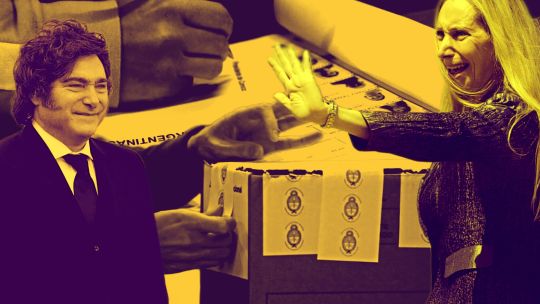
All sorts of problems left lying in the sand after the tidal wave of the papal visit, yet politicians are largely ignoring them to pursue their autistic obsession with tweaking the electoral rules in general and the future of the PASO primaries in particular – including, and especially, the government. In libertarian eyes, not even the crassest manipulation of the electoral system is ignoble since the end justifies the means – the end being, of course, the re-election of President Javier Milei. Beyond the electoral rulebook the broad strategy here is to hog a monopoly of virtue for Milei in a polarisation against a demonised opponent (for which Kirchnerism is the obvious choice) instead of compete against genuine alternatives. The upshot of this strategy is to preserve a party of the past as the alternation and block any construction of a party of the future – the antithesis of progress. Does the end really justify the means?
Below that strategy lies a process of haggling over the ground rules with the powers that be (aka the “caste,” a term falling increasingly into presidential disuse), especially provincial governors. The latter have just shown their clout with the elimination of the colectoras – feeder lists enabling presidential and gubernatorial candidates to piggyback each other – from the electoral reform. The government logic is that since Milei swept 10 provinces in the first round and 20 of the 23 in the second yet the provincial victor always came from another party, this system would be a win-win situation but, eyeing the dwindling opinion poll support of the libertarian administration, the provincial governors were far less convinced. The breakdown of this unholy alliance could lead to a revival of the electoral purism of Presidential Chief-of-Staff Karina Milei running La Libertad Avanza lists spurning any coalition.
The colectoras may have bit the dust yet the main objective of elimination or suspension of the PASO primaries remains alive and indeed on the cards. Beyond the political world most people would ground their removal on ending a waste of the citizen’s time and the tax-payer’s money (although their 1.5 percent threshold does serve to keep the joke candidates out of the real election) but politicians view it solely in terms of the impact on their vote.
In government eyes the question is quite simple – continuation of the PASO primaries would risk exposing their differences while permitting the Peronists to pass on their inability to resolve theirs to the voter at large. Thus their continuation in Buenos Aires Province could pit Karina Milei’s pet Sebastián Pareja against Cabinet Chief Diego Santilli of PRO, severely disrupting unity against the locally dominant Peronism. Yet whether elimination of the PASO primaries would torpedo Peronism is more debatable – this could give the disqualified ex-president Cristina Fernández de Kirchner (now topping even some neutral opinion polls) more margin to come up with a new Alberto Fernández (unless this means a repeat run for Sergio Massa) instead of the seemingly inevitable but resisted presidential candidacy of Buenos Aires Province Governor Axel Kicillof.
Yet the main argument against sustaining the PASO primaries is simpler still – the danger that lightning strike thrice after big Peronist victories in the 2019 PASO and the 2023 Buenos Aires Province midterms sent the markets into panic stations. Yet eliminating or suspending the PASO primaries would not remove the chance of any negative data ahead of the general elections. There will be a long string of advanced provincial elections as from February – a level at which the libertarian performance has always been mediocre, even in their glory days – while the Buenos Aires Province primaries next year could have a similar effect to their midterms last year.
Looking beyond the two main forces, the almost unconditional support given by ex-president Mauricio Macri to the electoral reform is puzzling. His Cambiemos coalition was born out of the 2015 PASO primary with the Radicals and Coalición Cívica, giving his PRO party the added clout to go on and win the elections – why not make similar use of this mechanism to construct a third way among all centrist parties this year instead of removing it?
Space prevents a closer look at other questionable aspects of this electoral reform – such as the limitation of debate to the run-off or the slot for blanket voting in the single ballot while the ficha limpia exclusion of even those not finally convicted of corruption runs the risk of fabricated charges – but the sordid negotiations will do little to dispel the public disenchantment with politics.
KioskNews shows a cleaned-up reading view extracted from the publisher’s page — the original always lives on their site, not ours.