North America’s oldest human footprints tell a tale of ice age chaos
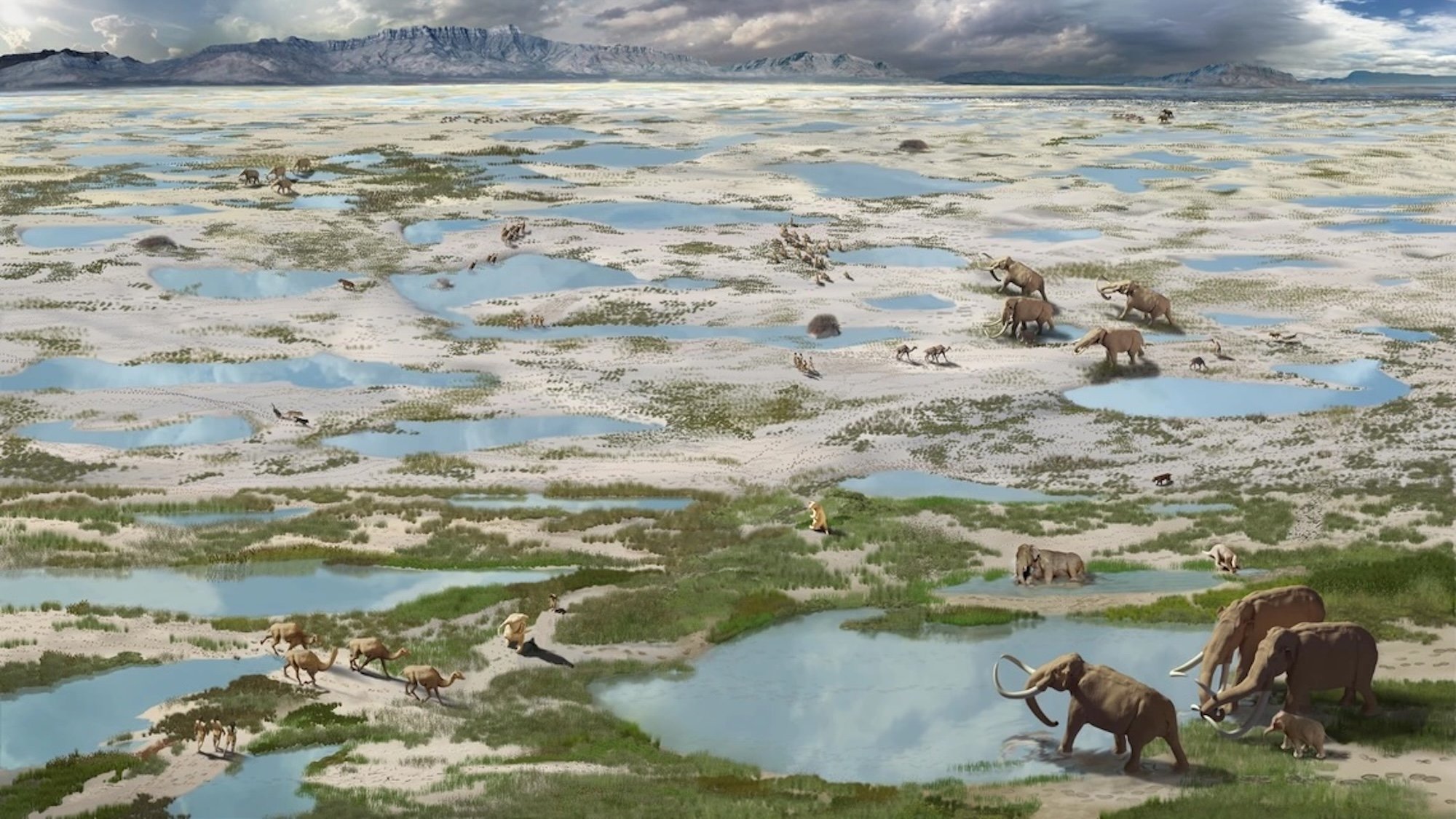
An extensive new analysis further confirms the oldest known human footprints in North America date back to the last ice age (about 23,500–21,700 years). To pinpoint their origins, researchers at the University of Arizona relied on cutting-edge methods at the United States Geological Survey (USGS) Radiocarbon Laboratory to examine hundreds of thousands of prehistoric pollen grains extracted from the tracks. According to researchers writing this week in the journal Science Advances, the team can even describe some of the dramatic environmental fluctuations experienced by these prehistoric humans within a single generation.
New Mexico’s White Sands National Park contains more than stunning vistas and desert dunes. It’s also home to one of the most controversial (and consequential) prehistoric discoveries of the last century. In 2006, archaeologists located footprints inside a dry lakebed that they later determined to be the earliest evidence of humans in North America. But there was a problem. Until then, researchers largely agreed that the first humans migrated into the continent about 16,000–12,000 years ago via Beringia, the subcontinent once connecting Alaska to Russia.
However, the White Sands footprints were estimated to be around 23,000 years old. That implied a sustained human presence on the continent at least seven millennia earlier than expected. Various archeological camps continued debating the true age of the White Sands footprints for years, while others cited similar—and sometimes older— sites in both North and South America. Meanwhile, the dry lakebed’s rarely seen geological conditions allowed researchers like University of Arizona geoscientist Jessica Tierney to learn more than each footprint’s age.
“The White Sands sediments are unique in that they allow us to reconstruct environmental conditions during the last ice age at a very high temporal resolution, so that we can see fluctuations that were relevant for the humans present at that time,” Tierney said.
Combining geochemical sediment signatures with the fossilized pollen, researchers accurately determined ancient regional details such as plant distribution, precipitation, temperature, and aridity. They soon learned that the humans who made the White Sands footprints would have experienced incredibly dramatic environmental shifts within their own lifetimes. Within only a few decades, the surrounding conifer forests transformed into plains covered with oak and sage. Lake Oterio, a giant body of water that once covered New Mexico’s national park, fluctuated in size for about 1,500 years until it receded completely. Although these shifts were large, they actually closely followed similar global climate changes at the time.
“And throughout that whole sequence, people were walking there, leaving their tracks alongside those of mammoths, giant sloths and dire wolves,” added Tierney.
KioskNews shows a cleaned-up reading view extracted from the publisher’s page — the original always lives on their site, not ours.