The Iran war's unexpected impact on US defenses against China threat downplayed by top Army leader
Gatestone Institute senior fellow Gordon Chang warns that Beijing's military buildup and cyberattacks on Taiwan are designed for intimidation. Chang explains that leadership vacancies within the Chinese Communist Party's Central Military Commission leave the military unready for a full-scale invasion of the main island. These aggressive actions from China are stiffening Taiwanese opposition rather than forcing submission.
NEWYou can now listen to Fox News articles!
Amid growing concerns that the Iran war is drawing away critical U.S. defenses from China's doorstep, the Army's top commander in the Pacific says the forces are using this unexpected opportunity to modernize.
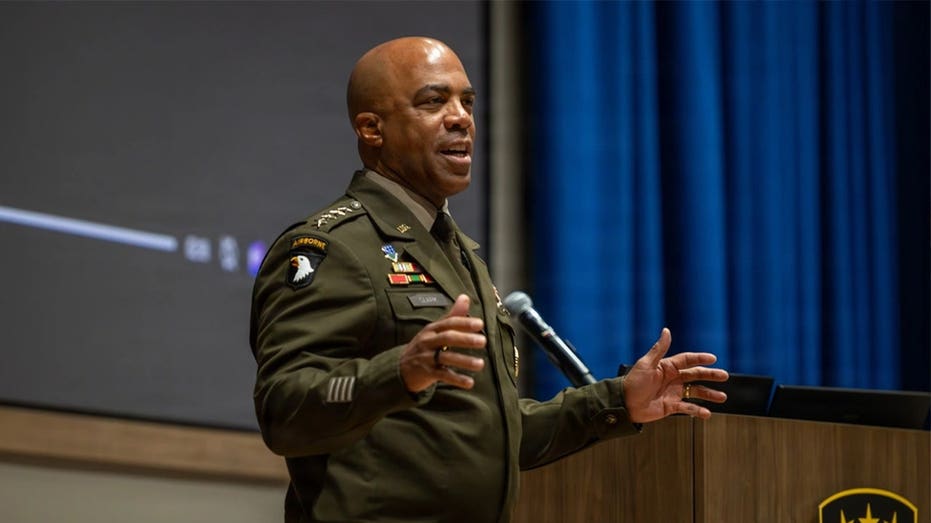
Gen. Ronald Clark, commander of U.S. Army Pacific, provided his assessment that diverting Patriot missile defenses to the Iran war has not increased risk to forces in the Indo-Pacific despite concerns about deployments impacting America's readiness for potential conflict with China.
"Actually, it's given us an opportunity to modernize our systems here," Clark told Fox News Digital during a small-group interview at the Association of the United States Army's annual conference in Washington, D.C., on Tuesday.
Patriot systems have been redeployed from the Indo-Pacific to support operations in the Middle East, while U.S. forces in South Korea have also sent Terminal High Altitude Area Defense (THAAD) interceptors to the region.
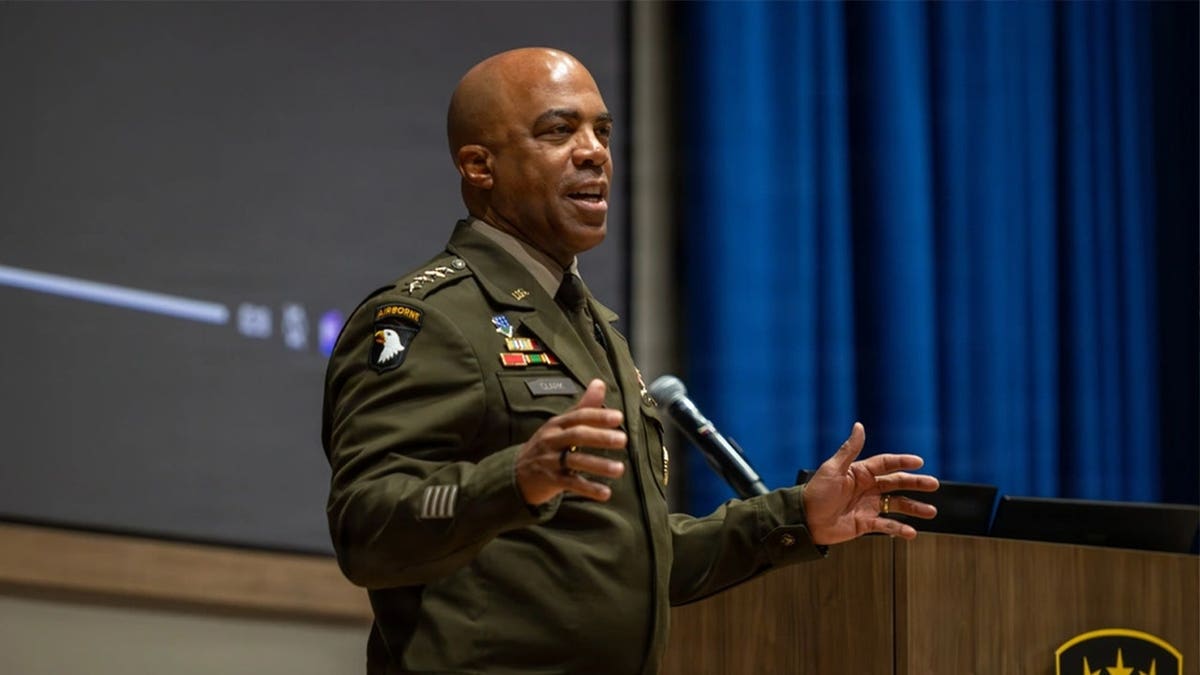
U.S. Army Gen. Ronald Clark, commanding general of U.S. Army Pacific, speaks with NSS guests during National Security Seminar Week at the U.S. Army War College in Carlisle, Pa., June 4, 2026. (Elizabeth Bukowski/US Army War College)
An October Congressional Research Service report cited estimates that U.S. forces had expended roughly 1,700 Patriot and 200 THAAD interceptors during the conflict, while the Congressional Budget Office estimated that the military had used between half and two-thirds of certain interceptor inventories. The Pentagon's inspector general has cited strategic inventory shortfalls and manufacturing bottlenecks stemming from the conflict, raising questions about how quickly the U.S. could replenish its defenses in the event of another major confrontation.
Clark said the deployments are giving Patriot crews firsthand experience defending against enemy attacks, while equipment upgrades are expanding what individual batteries can accomplish.
He said an upgraded Patriot battery can now provide coverage that previously required an entire battalion, though he did not specify whether he was referring to geographic coverage or the number of threats the system can engage.
Asked whether recent diplomatic progress between President Donald Trump and Chinese President Xi Jinping had changed his assessment of the threat from China, Clark said he believes the People's Liberation Army (PLA) is continuing its build-up.
"Well, I believe they're continuing to prepare," Clark said.
XI PREPARES CHINA ‘FOR BATTLE’ AS EXPERT WARNS OF GRAVE DANGER FACING US AHEAD OF DC SUMMIT
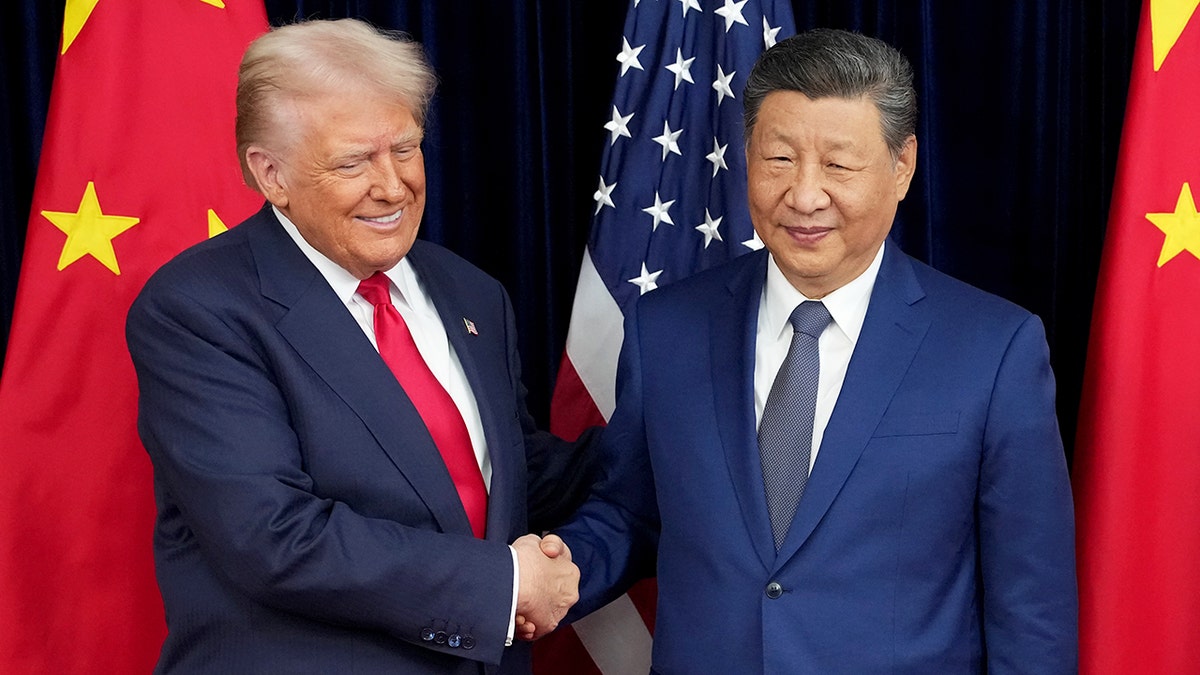
U.S. President Donald Trump greets Chinese President Xi Jinping ahead of a bilateral meeting at Gimhae Air Base on October 30, 2025 in Busan, South Korea. (Andrew Harnik/Getty Images)
The assessment comes weeks after Trump welcomed Xi to Washington for a high-profile state visit that produced new trade agreements and commitments to improve military communications. But the diplomatic progress has not resolved tensions over Taiwan and China's growing military reach across the Indo-Pacific, where American commanders continue preparing for a potential conflict.
Clark did not say whether China's military preparations had accelerated or whether diplomatic outreach had changed Beijing's intentions. He emphasized that the U.S. military's responsibility is to remain ready for a potential conflict while working to prevent one.
TAIWAN ANALYSTS SAY TRUMP-XI SUMMIT PRODUCED NO POLICY SHIFT BUT REAL TEST LIES AHEAD
"Hopefully my legacy in this job is that when we walk away from command of USARPAC, that the deterrent posture of our command is such that we have not just prevented war, but we're preventing war in the future," Clark said.
Clark said Adm. Samuel Paparo, commander of U.S. Indo-Pacific Command, recently discussed reviving disaster-management exchanges between the U.S. Army and China's PLA during talks with his Chinese counterpart.
The exchanges would provide an opportunity for American and Chinese military personnel to work together on disaster response, restoring a channel of direct engagement that Clark said he hoped to see revived.
"If you're able to have a conversation with your adversaries, you're able to share information with them in a way that makes them not want to fight," Clark said.
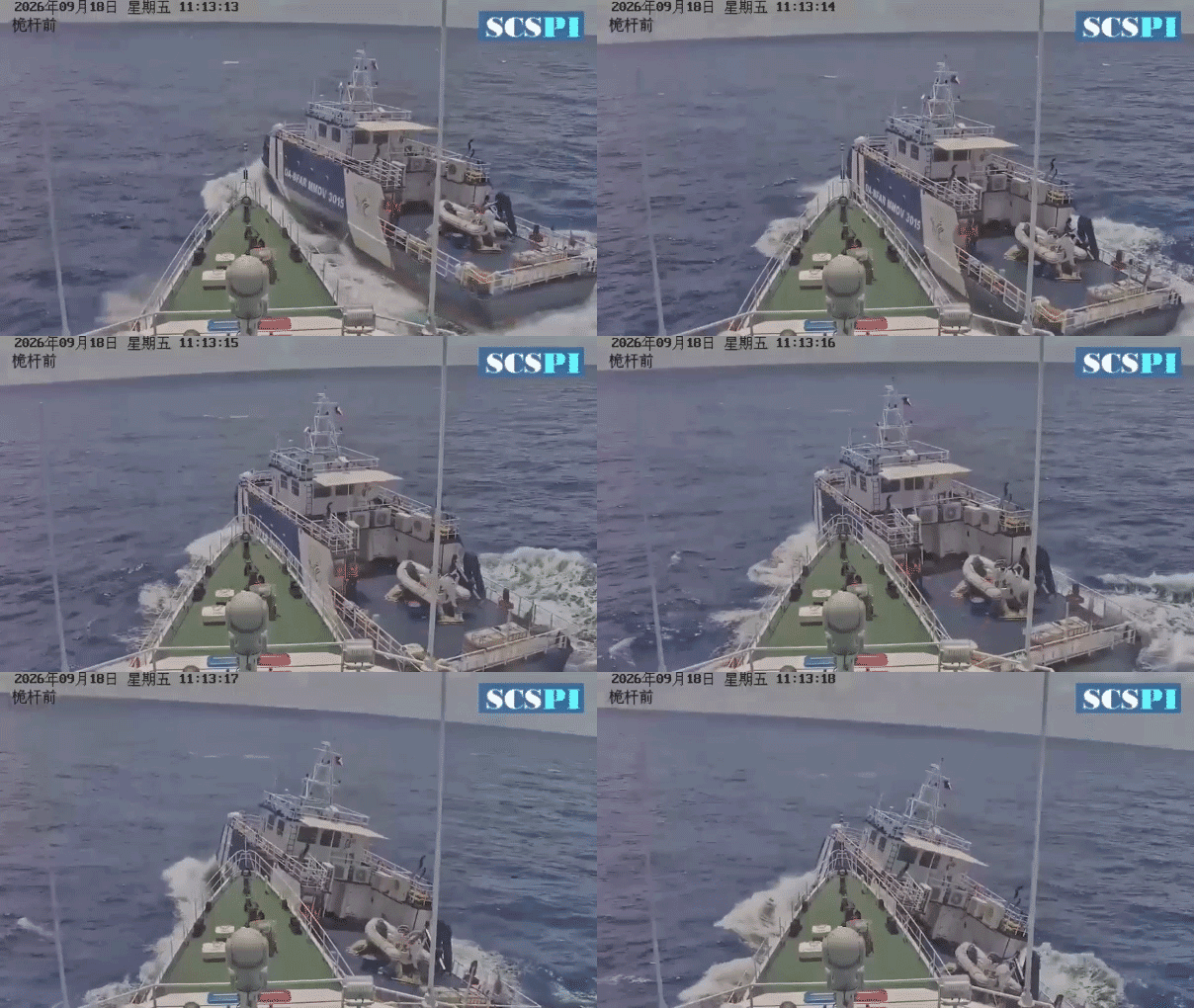
A Philippine Bureau of Fisheries and Aquatic Resources vessel, labeled DA-BFAR MMOV 3015, navigates in close proximity to another ship during a maritime encounter. (Chinese Coast Guard)
He said U.S. Army Pacific would be responsible for coordinating the exchanges with its Chinese counterparts if the effort moves forward. He did not announce a date or say that Beijing had formally agreed to resume the program.
The U.S. and Chinese militaries have periodically conducted disaster-management exchanges in the past, including an event hosted by the Army at Joint Base Lewis-McChord in Washington state in 2017.
"The cost of going to war is just so high that it's our duty to, one, be absolutely prepared for that eventuality, but two, to prevent that from happening," Clark said.
The diplomatic outreach comes amid continued confrontations between Chinese and Philippine forces in the South China Sea. As Fox News Digital previously reported, the Philippines tracked 101 Chinese navy and coast guard vessels around disputed waters in September, nearly double the number recorded in August. More recently, Philippine authorities accused Chinese forces of obstructing maritime operations and carrying out dangerous maneuvers near Philippine aircraft.
CHINESE MILITARY ACTIVITY NEARLY DOUBLES AROUND KEY US ALLY IN DISPUTED WATERS
Meanwhile, the Army has been expanding its capabilities across theIndo-Pacific, positioning additional forces and equipment closer to potential flashpoints as part of its effort to deter Chinese aggression.
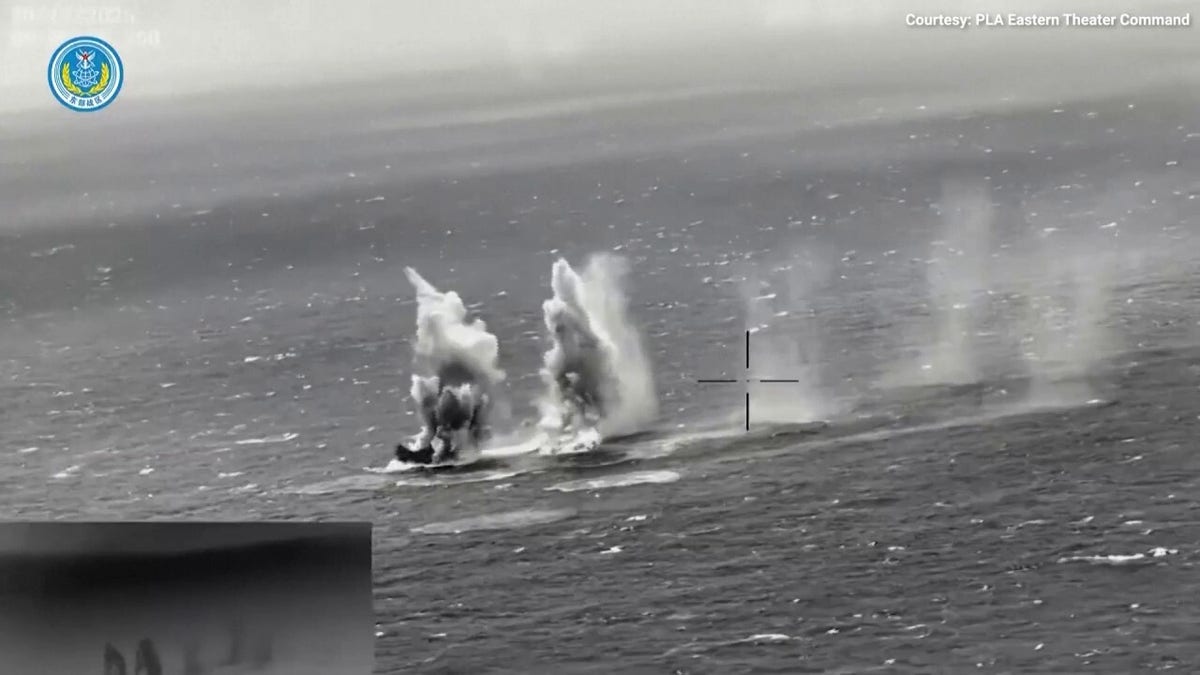
China launched rockets near Taiwan during massive live-fire drills, surrounding the island with warships, aircraft and military pressure as tensions rise. (PLA Eastern Theater Command via Reuters)
Clark said the Army now has more resources committed to the region than at any previous point in his career, including additional divisions, a corps headquarters and specialized formations designed to conduct long-range strikes and operations across multiple domains.
"The Army is now better resourced in the Pacific than I've ever seen it," he said.
He pointed to the Army's growing ability to support naval and air operations, including land-based weapons capable of striking targets at sea.
CLICK HERE TO DOWNLOAD THE FOX NEWS APP
Clark said recent military war games have demonstrated the importance of those capabilities, including one maritime scenario in which the addition of Army forces changed an unfavorable outcome.
"It's really tied to existing capabilities we have," Clark said, citing the Army's ability to detect targets, conduct strikes, protect military assets and sustain operations from land.
KioskNews shows a cleaned-up reading view extracted from the publisher’s page — the original always lives on their site, not ours.