Bombay High Court halts Goa tribal population notification. What this means for reserved seats
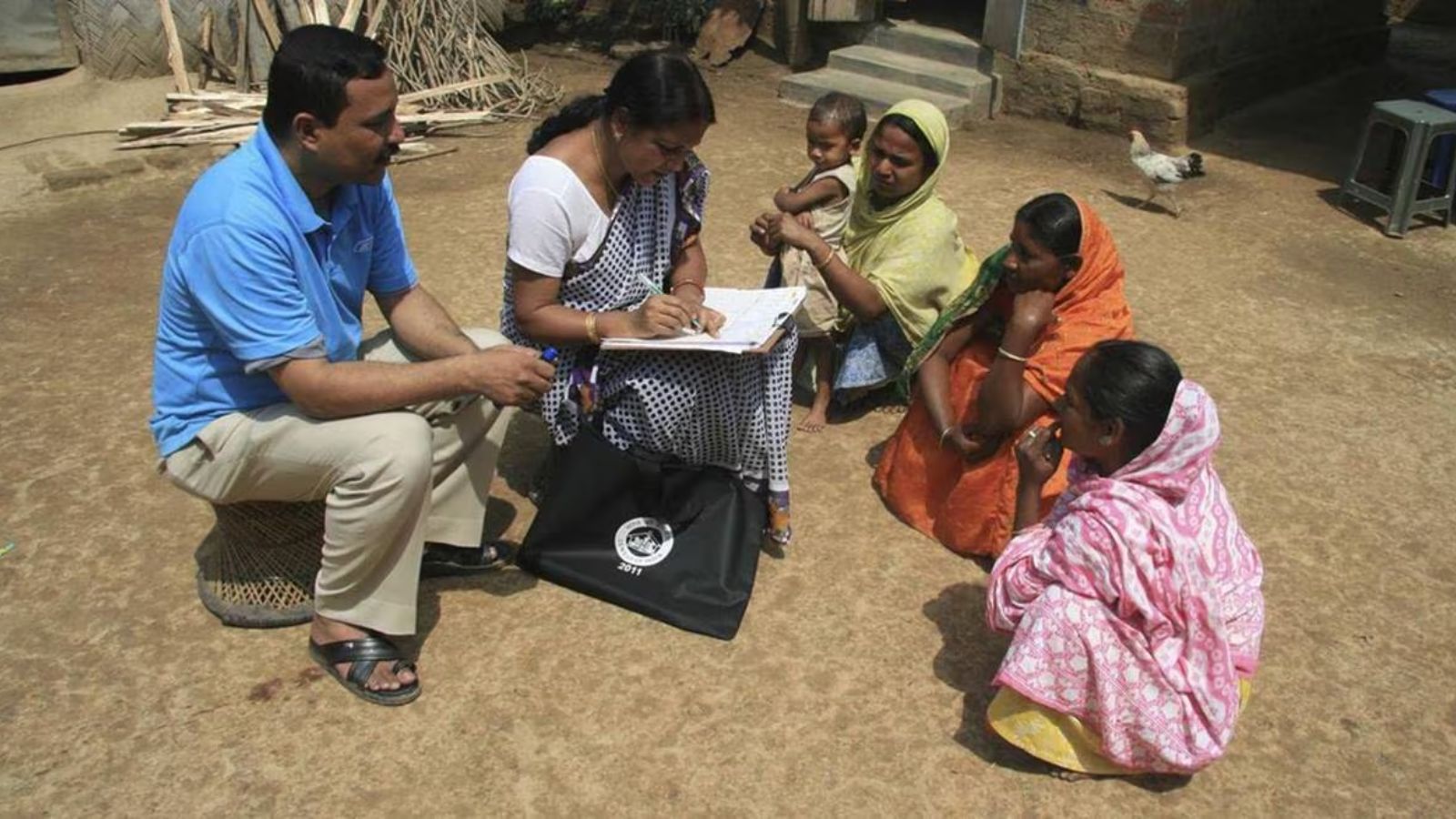
The High Court of Bombay at Goa on Thursday restrained the Census Commissioner from notifying the estimated Scheduled Tribes (STs) population in the state. The interim order is likely to put the process of reserving four seats for STs in the upcoming Legislative Assembly elections on hold.
The petitioner, Edwin Lucio Fernandes, had challenged the Readjustment of Representation of Scheduled Tribes in Assembly Constituencies of the State of Goa Act, 2025, arguing that the Act is unconstitutional. The Act was enacted in August 2025 to enable reservation for Scheduled Tribes (STs) in the Assembly and brought into force in August 2026. The petitioner submitted that the provisions in the Act bar readjustment of reserved seats for Assembly or Lok Sabha elections until the first census is completed after 2026.
The petitioner submitted that the provisions [sub-section 1 of section 3] in the Act confer the power on the Census Commissioner to ascertain or estimate the population of the Scheduled Tribe in the state based on the last Census, estimate or ascertain the proportion of the ST population to the total population of the state, and notify such population estimates. The petitioner’s counsel said that publication of such a notification of estimated or ascertained figures would be final and could not be called into question in any court.
Pravin Faldessai, Deputy Solicitor General of India, who represented the Union Government, contended that Parliament had enacted the Act specifically for the state of Goa and brought it into force before the next Assembly election, slated to take place by February 2027, with the objective of providing enabling provisions to empower the Election Commission of India to amend the delimitation of Assembly and Parliamentary constituencies. He submitted that since the Census of 2027 was not yet complete, a need was felt for legislation containing enabling provisions to permit the Election Commission to readjust the seats in the Legislative Assembly in Goa for Scheduled Tribes based on the existing population figures from the 2001 and 2011 censuses.
The High Court said the only Census available for reckoning the provisions of Article 170(3) was the 2001 Census, at which time the three new communities of Kunbi, Gauda and Velip had not been declared Scheduled Tribes. The three communities were declared Scheduled Tribes on January 8, 2023.
Reacting to the development, Goa Chief Minister Pramod Sawant said the government was “committed to the cause of Scheduled Tribes and providing reservations to Scheduled Tribes to Goa Legislative Assembly”.
“The Goa Government continuously followed the said issue before the Central Government and the law is made in favour of the Scheduled Tribe community. However, the legal impediments caused due to the court cases will be seriously pursued before the Govt of India and the Central Government will be urged to approach the Hon’ble Supreme Court for protecting the interest of the Scheduled Tribe community in the state of Goa,” the CM said on X.
Court questions population estimate
Story continues below this ad
In an interim order on Thursday, a Division Bench of Justices Valmiki Menezes and Amit S Jamsandekar said the Census Commissioner had attempted to ascertain or estimate the population of the Scheduled Tribe as at the last Census [the 2001 Census or the 2011 Census] and had recorded in its communication dated September 10, 2026, issued to the Ministry of Law and Justice, that it was unable to estimate or ascertain from the available data either the current population or the population under any category (including Scheduled Tribe) in Goa.
“What is even more surprising is that the Census Commissioner has now, after accepting that it is neither possible to estimate or ascertain the population figures, gone on to record, on the basis of the 2001 Census, that it could be ‘reasonably presumed’ that 9.9 percent of the population, being the proportion of the ST community, to the total population of the State, has remained constant,” the court said.
It added: “If there was no manner for the Census Commissioner to be able to even ascertain or estimate the population figures as are required by Section 3, before publishing the same, there could be no justification for presuming the proportion of population of Scheduled Tribe Community to the population of the State being 9.9 percent at present, when the figure pertains to the year 2001 Census.”
Release of any notification reflecting these to be the population figures would not only be contrary to the mandate of Article 170(3) and Article 332 of the Constitution of India but would also be contrary to the requirement of the Act itself, the court added.
KioskNews shows a cleaned-up reading view extracted from the publisher’s page — the original always lives on their site, not ours.