Brendan Carr was a member of a rogue Alcoholics Anonymous group some labeled a ‘cult’

Brendan Carr, the chair of the Federal Communications Commission (FCC), was for about a decade a member of a rogue Alcoholics Anonymous (AA) group when he was in his late teens and 20s that some former members compared to a “cult”, according to a Guardian investigation.
The Midtown group, which was based in the Washington DC area, attracted young people who were seeking help with addiction, sometimes at the urging of their parents.
But while AA groups are traditionally a fellowship of people who come together to solve their drinking problem, former Midtown members say its one-time leader Michael Quinones – who died of cancer in 2007 – came to control nearly every aspect of their lives, including where they lived, worked and went to school. Former members who spoke to the Guardian also allege that teenage girls and young women were sexually exploited at Midtown, where they were regularly pressured and coerced into “dating” and having sex with multiple men who were also Midtown members – sometimes decades older than them. In at least one case, a former member said she believes that what happened to her could be described as sex trafficking.
People who knew Carr during his years in Midtown say they do not believe he participated in inappropriate behavior. He was seen as providing a “safe respite” in an environment where some teenage girls and young women bore the brunt of “forced relationships, restrictive diets” and psychological manipulation, one former member said. He was described, too, by that former member, as sensitive and desperate for the approval of others. Another former member said Carr was “never among” the predators, whom she knew well, and that he was a “victim” of Midtown.
The Guardian’s investigation is based on interviews with 14 former members of Midtown, contemporaneous recordings of Midtown members discussing their sobriety journey, and photographs.
At the heart of the Midtown group was Quinones, described as the “Epstein of AA” by one former member, Tammy S.
The people who spoke to the Guardian were members of the group in the 1990s and the early 2000s. Being a member of Midtown did not necessarily mean a person was an alcoholic, according to most of the former members. Sometimes young people were sent there by their parents, especially parents who had a history of drinking problems, as a way to try to correct problematic behavior.
In response to detailed questions from the Guardian, a spokesperson for Carr at the FCC said: “He did not engage in any of the allegedly illegal conduct or abusive behavior you reference.” The spokesperson added: “Any suggestion that he knew of the allegedly illegal or abusive conduct you point to would be false.” The spokesperson did not respond to questions for Carr about how he would describe his time at Midtown or his relationship with Quinones.
Carr joined the group in 1996, when he was about 17 years old and a senior in high school, and appears to have remained a member for about nine years, including while attending law school, according to the Guardian’s reporting. While it is difficult to pinpoint when exactly Carr left the group, he spoke about his sobriety journey in a recorded Midtown speech in 2005, in which he also referenced that he was in his last semester of law school. The Guardian has also seen a group photograph of a men’s retreat that sources said was taken in 2006. In it, Carr is standing a few rows behind Quinones. He would have been about 27 years old in 2006. Carr, through a spokesperson, denied being a member of Midtown “up to and through 2006”.
A woman whom Carr dated, who joined Midtown when she was a teenager, described him as a “safe” person, amid a sea of predatory older men, who had even “snuck” french fries to her once because she was being kept on a very strict diet. It was an act he could have been punished for, she said.
She was among multiple sources who told the Guardian that Midtown was a place where people were “entrenched” in each other’s lives, even though they might not have fully understood at the time that things that were happening were wrong.
“Obviously it was widely known that teenage girls were sleeping with older men, it was such a part of our culture. It took me to my late 20s to understand it was wrong,” she said. “I was 16, sleeping with a 55-year-old. That was just the way things worked there.”
A former Midtown member who was friends with Carr and lived with him in Silver Spring, Maryland, when they were in college acknowledged that members had “drunk the Kool-Aid” when it came to Midtown’s then leader, “Mike Q”. The former roommate, who asked not to be identified, recalled cleaning Quinones’ house for free along with other Midtown members, and doing other chores as so-called acts of service. But he also described it as among the best times of his life, when he forged deep friendships, and said that, while bad things happened, he did not personally believe – as others do – that it was fair to call Midtown a “sex cult”.
However, he says, “What Mike Quinones was able to pull together was more like a cult than an AA group. It was an amazing outlet for young people to get sober. But unfortunately, that outlet included people in their 40s, 50s and 60s. Were there bad actors doing shady stuff? Hell yeah.”
People who spoke to the Guardian – some of them using their names, or partial names, and others asking to remain anonymous – said they believed it was important for the public to understand the trauma they and hundreds of others endured inside the clutches of a group that “masqueraded” as a legitimate recovery program for young people in the late 90s and 2000s. They described years of intense trauma therapy and complicated feelings of being both a victim of Midtown’s coercive control and feeling guilty for remaining in the group, sometimes for years.
Some also believe it is important to reveal Carr’s presence in the group, given the prominent position he has as “Maga’s media watchdog”. In a major departure from past FCC chairs, Carr has threatened to withdraw broadcasters’ licences over news coverage that he has deemed to be unfair to the administration.
Lydia, one former Midtown member who only wanted the Guardian to use her first name because of fear of retaliation, said: “The wounds inflicted upon us during our time trapped at Midtown have formed scars.”
“A man who has the power to control what types of stories the mainstream public have access to is a man who should expect the narrative of his own life to fall under scrutiny,” she said.
Asked to respond to that and other claims, a spokesperson for Carr said: “The fact that [Carr] got sober over 30 years ago as a teenager” was being publicized and weaponized by a small number of people, as part of “an effort to embarrass or pressure him into doing his job differently”.
The first public sign that things were not quite right at Midtown emerged in May 2007, when Newsweek published an article titled Critics Say Washington AA Chapter Is Cultlike. It described how “angry” former members of Midtown had come to believe the group was “coercive” and “cultlike” and used the trusted AA name to “induce young alcoholics into a radical fringe movement that has little resemblance to traditional AA”. The article said that critics of the group had tried to complain to the police, but law enforcement officials had not found evidence of wrongdoing.
The Newsweek article was followed a few months later, in July 2007, by an article in the Washington Post, which described Midtown as a “rigidly insular world of group homes and socializing, in which older men had sex with teenage girls”. It also described an environment in which members’ ties to family and friends were “severed or strained” and vulnerable people were encouraged to stop taking prescription medication. The article quoted one Montgomery county police sergeant as pointing out that they had not been able to charge anyone with wrongdoing because girls were having sex at age 16 or 17, and it was legal.
The article included a statement the group issued that year in response to questions raised by some parents, therapists and churches where Midtown held meetings. It denied improper acts and said: “We do not condone underage sex. While we are not the arbiter of other people’s sex conduct, underage sex is illegal and our experience shows that it can endanger your sobriety.”
At the center of Midtown was “Mike Q”, a veteran of the Vietnam war who had a drinking problem, sources said, began attending AA and got sober. One former member – who asked not to be named – described Quinones as charming and said he had been able to commandeer an AA meeting that was in existence since the 1950s, which met at the Church of the Pilgrims in the DuPont Circle neighborhood, in the heart of Washington. Using his persuasion and influence, he could convince young people that there was one “right” way to get sober, and that deviating from it would lead to certain alcohol-related death, or prison, or institutionalization.
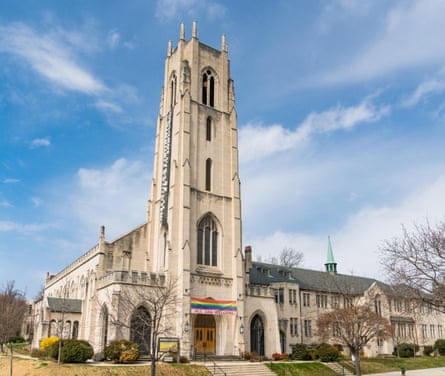
Sources have described to the Guardian that this belief system made them fear leaving the group, even when they believed they should. Parents and teens came to know that Midtown was a place to go for young people to get sober, get a sponsor, attend regular meetings and develop a social network free of alcohol that was still fun.
But it was vastly different from AA. In the traditional recovery program, individuals were sponsored by people of the same gender and single newcomers were encouraged not to date in their first year. At Midtown, Lydia and other sources said, a person’s sponsor could pressure them to date within weeks, young women could be sponsored by men, and Midtown directed people to view their family and friends as potentially dangerous individuals who would lead them back to drinking. Meetings were held every day at Midtown, sometimes twice a day.
The group was effectively run by Quinones and his crew of about four lieutenants, called “pigeons”, and each of those had groups of people they sponsored, said Elizabeth, a former member.
“Mike was the one who determined how we lived our lives and instituted rules,” said another former member. There were daily check-ins with sponsors, who offered instructions on everything from who to date, where to work, whether to attend a family gathering, what kind of car to buy and what diet to follow. Personal information about how one may have wronged another person – referred to as a “fearless moral inventory” – would be shared with sponsors, and sometimes make its way to Quinones, where it could be used in a coercive way, former members allege.
Dr Ellen Dye, a clinical psychologist based in Rockville, Maryland, who was quoted in the 2007 articles, said she had heard rumors about Midtown for years, including that it was cultlike. Then one of her patients got clean and joined the group.
“She had a very scripted life that I’d never heard of before at AA. Everyone was telling her what she could and could not do. They even picked a boyfriend for her and were controlling her life,” Dye recalled. When Dye tried to point out that what was happening was not normal, her patient insisted that it was and left therapy. Ultimately, the patient came back to her and told Dye she believed Midtown was a sexually exploitative cult. She asked Dye to participate in the Newsweek article to get the word out. Dye recalled her patient telling her that Quinones had said “you won’t be able to drink if my dick is in your mouth”.
Lacie W, a former member of Midtown, said she could also remember men making that “joke”.
“It was said in front of young women and teenagers. In my opinion, it was said in the form of a joke, but also to pave the way for that to happen. Like as if to say, if that happens, it’s not a big deal. It is part of the process,” Lacie W said.
Dye said she was not an expert in defining a cult, but that her patient had begun to act like someone who was under coercive control, similarly to a person who is in an abusive relationship. When a person in such a situation is confronted, she said, they will often quote the person who is controlling them to defend their actions, instead of expressing their own opinions.
Tammy S said she joined Midtown in 1996, when she was 28 and Quinones was in his early 50s. She recalled how 72 hours after they met, he informed her they would be having sex. She began to date him and lived with him for two years.
“I was older so it gave him some reprieve from the reputation that he only dated teenagers,” Tammy S said, though she points out he once told her he believed she had the mentality of a 13-year-old.
She said she remembers overhearing conversations among older men about how it was important to have sex with teenagers in Maryland, where the age of consent was 16, and not in Virginia, where it was 18. When she brought it up she was told it was not her business to be the “arbiter of any one else’s sex conduct”. “That’s the way it went. You were shunned if you questioned things,” she said. She and Quinones eventually broke up.
Shortly before his death, Quinones admitted to Tammy S that he had sexual relations with a 15-year-old. But he blamed the teenage girl for coming on to him.
Mandi Pagliarini, now 44, was a member of Midtown from age 15 to 22, and now posts about her experience of what she calls “child trafficking and child violation” on Instagram. In one post, Pagliarini described how, like other young people she met, she never really needed a 12-step program. When her parents discovered she was smoking pot, she was sent to an adolescent treatment facility – a hospital – which in turn instructed her to attend “90 meetings in 90 days” as part of her discharge instructions. The hospital staff referred her to Midtown, which was known for being a young people’s group.
There were cute high school and college-aged boys there, and Pagliarini quickly adopted an entire social life around the group.
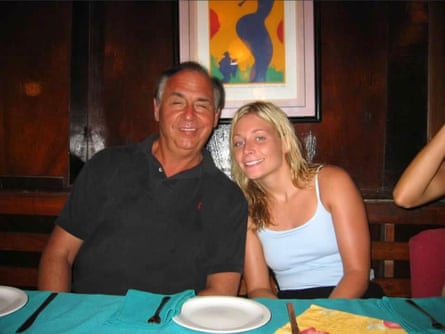
Amid the sorority-like fun, she said, were acts of labor, and daily self-analysis and confession to a sponsor. There were “verbal lashings”, strict diets for girls, and a “constant cycle” of fear and shame – followed often by love bombing, a form of manipulation in which someone is inundated with affection. Eventually, Pagliarini said, she began to be “nudged” toward older men, initially those in their late 20s and 30s. And then even older men.
“We were structured like a pyramid, with the old-timers at the top, holding the power. The higher up the pyramid I was nudged, the more privileges and less labor I had to perform,” she said in one Instagram post. She was eventually sent to “Mike”.
“The consequence of resistance outweighed enduring the act,” she wrote in a post on Instagram.
Pagliarini and other sources have described how Quinones appeared to be relatively wealthy. She has said she realized later that men were giving him money, including the proceeds of any events. Several sources said Quinones would be gifted large items, including a luxury car and vacations. There was a kind of tithing system, in which members paid his rent and took him out to eat, former members allege.
Adam Johnson was just 13 when he joined Midtown in 2005 and stayed for five years. During his most active years, he was attending a meeting every day – seven days a week – and believes one of the most troubling aspects of the group was the way members were expected not only to provide their sponsors with an “inventory” of the bad things they had done, including resentments, but also a “sexual inventory”. At the time, he trusted his sponsor. But now he realized the act of sharing such information was “a threat that had power over me”. Unlike a therapist, sponsors were not bound by secrecy.
Johnson said it was considered completely normal for 15-year-old girls to be “dating” 20- or 21-year-old men, though he was not personally aware of instances of sexual trafficking of girls to even older men.
Johnson said it was ingrained in people that there were addicts and there were “normal” people, and that this belief helped older members justify to others and themselves that a 15-year-old girl had more in common with a fellow addict who was in his 20s than a boy her age.
Claire Perna joined Midtown and got sober when she was 16, in 2001, and remembers how when she first met Quinones, he seemed older than her parents. He was like a grandfather figure, she said. Given the age difference, she said in her own mind she never saw him as a threat. He first came on to her when she was a few months sober. He invited her to his house and she recalled how they walked into his bedroom and lay on his bed together. She was uncomfortable and got out of the situation without having sex with him. But when she told her sponsor what happened, and that it had been weird, she remembers seeing a look of disappointment and disapproval on her sponsor’s face.
“Quinones really groomed me. After the first time he tried to have sex with me, he altered his approach and focused on the flattery, extra attention, how we were alike and other people wouldn’t really understand us,” she said.
By the time she turned 17, Perna said she was regularly having sex with Quinones, as well as other much older men in the group. So was a friend of hers who was even younger than she was.
“I think that that group was about men … Women were just objects for entertainment,” she said. Her recollection of Carr was as someone who was jovial, laughing at jokes with friends, and a little condescending. He seemed like a “cool college kid”, she said.
Perna said she believed a number of adult members were aware of her relationship with Quinones, but that she did not believe Carr knew.
“When I had three years sober, something cracked. I just couldn’t take it any more,” she said. She moved back with her parents. Perna only realized how completely Midtown deviated from normal AA when she started attending regular AA meetings.
“I am grateful for my life today but I feel very sad for the person I was, that I spent so much of my life in that group, where I was gaslit to think that things that are so fucked-up were acceptable and normal,” she said.
The publication of the Newsweek and Washington Post articles in 2007 had an immediate effect: the church on 22nd and P Street, where the group had its usual big Sunday meeting, kicked Midtown out, sources said. Quinones had been ill and some of his power had transferred to his lieutenants before his death that year. Over time, there was a slow exodus from the group, Lydia and other sources said, as people began to “grow up and get older”.
“Once you got to your 30s and 40s, people began to think, ‘What the hell am I doing here?’” she said.
An AA group called Midtown still exists today, and meets in suburban Maryland, on the outskirts of Washington. Sources who spoke to the Guardian say it is not the group it once was and there are no allegations that Midtown today – nearly two decades after Quinones’ death from cancer – is like a cult.
Carr, who was appointed as chair of the FCC by Trump, wields his power in unprecedented ways, particularly against the president’s perceived enemies. Last year Jimmy Kimmel was temporarily taken off the air shortly after the FCC chair blasted the late-night host for comments he made following the murder of Charlie Kirk. Carr later defended his comments, saying local affiliates were “obligated” to scrutinize entertainment content that “does not serve the public interest”.

When Trump recently criticized NBC journalist Kristen Welker, Carr suggested the FCC was “weighing options”, and issued a warning to broadcasters not to air “fake polls” that could suppress voters heading into midterm elections. Carr – who has been photographed wearing a golden lapel pin of Trump’s head – has defended his rhetoric, saying he is simply trying to force broadcasters to “operate in the public interest, not some sort of narrow, partisan interest”.
Victor Pickard, a media professor at the Annenberg School for Communication at the University of Pennsylvania, said Carr had jettisoned his principles to serve “one man” in the White House and does not even pretend to be independent.
“There was never a perfect FCC that exhibited zero partisanship,” he said. But as a scholar, he noted that “never in history” has there been such an “extreme capture” of the regulator as there is today. “Nothing is remotely similar,” he said.
“He seems to wake up every day trying to figure out how he can serve Donald Trump,” Pickard added.
In the opening paragraphs of a profile of Carr published by Bloomberg Businessweek in March, it noted how Carr was largely “unnotable and unnoticed” when he was an undergraduate student at Georgetown University. Carr has emerged as such a powerful enforcer in Trump’s Washington – having sparred publicly with Kimmel and Stephen Colbert – that alumni from the elite Jesuit college later scoured their yearbook to see if it was true that this young man whom they could not remember had graduated with them in 2001. The yearbook contained just a single mention of his name among a “slightly sorrowful list of unpictured students”, the article noted. Carr’s involvement in Midtown was not included in this or any other published profile.
But two biographical facts contained in the Businessweek article are consistent with Carr’s Midtown affiliation. First, that the boy who had grown up in McLean, Virginia – a suburban, wealthy and relatively conservative enclave, famously close to CIA headquarters – had stayed close to home during his college years: one year at James Madison University in Virginia, then transferring to Georgetown, followed by law school at the Catholic University, in north-east Washington. It was understood inside Midtown, sources said, that members were not to stray too far from DC. Second, the profile noted that Carr had lived in a “group house” in Silver Spring, Maryland, “with a group of home-town buddies”. He was living with other members of Midtown.
There was an “expectation” that Midtown members would live exclusively with other Midtown members, former members say. The stated intention was to support people’s sobriety, but one source said it also made it more difficult to leave the group.
Carr lived for about two years in the Silver Spring home with three other Midtown members, public records indicate. One roommate who was interviewed by the Guardian said Carr was one of his best friends at the time. An internal 2002 Midtown phone directory indicates that Carr later moved to a home in Vienna, Virginia. Three other Midtown members shared the address, including Francisco Convit, a Venezuelan who was studying at university at the time. The Department of Justice now considers Convit to be a fugitive following his indictment for money laundering in 2018. He is a cousin of Alejandro Betancourt, a Venezuelan tycoon who is described as Trump’s partner in his bid to control Venezuelan oil resources. Adam Kaufmann, a lawyer who represented Convit, did not provide a comment to the Guardian about Convit’s apparent membership in Midtown or his living arrangements at the time.
Asked about his living arrangements during those years, a spokesperson for Carr at the FCC denied he lived in a “Midtown group home”. The spokesperson did not respond to specific questions about Carr’s roommates during that period, who sources say were members of the group.
The spokesperson did not respond to questions about Convit.
The Guardian has heard two recordings of Carr when he was still in Midtown. In one, he described his upbringing, how he had gotten drunk about 10 times before he joined Midtown, and how someone had said – seemingly as a joke – that he could get a date to the prom if he joined AA. He also spoke of getting sober, of his need for other people’s approval and of the importance sobriety had played in his household. Midtown was described as “a lot more than a meeting to me”.
Carr was described by one former member as a “victim of Midtown”, who was a young kid who got trapped, they said.
“He was never involved in anything shady, and was actually the reverse, quite a stand-up guy. I was the sponsor to all the young girls and know all the predators well. Brendan was never among them,” the person said. She also said Carr “would never” have instructed people he sponsored to sleep with another person, although he “was sponsored by people who would”.
A former member said he believed it was evident at the time to people inside Midtown that inappropriate things were happening.
“He knew the deal and he hung around there … I did the same thing. But I should not be the chair of the FCC, either,” the former member said.
A spokesperson for Carr has denied he had any knowledge of inappropriate conduct occurring at Midtown.
Another person who spoke to the Guardian about her experience with Carr but did not want to be identified speaking about him said Midtown had “hijacked the name AA to bring people in”, and was full of kids from prominent and well-to-do families. Carr’s own father was a successful lawyer who once worked for Richard Nixon.
“A lot of kids were from prep schools, and you got busted drinking or with drugs and you were sent to Midtown to ‘learn a lesson’ and just got trapped,” the woman, who dated Carr, said.
While the woman was deeply critical of Midtown, she expressed warmth toward Carr.
“Mike [Quinones] liked women who were bone thin. We were all eating next to nothing and Brendan would sneak me fries because he cared about me and knew I was hungry. That sounds like a stupid and small thing, but he could have been severely punished for that,” she said.
A spokesperson for Carr at the FCC did not respond to questions about this alleged incident.
The woman continued: “Brendan got gobbled up like everyone else. Here is the thing. Mike Quinones was in his 50s and liked to sleep with young girls. And there were some older men at the top, his lieutenants. But you are not going to get a 15-year-old like me to hang out [if there are not young men there]. You needed younger guys to serve as bait,” she said.
The woman said one of her most distinct memories of Carr was coming home and seeing him sitting at the kitchen table and sobbing, because he had “bombed” his LSAT, the standardized test students take before they apply to law school.
“His dad had a whole plan for his life and he wanted so badly to please him and was beside himself. And I was like, ‘You are going to take them again and you’re going to be fine.’ And he eventually went on, obviously, and did all that,” she said, adding: “He is one of the most tender souls and so desperate to please, and desperate to have a place to belong.”
“He was such a fragile guy,” she said.
A spokesperson for Carr at the FCC did not respond to questions about this alleged incident.
The woman who dated Carr – who says she is apolitical – shared a message she sent Carr over Facebook, around the time when his first conflict with Kimmel was in the news.
“Whether you’ve taken much time to consider it or not, I think you can admit the environment we grew up in was very unhealthy. And though you could probably surmise, it was way worse for the girls,” she wrote, pointing to the brutality of “forced ‘relationships’, restrictive diets, and psychological beatings”. She thanked Carr for being a “consistent, safe respite” and said she believed that both she and Carr had been among the most “fervent defenders” of Midtown “when called to do so” because they were the “hungriest” for belonging.
She closed the letter with a plea: “You are fortified in yourself as a man – a man who has a family of his own now. You do not need the approval, or validation of anyone outside of you. You have your own table now, you don’t need to earn a seat at anyone else’s. He is Mike, Brendan. And I know you know that.”
It was a reference to Trump. He did not reply to the letter, though she believes he read it.
KioskNews shows a cleaned-up reading view extracted from the publisher’s page — the original always lives on their site, not ours.