Back of the net! Scotland’s historic salmon fishers – in pictures
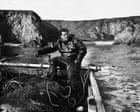
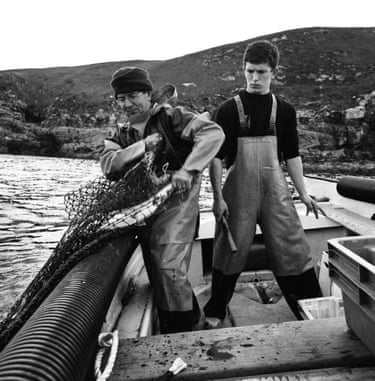
Simon Paterson and his son James fishing bag nets at the Strathy fishing station, Sutherland, 2007
Spanning the last 30 years, Catching the Tide is a lyrical portrayal of salmon net fishing in Scotland. Colin McPherson’s images pay tribute to the skill and courage of the fishers as they face losing their livelihoods and traditional way of life. Catching the Tide: Salmon Net Fishing in Scotland is published by Dewi Lewis. All photographs: Colin McPherson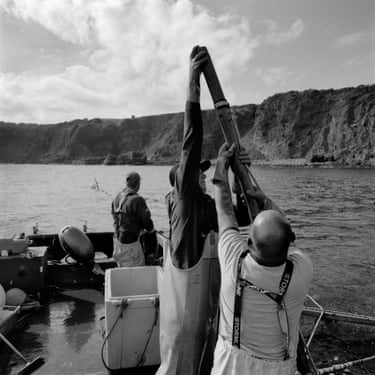
Salmon net fishers harvesting sea trout from a bag net at Boddin Point at the north end of Lunan Bay, Angus, 2025
Colin McPherson introduces us to the people he has met and worked with over three decades as they strive to make a living from a way of life that stretches back many generations and which has all but disappeared from the country’s coastal communities today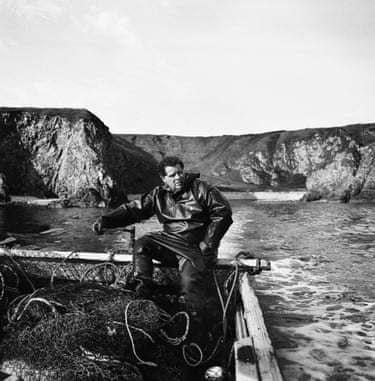
James Mackay setting off in his coble, at Armadale, Sutherland, 2003
Colin McPherson: ‘It was once a thriving industry which employed thousands seasonally around the country’s long and varied coastline, supplying wild Atlantic salmon to customers and clients at home and abroad. For centuries, fishers used traditional methods to intercept the “king of fish” in estuaries, on beaches and in rivers as they returned to native breeding grounds each year’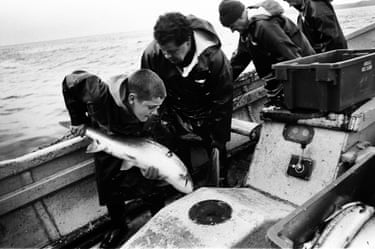
Armadale, Sutherland, 2003
Salmon net fisher James Mackay watching his son Neil putting a newly caught wild Atlantic salmon into a box while fishing one of his bag nets in the sea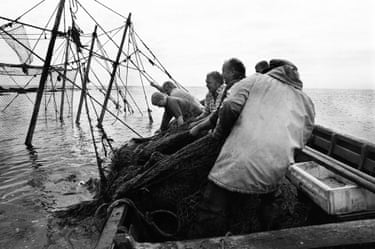
Boddin Point, Angus, 2000
Salmon netters hauling the dirty net aboard a coble, a type of flat-bottomed boat, after the fortnightly change of nets on the fly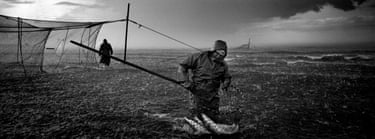
Jim Mitchell (right) and Bob Ritchie fishing a ‘jumper’ net in a hailstorm at Kinnaber, Angus, 2000
The practice of catching salmon and sea trout using traditional nets and traps dates back centuries, and the laws dictating where, when and how the fish can be caught and sold were put in place in the 19th century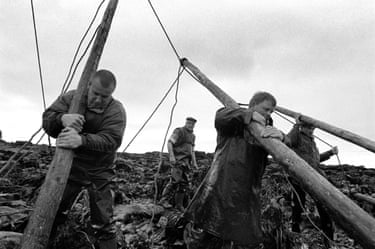
Salmon netters guide stakes into holes on the foreshore at low tide during construction of the fly net on the rocks, Boddin, Angus, 1998
Over the following 100 years, tens of thousands of men (it has always been an almost exclusively male job) made a seasonal living at fishing stations in every coastal community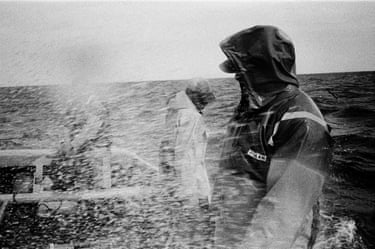
Salmon net fishers crossing Lunan Bay on the way to fishing bag nets at Auchmithie, Angus, 2002
They worked with the flow of the tides and the rhythms of the seasons to supply Scottish salmon to customers in this country and abroad. By the mid-1990s, however, a complex mix of economic and environmental factors meant the industry was in sharp decline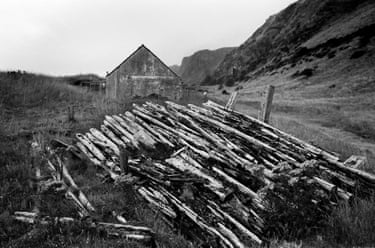
Abandoned equipment at a salmon netting bothy in the dunes at St Cyrus beach, 2021
Equipment which was fished until the 2010s and was formerly owned by Joseph Johnston & Sons, a large salmon company based in nearby Montrose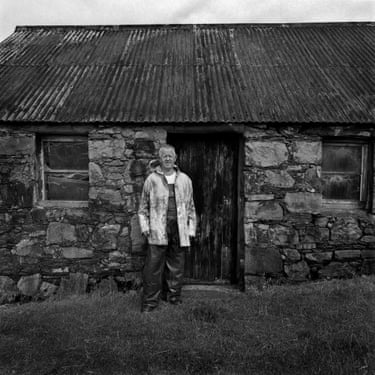
Former salmon net fisherman Sandy MacLachlan standing outside the bothy at the former salmon netting station at Cuil Bay, Lochaber, on the banks of Loch Linnhe in 2022
The station was owned and operated by fisher Sandy MacLachlan until it was closed down in 2018
Salmon net fisher Ian Paterson sitting in his bothy in Melvich, Sutherland, close to the Portskerra fishing station which he owned and operated, 2021
Mr Paterson retired shortly after this photograph was taken and passed away the same year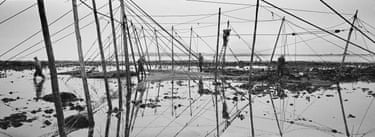
A team of salmon net fishers battle against the incoming tide as they secure poles with ropes on the foreshore during construction of the fly net on the rocks at Boddin, Angus, 2000
McPherson: ‘Netting stations were to be found in villages, towns and even cities on the coast, satisfying a demand for a premium product. It was a way of fishing which was regulated in the early-1900s and remained unchanged for almost 150 years’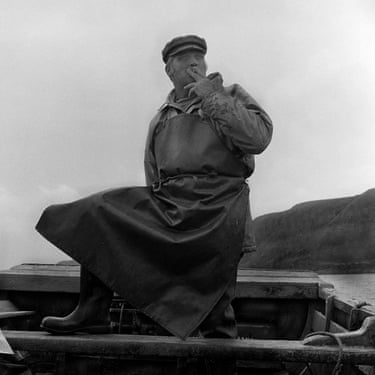
Salmon netter Ian Falconer steers a coble boat on the way to emptying bag nets in the waters off Boddin, Angus, 2000
For McPherson, what started with a few photographs of a stake net being fished on the beach at St Cyrus in Aberdeenshire, has grown into a project which includes around 1,000 edited images, film footage and interviews with fishers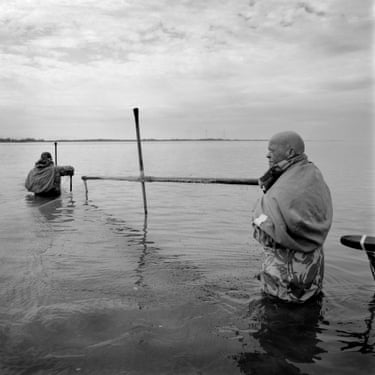
Two salmon net fishers enter the waters of the Solway Firth with their haaf nets at Annan, Dumfries and Galloway on the first day of the fishing season, 2026
By the time McPherson discovered net fishing and began photographing the men at work, the practice was under threat and the industry in sharp decline. By the mid-1990s, salmon businesses and fishing stations were being bought out and closed down to preserve stocks and protect lucrative angling interests. The boom in cheap farmed fish, pollution affecting rivers and climate change have all taken a toll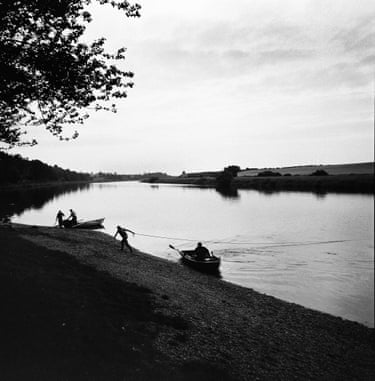
Salmon net fishers working at the Paxton House fishing station on the river Tweed at Paxton, Berwickshire, 2002
The netsmen who continued to work faced restrictions on the times they could fish. In 2016, following scientific advice, the Scottish government placed a moratorium on the catching of wild Atlantic salmon by interceptory nets. This ban, which does not include sea trout, looks set to continue indefinitely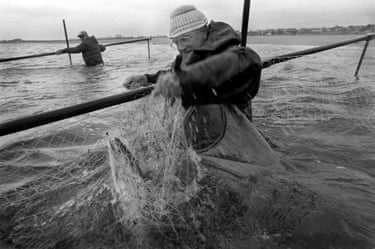
Salmon net fisher Tony Turner working in the waters of the Solway Firth with his haaf net, Annan, Dumfries and Galloway, 2000
Today, only a handful of people still exercise their historic right to fish, including a group of haaf netters on the Solway by the town of Annan. For them, it is a way of preserving a custom and tradition which dates back generations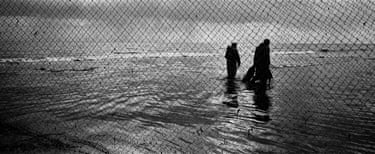
Two salmon net fishers making their way home across the beach after fishing ‘jumper’ nets at Kinnaber, Angus, 2000
For McPherson, the project has been a race against time to document ways of fishing which were once woven into the fabric of coastal life in Scotland and now barely existKioskNews shows a cleaned-up reading view extracted from the publisher’s page — the original always lives on their site, not ours.