AI Godfather Calls Dario Amodei's Mindset 'Medieval', Questions OpenAI exit
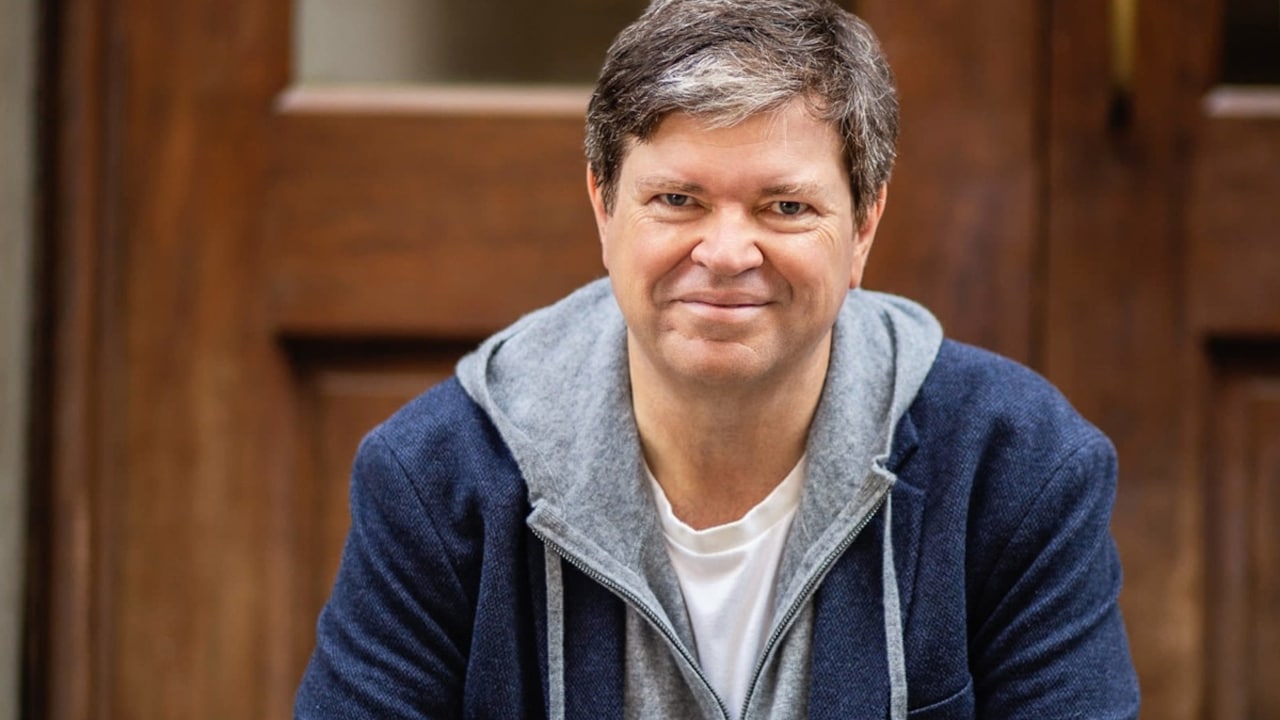
Former Meta AI chief Yann LeCun, who is also known as one of godfathers of AI has publicly thrown punches (metaphorically speaking) at Anthropic co-founder and CEO Dario Amodei
LeCun has accused Anthropic CEO Dario Amodei of exaggerating the dangers of open-weight AI models to keep control of the technology in the hands of a few companies. He says Amodei's position dates back to the GPT-2 era, referring to a pivotal inflection point in artificial intelligence-originally around 2019 when
OpenAI released the model-now widely used as a metaphor for when an AI field transitions from narrow, specialized tools to general-purpose models that work "out of the box" on multiple tasks without task-specific training
LeCun compared Amodei's approach to historical restrictions on printing in the Ottoman Empire, calling it a new form of medieval obscurantism. He invoked the Ottoman Empire's historical restrictions on printing in Arabic script. In 1727, Sultan Ahmed III authorised Ibrahim Muteferrika to establish a printing press using Arabic script in the Ottoman capital.
However, the historical story is more complicated than a simple empire-wide ban. Arabic printing had already taken place in Aleppo in 1706, and historians have questioned some accounts of the alleged earlier prohibitions.
"Dario's spiel since GPT-2 has always been about hyping the dangers so that open models would be made illegal and he would stay in control," he said, while adding, "It's a new form of medieval obscurantism."
Dario's spiel since GPT-2 has always been about hyping the dangers so that open models would be made illegal and *he* would stay in control. He left OpenAI because he wasn't going to have control. It's like the Ottoman Empire banning the printing press for Arabic so they would keep in control of the dogma. It stops the population from freely accessing diverse knowledge. It's a new form of medieval obscurantism.
— Yann LeCun (@ylecun) November 22, 2026
LeCun also alleged that Amodei "left OpenAI because he wasn't going to have control."
The Anthropic CEO left OpenAI at the end of 2020 along with other colleagues and co-founded Anthropic in 2021.
Amodei had said that he and colleagues who eventually became Anthropic's co-founders had developed strong convictions about the scaling of AI models and their implications, including national security risks.
He described the thinking that led to their departure from OpenAI as rooted in the direction and implications of increasingly powerful AI systems.
What is the fight over open-weight AI models?
Most people access AI models such as Anthropic's Claude and OpenAI's ChatGPT through apps or online services. Open-weight models on the other hand allow developers and users to download the underlying model parameters and run them on their own computers or servers. These can be customised, modified and adapted for different purposes. Meta's Llama and China's DeepSeek models are examples of open-weight models.
To be sure, open-weight does not necessarily mean fully open-source. The weights may be available without the training data and code being released.
Why does Dario Amodei want greater caution?
At a US Senate Judiciary Subcommittee hearing on July 25, 2023, Amodei warned that the trajectory of increasingly powerful open models could create serious risks; he's kept warning ever since.
"When a model is released in an uncontrolled manner, there's no ability to do that. It's entirely out of your hands," he had said.
Amodei was referring to the ability of companies operating closed models to monitor usage, revoke access and change what a model is allowed to do.
He also said open-source AI was beneficial in most scientific fields and that the risks from open models available at that time were relatively limited.
In his July 2026 clarification via public statement, Amodei said: "Anthropic has never advocated for a ban on open-weights models."
He described open-weight models without dangerous capabilities as a public good, while arguing that more powerful models could be misused for cyberattacks, biological attacks and other serious threats.
What does research say?
The International AI Safety Report 2026, led by AI researcher Yoshua Bengio, involving more than 100 experts and backed by over 30 countries and international organisations, identifies both benefits and risks of open-weight models.
Its findings:
They encourage research, innovation and competition.
They allow developers to customise models and run them locally.
But their safeguards can be removed more easily.
Once weights are publicly released, they cannot be recalled.
Their use outside monitored environments makes potential misuse harder to prevent and trace.
A particularly useful finding is the capability gap between leading open-weight and closed models has narrowed to less than a year on prominent AI benchmarks.
The UK AI Security Institute has also highlighted the dilemma - open-weight models encourage transparency, research and competition, but can be modified for harmful purposes and have safeguards removed relatively easily.
KioskNews shows a cleaned-up reading view extracted from the publisher’s page — the original always lives on their site, not ours.