‘Travesty to term it state-inflicted death’: India votes against UN death penalty moratorium
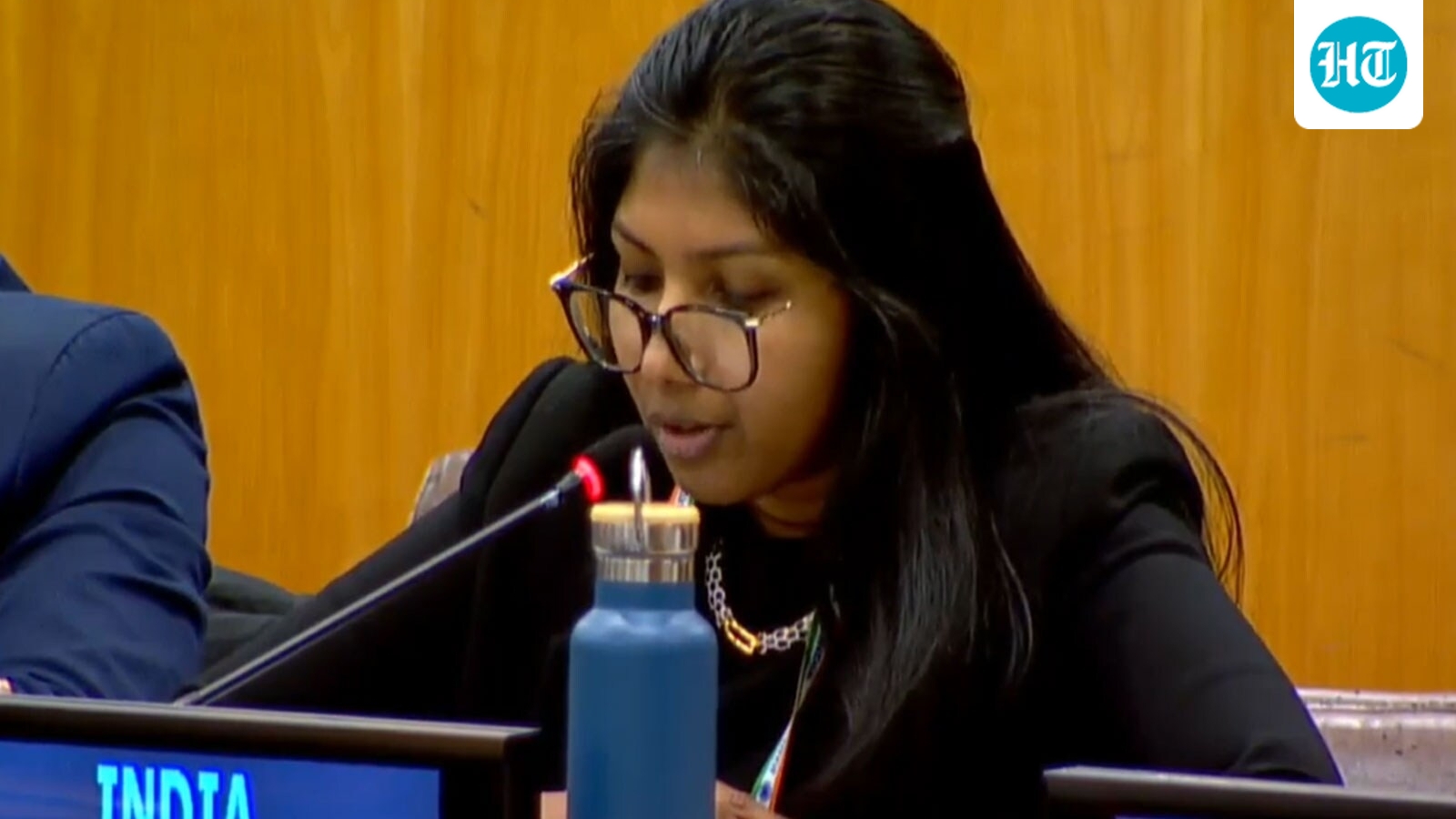
India on Saturday voted against a United Nations General Assembly draft resolution calling for a moratorium on the use of the death penalty, saying there was no international consensus against capital punishment and that every sovereign state had the right to determine its legal system and penalties.
During the same session, at the Third Committee's 43rd plenary meeting of the 81st UN General Assembly, India also weighed in on a separate draft resolution (A/C.3/81/L.37) concerning extrajudicial, summary or arbitrary executions, news agency ANI reported. While India supported the adoption of the resolution overall, it formally disassociated itself from a specific paragraph that equated lawful capital punishment with torture and arbitrary killings.
Bhavika Mangalanandan, an Indian Foreign Service (IFS) officer serving as first secretary at India's Permanent Mission to the United Nations, objected to linking judicially mandated capital punishment with unlawful executions while speaking on the resolution on extrajudicial executions.
"There is no international consensus against capital punishment, and article six of the ICCPR permits its use with restrictions. Capital punishment is meted out after rigorous and due legal process," she was quoted as saying.
"It is therefore a travesty to term it state-inflicted death," Mangalanandan added.
She further objected to the discussion of capital punishment under a resolution or report concerning extrajudicial and arbitrary executions, calling it "disingenuous and mischievous".
"To discuss this topic under a resolution or a report on extrajudicial and arbitrary execution is therefore disingenuous and mischievous, intended to portray personal ideological preferences as settled international law," she said.
At the outset of her remarks on resolution A/C.3/81/L.37, Mangalanandan emphasised that India opposed extrajudicial, summary or arbitrary executions and supported the broader resolution addressing such human rights violations.
"Extrajudicial, summary or arbitrary executions are unlawful and a clear violation of human rights. They deeply affect the families of victims and violate the most fundamental human right, the right to life," she said.
"India therefore supported the adoption of the resolution that calls upon states to eradicate instances of such grave human rights violations," she added.
She clarified that India's objection was specifically directed at Operational Paragraph 6 (OP 6) of the resolution, which refers to a report by the Special Rapporteur presented to the Human Rights Council at its 62nd session and calls on states to take its recommendations into account.
"We strongly disagree with the assertion conveyed in the report of the Special Rapporteur and thereby through the resolution. The death penalty inherently constitutes torture or ill-treatment," Mangalanandan said.
Explaining India's legal position, she noted that capital punishment is a statutory provision in the country and is imposed exclusively in the "rarest of rare" cases.
"In India, the death penalty is a statutory provision exercised exclusively in the rarest of rare cases; a legal framework guarantees multi-tier procedural safeguards, including the presumption of innocence, mandatory confirmation of death sentences by a higher court and extensive mitigation consideration," she said.
"In view of the above, my delegation is constrained to disassociate from OP six of the resolution," she added.
Meanwhile, India's vote against the separate biennial draft resolution on a moratorium on the death penalty (A/C.3/81/L.43) is consistent with its position in previous sessions, including those in 2016, 2018 and 2024.
KioskNews shows a cleaned-up reading view extracted from the publisher’s page — the original always lives on their site, not ours.