Your Social Media Posts Can Help Scammers Target You. Here's How
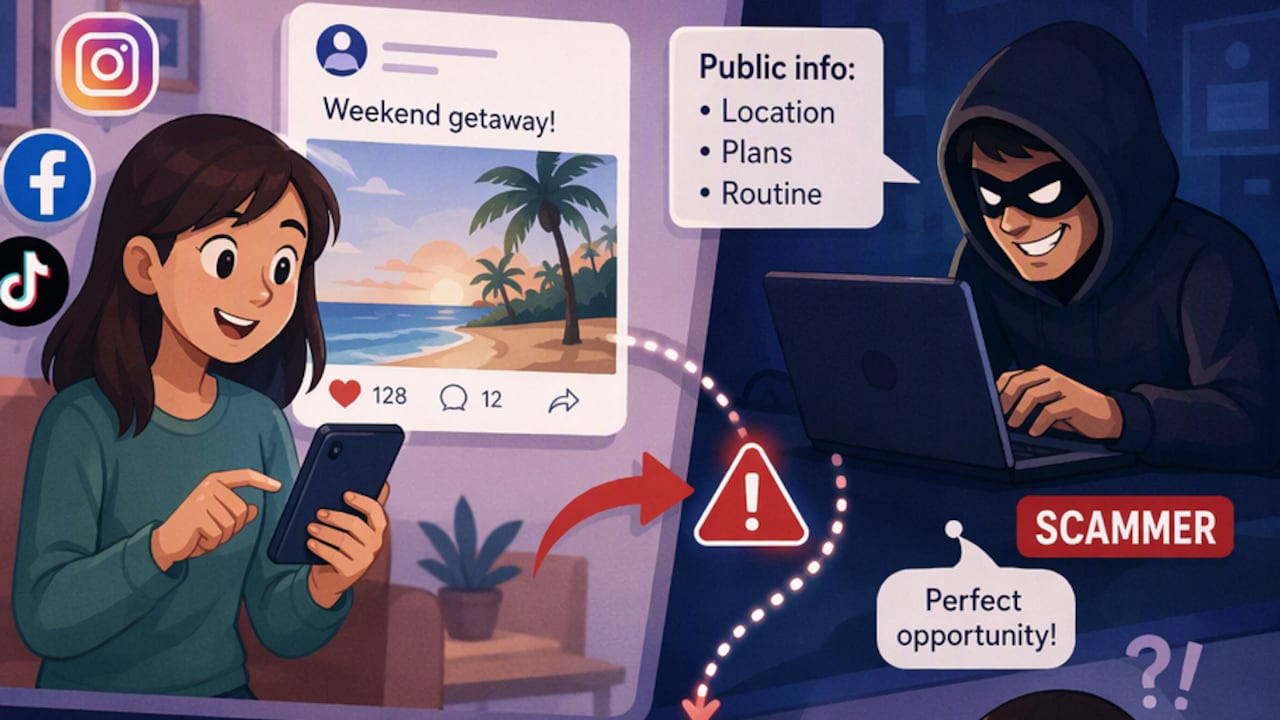
Most scams do not begin with a suspicious phone call or an email asking for money. Sometimes, the groundwork is laid weeks earlier, through social media posts that reveal more about a person than they realise.
A birthday wish, a photograph of a child's first day at school, or a LinkedIn update about a new job may seem harmless. But to a scammer, each post offers a clue. Put together, these details can help criminals build a convincing story, impersonate someone you trust and make a fraudulent request appear genuine.
Sarthak Dubey, Co-founder and COO at Mitigata, told NDTV that information shared online can help scammers understand their targets and make their attacks more believable. As artificial intelligence (AI) makes it easier to imitate voices and identities, the risks are growing.
Also Read | Layoffs Are Rising In Tech, But These Skills Are Helping People Unlock Better Pay
How Your Social Media Posts Can Help Scammers
Your social media profile can reveal details that are useful for identity theft and targeted fraud. Your birthday, school, family members' names and even your pet's name may be publicly available. Some of these details are also commonly used as answers to security questions or as clues to passwords.
Scammers can use this information to impersonate you or someone close to you. For instance, a criminal who knows your child's name, school and recent activities may send a message that appears to come from a family member. The request could involve an emergency, a payment or a demand for personal information.
The danger lies in how believable such messages can sound. The scammer may already know enough about your life to make you lower your guard.
LinkedIn Can Reveal Who Handles Payments At Your Company
The risk extends beyond personal social media accounts. Professional platforms such as LinkedIn can help fraudsters map an organisation and identify employees who may be vulnerable to targeted attacks.
Job titles, reporting relationships, hiring announcements and work-related updates can reveal who handles payments, who approves transactions and who has recently joined a company.
New employees may be particularly vulnerable because they are still learning internal procedures. A scammer could impersonate a senior executive and ask them to process an urgent payment. Alternatively, criminals could target employees responsible for finance or accounts and attempt to trick them into transferring money to a fraudulent bank account.
Even publicly listed work email addresses can help attackers identify potential targets and craft convincing messages.
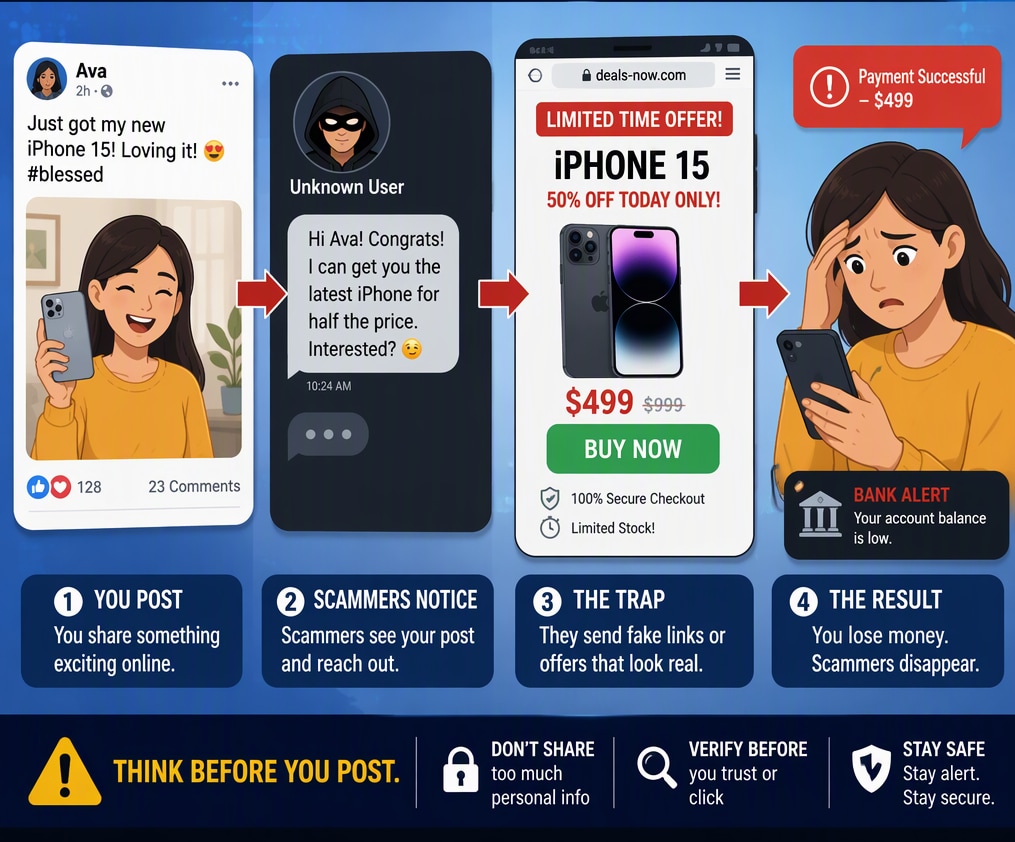
How AI Makes Social Media Scams More Convincing
The information available online can become even more dangerous when combined with stolen passwords and AI tools.
Passwords exposed in old data breaches may continue circulating online. People who reuse the same password across multiple accounts risk giving criminals access to more than one service if one set of credentials is compromised.
AI adds another layer to the problem. A short recording of someone's voice, taken from a public video, interview or social media post, may be enough to create a convincing imitation using voice-cloning technology.
A fraudster could use that imitation to pose as a family member asking for money or as a senior executive instructing an employee to make a payment.
As generative AI tools become easier to access, creating convincing impersonations may require less time, money and technical expertise. This makes it harder to rely on familiarity with a person's voice or writing style as proof of identity.
What Can You Do To Protect Yourself?
Avoiding social media altogether is neither practical nor necessary. The more useful approach is to understand what information is publicly visible and take steps to limit how it can be misused.
Dubey recommends building simple verification habits into everyday life, both at home and at work. Here are some precautions worth following:
- Review your privacy settings: Limit who can see personal details, family photographs, birthdays and other sensitive information on social media.
- Verify urgent requests for money: If someone claiming to be a family member asks for an emergency transfer, call them on their usual number before sending anything. Families can also agree on a private code word to verify unexpected requests.
- Confirm payment instructions separately: At work, verify new payment requests or changes to bank details through a second channel. Use a trusted contact number rather than relying on the contact details provided in the suspicious message.
- Secure important accounts: Use unique passwords and enable multi-factor authentication. An authenticator app or a security key can provide stronger protection than relying on passwords alone.
- Think before posting: Avoid sharing sensitive personal details, travel plans or information that could reveal security answers and workplace responsibilities.
Why Urgency Should Be A Warning Sign
One of the most common tactics used by scammers is to pressure victims into acting quickly. A caller may claim that a family member is in trouble. An email may appear to come from the boss and demand an immediate transfer. The aim is to leave little time for questions or independent checks.
Dubey's broader warning is that scammers do not always need to break into an account to make an attack convincing. Information that people willingly share online can help criminals construct a believable identity and story.
A birthday or a photograph may reveal very little on its own. But when combined with family details, professional connections, leaked passwords or a cloned voice, these fragments can make a fraudulent request seem authentic.
KioskNews shows a cleaned-up reading view extracted from the publisher’s page — the original always lives on their site, not ours.