Arab parties joining government coalition finds 59% Israeli Arab support - University of Haifa poll
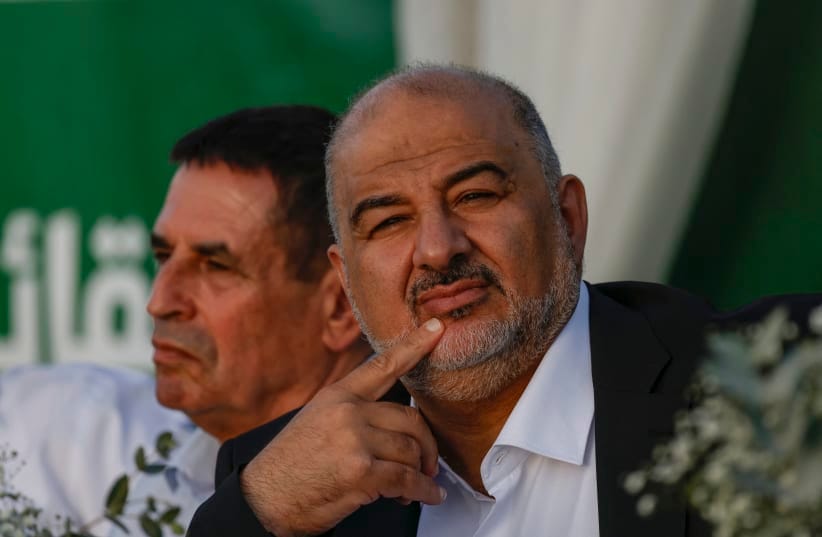
Among voters in the change bloc, 28% support including an Arab party in the government, even when a coalition could be formed without one.
A majority of Arab Israeli citizens support Arab political parties joining a governing coalition, according to a University of Haifa survey conducted ahead of the 26th Knesset elections as part of its Arab-Jewish Relations Index project at the Paris Center for a Shared Society.
The survey found that 59% of Arab respondents support Arab parties participating in a coalition, while 56% of voters in the anti-Netanyahu bloc, also known as the change bloc, support forming a government with an Arab party, at least when no alternative coalition is possible.
The research was conducted among two separate samples: 1,003 Arab citizens interviewed face-to-face and 1,001 Jewish citizens who participated in an online survey. According to the university, the maximum margin of sampling error for each sample was approximately 3.1 percentage points.
Support for Arab parties in government varies among Jewish and Arab voters
Among voters in the change bloc, 28% support including an Arab party in the government even when a coalition could be formed without one. Another 28% support such an arrangement only if no other alternative is available.
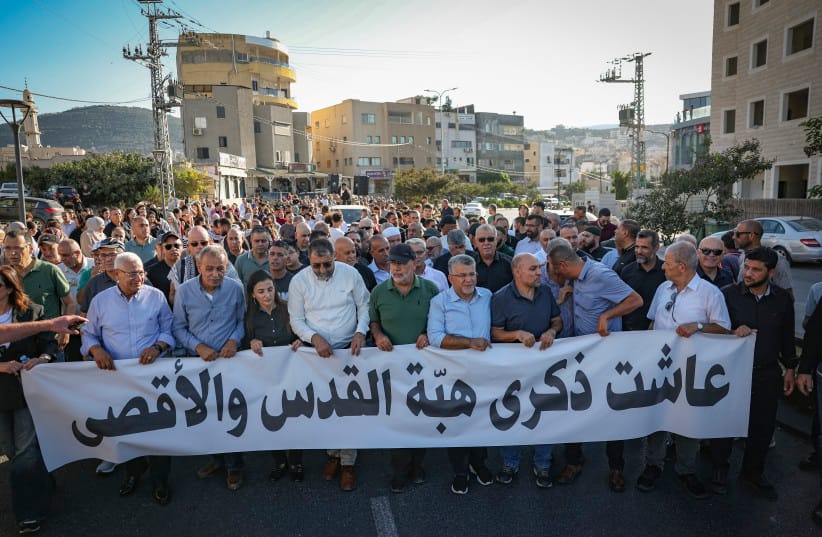
Support is particularly high among Arab voters who back Ra'am (United Arab List), with 76% favoring Arab party participation in a governing coalition.
The survey also examined expectations surrounding the inclusion of an Arab party in government. Among Arab respondents, 67% identified increased funding for Arab municipalities as a key expectation, 64% cited a stronger sense of belonging to the state, and 58% pointed to reducing crime in Arab society.
Jewish respondents express concerns over Israel's Jewish character and national security
The survey revealed significant differences between Jewish and Arab respondents regarding the potential consequences of Arab party participation in government.
Among Arab respondents, 23% believe such participation would change Israel's Jewish character, while 20% expect it to undermine the country's ability to defend itself.
Among Jewish respondents, however, 65% expressed concern that including an Arab party in government could harm Israel's Jewish character, while 60% feared it could weaken the country's defense capabilities.
Despite these concerns, Jewish respondents also expressed positive expectations regarding such a partnership. Some 70% said they hoped it would help reduce crime in Arab society, while 60% hoped it would reduce the risk of Arab citizens becoming involved in terrorist activities.
University of Haifa researchers point to growing political pragmatism among Arab Israelis
Prof. Yuval Feinstein of the University of Haifa's Department of Sociology said that a majority of change bloc voters had already expressed willingness to support a government including an Arab party before the election results became known and coalition negotiations began.
"Among the Arab public, a large majority does not believe that the scenarios raising concerns among Jewish Israelis, such as damage to the state's Jewish character or its ability to defend itself, would materialize as a result of such a partnership," Feinstein said.
"For them, the basis for partnership is the expectation of improved living conditions, personal security, and a stronger sense of belonging to the state," he added.
Prof. Nohad Ali said that Arab Israelis were demonstrating an increasingly pragmatic approach toward their relationship with the Jewish majority and the state.
"The Arab public is highly measured and calculating, and is undergoing processes of growing pragmatism regarding its relations with the Jewish majority and the state," Ali said.
"High proportions of the Arab public express a desire to integrate into various aspects of life in the country," he added.
Arab parties could support change government without coalition agreement, researcher says
Prof. Sammy Smooha said Arab political parties were expected to support the formation of a change government even without a formal coalition agreement.
According to Smooha, if an agreement were reached, the parties would sign coalition guidelines focused on allocating budgets and combating crime in Arab society.
"If an agreement is signed with them, they will sign basic coalition guidelines that include budget allocations and combating crime in Arab society, and will not demand an end to the occupation, the establishment of a Palestinian state, or the transformation of Israel into a binational state," Smooha said.
KioskNews shows a cleaned-up reading view extracted from the publisher’s page — the original always lives on their site, not ours.