You can de-notify protest spaces, not people’s ability to (re)produce them
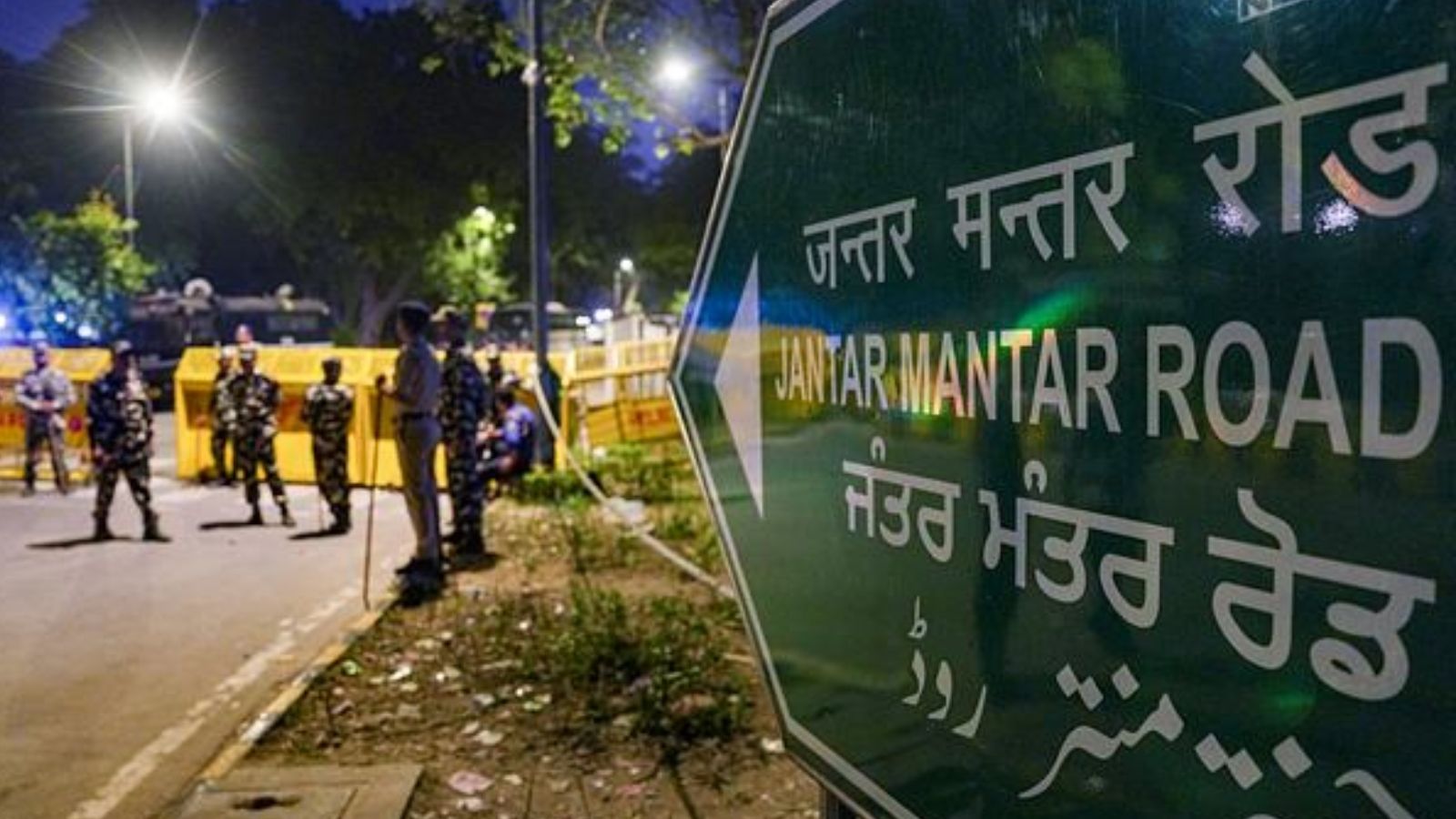
Across political parties, governments have regulated dissent by managing its geography, calibrating the distance between protesters and institutions of power. Underlying this management is an arrogant misunderstanding
The order also revised the standard protocol governing protests, including the procedure for seeking permission, which will be issued separately for each of the three current designated sites. (File photo)
4 min readOct 19, 2026 06:21 AM IST First published on: Oct 19, 2026 at 06:21 AM IST
The Delhi Police’s decision to de-notify Jantar Mantar as a designated protest site is the latest episode in the Indian state’s long history of curbing dissent. Ramlila Maidan, Burari Ground and CBD Ground have been designated as Delhi’s new protest sites. The vocabulary of this move is predictably administrative: Public safety, traffic, and inconvenience to residents.
Against these seemingly innocuous considerations, we must examine how protest spaces are managed and produced. History shows that every time the state attempts to take a space of protest away, people find ways to produce new political spaces. The history of India’s protest spaces reveals their gradual displacement from centres of political power. For decades, Rajpath lawns hosted enormous demonstrations. In October 1988, nearly half a million farmers led by Mahendra Singh Tikait occupied them for days. With tractors, cattle, charpoys and cooking arrangements, they transformed the Republic’s ceremonial landscape into an extraordinary temporary settlement, bringing their everyday life into the state’s monumental core.
KioskNews shows a cleaned-up reading view extracted from the publisher’s page — the original always lives on their site, not ours.