MOTC seeks tighter drug driving laws
MORE EFFICIENT: Drug-impaired riding cases rose from 71 to 580, as on-the-spot saliva testing kits greatly helped the crackdown on drug-impaired driving, the ministry said
By Shelley Shan / Staff reporter


People riding light electric two-wheelers under the influence of drugs would soon face tougher sanctions under an amendment to the Road Traffic Management and Penalty Act (道路交通管理處罰條例) proposed by the Ministry of Transportation and Communications.
The changes aim to address a rise in drug-impaired driving cases and related issues, the ministry said in a report to the legislature’s Transportation Committee.
The stricter penalties include confiscating the vehicle and license plate of light electric two-wheeler riders if they refuse to stop for inspection or undergo a drug test, the ministry said.
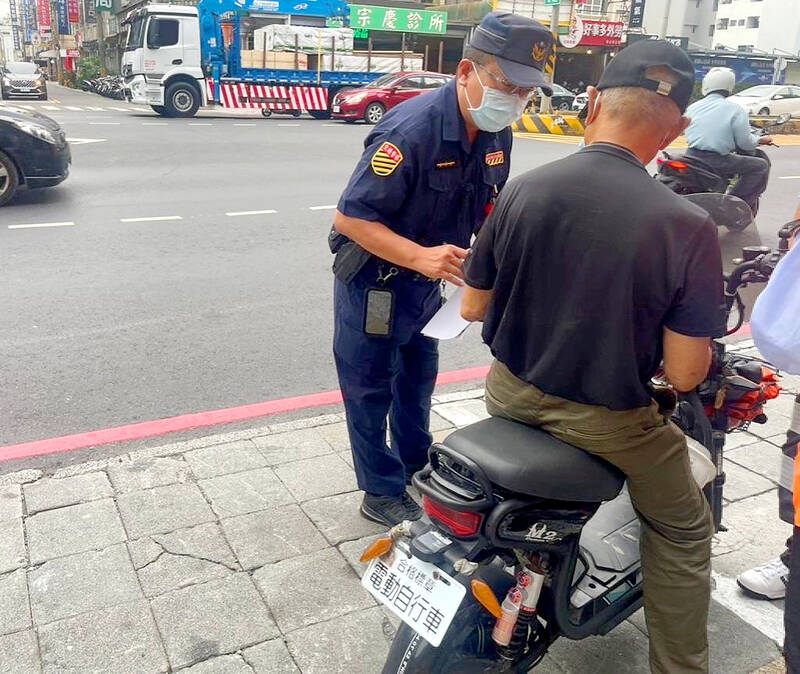
A rider of a light electric two-wheeler is pulled over by a police officer by a road in Kaohsiung on Nov. 3, 2024.
Photo: Huang Liang-chieh, Taipei Times
Drunk-driving cases involving light electric two-wheelers increased by 270 in the first nine months of the year, up 17 percent from the same period last year, it said.
Drug-impaired riding cases surged from 71 to 580, with the number of riders who refused to undergo drug tests also rising by 334, the ministry said, citing data collected by the National Police Agency.
Drug-impaired cases involving light electric two-wheelers have increased significantly since on-the-spot saliva drug screening kits became available last year, greatly enhancing efficiency in cracking down on drug-impaired riders, it said.
The ministry plans to submit the proposal to the Executive Yuan for further review next month, it said.
The police agency said the notification period to claim confiscated vehicles would be shortened from three months to one month, which would take effect on Saturday.
Some owners of confiscated vehicles failed to claim them before the notification period ended, while others had no intention of taking them back, it said.
This has affected the efficiency of vehicle impound lots, limited their capacity and increased their management and maintenance costs, it added.
KioskNews shows a cleaned-up reading view extracted from the publisher’s page — the original always lives on their site, not ours.