Mixing caffeinated drinks to stay alert? CASE warns youth about excessive caffeine intake
SINGAPORE – Teens who drink matcha or coffee should avoid mixing these with energy drinks, warned Singapore’s consumer watchdog on Sept 22, after its tests found that such concoctions could have excessive caffeine levels.
Tests by the Consumers Association of Singapore (CASE) of six combinations of common caffeinated drinks found that all of them went over the daily recommended limit for those aged 12 to 18.
Two of them which mixed two energy drinks with espresso contained “substantially higher” levels of caffeine, CASE said.
The highest caffeine level of 282.1mg per 350g serving was found in a mixture of energy drinks Monster and Red Bull, and espresso.
This is nearly triple the recommended maximum daily caffeine amount for adolescents, and equivalent to about three cups of brewed coffee.
The other four combinations, which included a single energy beverage, contained between 100.45mg and 106.4mg of caffeine per 350g serving.
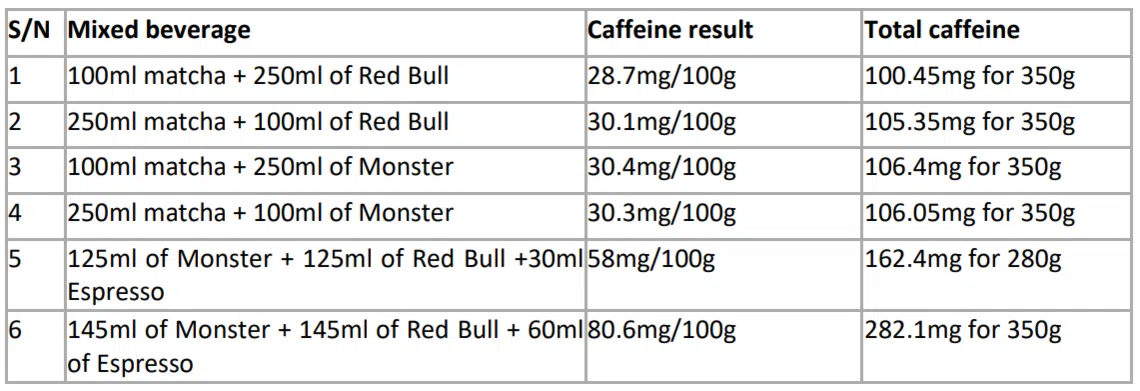
Tests by the Consumers Association of Singapore mixed common caffeinated drinks like matcha, energy drinks, and espresso.
PHOTO: CONSUMERS ASSOCIATION OF SINGAPORE
CASE warned that consuming high levels of caffeine may lead to symptoms such as headaches, rapid heart rate, anxiety, tremors and insomnia.
There is currently no internationally recognised guidance on daily caffeine intake, although the Health Promotion Board advises healthy adults to consume only up to 400mg of caffeine per day.
For those aged 12 to 18, the recommended limit is 100mg daily, according to the American Academy of Pediatrics.
It is not recommended for children under the age of 12 to consume caffeine, even in minimal amounts, according to the KK Women’s and Children’s Hospital’s website.
In a statement on Sept 22, CASE said the tests were done to provide consumers with objective information on caffeine levels in commonly mixed caffeinated drink combinations.
It is also hoping to raise consumer awareness of the risk of unintentionally consuming excessive amounts of caffeine.
This comes after local media reports of such actions raised concerns that young consumers may not fully realise how quickly caffeine intake can add up when different drinks are combined.
CASE president Melvin Yong said youth may turn to caffeinated drinks to stay alert as the exam period approaches.
“We urge youth and parents to be mindful of total caffeine intake and to avoid mixing multiple sources of caffeine in a single drink,” he said.
He advised consumers to check caffeine labels where available, monitor their daily caffeine intake, and seek medical advice if they experience persistent discomfort or sleep-related issues after consuming caffeinated drinks.
In September 2025, Yong, who is also the MP for Radin Mas SMC, had asked in Parliament if the Ministry of Health was studying overseas measures to restrict the sale of high-caffeine energy drinks to youth, and whether there had been studies done on the impact of such drinks on youth here.
The ministry replied that there were no local studies being conducted at the time.
In July, the British government said it would ban the sale of high-caffeine energy drinks to under-16s in England from April 2027 to protect children’s health and well-being.
KioskNews shows a cleaned-up reading view extracted from the publisher’s page — the original always lives on their site, not ours.