The 10 Most Perfect Neo-Noir Movies, Ranked


Andrea M. Ciriaco is a long-time script reader and former entertainment editor who specializes in classic movies and Hollywood history. She was a student film critic at Kent State University for three years and worked at Warner Bros Studio in Burbank and The Safran Company for several years. Based on her vast taste and range of knowledge, many consider Andrea to be a walking IMDb who knows dozens of underrated movies and is a vital assesst to any trivia night. While movies are her expertise, Andrea is also a diehard fan of iconic shows including The Sopranos, Boardwalk Empire, Rod Serling's The Twilight Zone, Will & Grace and South Park. Some of her favorite filmmakers are Walt Disney,John Huston, Fritz Lang, Alfred Hitchcock, John Ford, Mel Brooks, Quentin Tarantino, Martin Scorsese and Howard Hawks.
Sign in to your Collider account
Towards the end of the 1950s, classic film noir had started to fade from the silver screen, but the genre didn't die—it simply evolved. Filmmakers such as William Friedkin, Martin Scorsese, and David Lynch took the cynical DNA of classic film noir and fused it with graphic realism, modern paranoia, and psychological depth, essentially creating what is now known as neo-noir. Whether exploring corporate corruption in broad daylight, suburban nightmare landscapes, or cold-blooded underworlds, the neo-noir genre captures audiences' deepest anxieties about power, fate, and human flaw.
But what separates a good crime thriller from a true neo-noir masterpiece? It comes down to atmosphere, moral ambiguity, and an uncompromising fatalism. In this list, we break down ten essential films that perfected the subgenre, analyzing the cinematic mechanics, character dynamics, and thematic brilliance that make each one an undisputed classic. From the 1967 essential noir, Point Blank, to the Academy Award-winning neo-noir, Chinatown, these are the ten most perfect neo-noir movies of all time, ranked!
10 'Point Blank' (1967)

John Boorman’s Point Blank is a radical, stylistic landmark that brought European avant-garde visual techniques into the American crime picture, laying crucial groundwork for neo-noir. Adapted from the 1962 novel The Hunter, written by Donald E. Westlake, Lee Marvin stars as Walker, a cold, relentless criminal who is double-crossed and left for dead on Alcatraz Island by his partner (John Vernon), but with the help of a mysterious man (Keenan Wynn), Walker resurfaces in Los Angeles, where he hunts down those who betrayed him to retrieve his stolen cut of the money.
Point Blank achieves neo-noir perfection through its fragmented, dreamlike execution and Marvin's underrated performance. Boorman utilizes sharp jump cuts, rhythmic footstep sound design, and stylized color palettes that directly reflect Walker’s detached psychological state. Instead of battling low-level thugs, Point Blank flips the script for its protagonist, who discovers that modern organized crime has morphed into a corporate syndicate where no single executive takes responsibility for the money. Point Blank strips away traditional melodrama in favor of existential abstraction, transforming a straightforward revenge storyline into an unforgettable meditation on memory and isolation.
9 'Cape Fear' (1962)

Cape Fear is an edgy adaptation of John D. MacDonald's 1957 novel, The Executioners, that served as a crucial cinematic bridge between traditional 1940s film noir and the emergent neo-noir movement of the 1960s, making it one of the most significant and influential neo-noir movies of all time. Directed by J. Lee Thompson, the story pits a law-abiding defense attorney, Sam Bowden (Gregory Peck), against Max Cady (Robert Mitchum), a vengeful ex-convict who methodically terrorizes Bowden’s family after serving eight years in prison due to Bowden's trial testimony.
Cape Fear earns its place in neo-noir perfection by pushing the boundaries of psychological terror and moral degradation. Mitchum’s performance as the charmingly menacing Cady fuels an intense tone of unpredictability, proving that the real monsters of the world are often walking among us. Cape Fear subverts classical heroic archetypes by forcing an upright, rule-following citizen to embrace lawless vigilante tactics to protect his loved ones, signaling a permanent shift toward the darker, morally ambiguous territory that defines neo-noir.
8 'Body Heat' (1981)
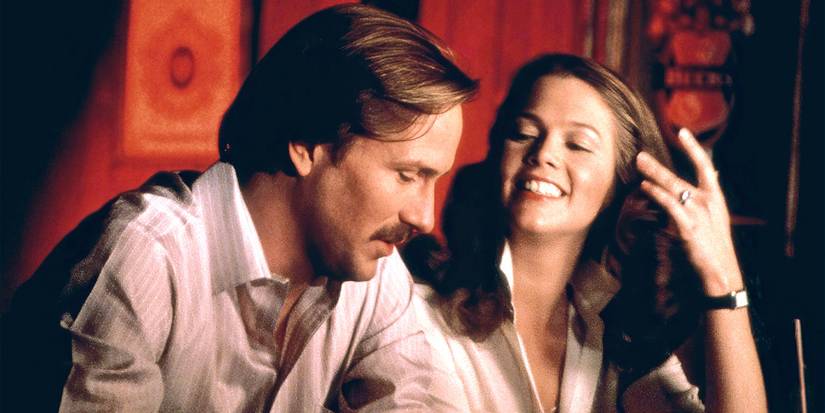
Lawrence Kasdan's Body Heat is an erotic neo-noir that pays brilliant homage to 1940s classics, specifically Billy Wilder's Double Indemnity starring Fred MacMurray and Barbara Stanwyck, while modernizing the genre with sex appeal, moral cynicism, and atmospheric intensity. Set during a suffocating Florida heatwave, the story follows Ned Racine (William Hurt), a small-town lawyer and bachelor who is manipulated by the captivating, ruthlessly cunning Matty Walker (Kathleen Turner) into murdering her wealthy husband for his fortune.
Body Heat is one of the decade's greatest neo-noirs that represent perfection through its extraordinary atmospheric integration as well as Turner's defining performance, which, today, stands as one of the most formidable femme fatales in cinema. The sweltering, sweat-soaked heatwave functions as a physical manifestation of the characters' uncontrollable lust and rapid moral downfall that is essential to any great noir movie. Kasdan’s sharp, double-crossing script keeps viewers guessing until the final moment, proving that traditional noir fatalism and tragic ruin are timeless themes.
7 'The Conversation' (1974)

Francis Ford Coppola’s neo-noir mystery thriller The Conversation is a masterclass in paranoid neo-noir, replacing classic street-level detective work with the cold, isolated realm of high-tech wiretapping. Gene Hackman delivers a brilliantly restrained performance as Harry Caul, an obsessively secretive surveillance expert who records a vague interaction between a young couple in a noisy San Francisco park. As he repeatedly cleans up and analyzes the audio track, he becomes convinced he has uncovered a murder plot.
The film uses sound as its primary visual and dramatic engine, making The Conversation one of the boldest and most perfect neo-noir movies to date. Sound designer Walter Murch turns static, tape hiss, and isolated audio clips into vital clues, making the viewer just as obsessively paranoid as Caul himself. Coppola’s direction emphasizes profound alienation, employing long lenses, distant pan shots, and muted colors. The Conversation was a major success and went on to earn three Oscar nominations, including Best Sound, Best Original Screenplay, and Best Picture.
6 'Pulp Fiction' (1994)
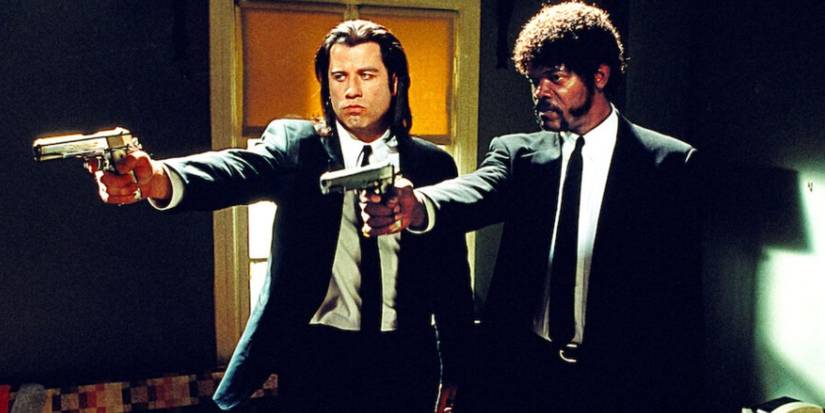
Quentin Tarantino’s cinematic masterpiece Pulp Fiction revitalized the neo-noir genre for modern audiences by taking familiar dime-novel tropes and reconstructing them into a brilliantly original, non-linear narrative structure. Instead of focusing on a single detective, the story centers around an interconnected cast of Los Angeles criminals, including two hitmen, Vincent Vega (John Travolta) and Jules Winnfield (Samuel L. Jackson), a mob boss's dangerous wife (Uma Thurman), a prizefighter (Bruce Willis) who refuses to throw a match, and a couple (Tim Roth/Amanda Plummer) attempting a diner robbery.
Pulp Fiction stands as a neo-noir milestone due to its audacious tonal shifts and iconic, conversational dialogue. This contrast between everyday banter and sudden, explosive violence fundamentally redefined cinematic tension. Visually, the film fuses retro aesthetics, surf music, vintage vinyl, and diners with crisp contemporary clarity that has since become a Tarantino trademark. Pulp Fiction was both a critical and commercial success and went on to earn seven Academy Award nominations, including Best Picture and Best Actor, ultimately winning for Best Original Screenplay.
Collider Exclusive · Villain Personality Quiz Which Criminal Mastermind Would Be Your Nemesis? Lecter · Joker · Moriarty · Chigurh
Four of the finest criminal minds ever put on screen. One of them would look at you and see something worth their time. Eight questions decide which one comes for you, why they picked you, and what they would want when they arrived.
🍷Lecter
🃏Joker
♟️Moriarty
🪙Chigurh
01
What would a criminal mastermind notice about you first? Great villains choose their opponents carefully. Something about you got their attention.
02
How do they make first contact? The introduction tells you everything about what is coming next.
03
What do you actually believe about right and wrong? Every nemesis is really an argument about the thing you believe most.
04
What finally gets under your skin? Everybody has a pressure point. Finding yours is the whole plan.
05
They have made their move. How do you fight back? This is the part of the film where the audience finds out who you are.
06
What would they use against you? A good villain never brings a weapon you have not already handed them.
07
What do they actually want from you? The money is never the point. Something else always is.
08
How does it end between the two of you? Eight questions in, this is the one that decides who comes for you.
The Case File Is Complete Your Nemesis Is…
Four criminal masterminds. One of them was always going to be yours. Here is who comes for you, why they picked you out of everyone available, and what they want from the encounter.
Hannibal Lecter
Your nemesis does not want to beat you. He wants to know you completely, and he is patient enough to wait for it. The frightening part is how good the conversation is.
- Lecter is the most dangerous kind of opponent: the one who finds you interesting. He never raises his voice, because he has never needed to.
- You keep a great deal to yourself and you are careful about what you show. That reserve is exactly the door he would knock on.
- The films understood something other thrillers missed. The horror is not the violence. It is being perfectly understood by the wrong person.
- He would be unfailingly polite about all of it. That is the worst part.
The Joker
Your nemesis is not after money, territory or revenge. He is after a demonstration, and you are the person he has chosen to prove his point on.
- The Joker only picks opponents who believe in something. Your decency is not a defence against him. It is the entire reason he showed up.
- He has no plan you can predict and nothing you can take away, which removes every tool you would normally reach for.
- His whole argument is that you are one bad day away from being him, and you would spend the rest of your life proving him wrong.
- He would call it a magic trick. You would call it the worst night of your life.
Moriarty
Your nemesis respects you, which sounds flattering until you work out what it means. He chose you because nobody else was worth his time.
- Moriarty is the original criminal mastermind, the template every later one borrows from: a mind the equal of the hero's, pointed the wrong way.
- You enjoy being the cleverest person in the room. He is counting on exactly that, and he has already built the room.
- This is the rare nemesis who would be genuinely disappointed if you lost badly. He needs the game to be worth playing.
- It ends the way these things always end. Two people, one problem, and only one way down.
Anton Chigurh
Your nemesis has no personal interest in you whatsoever, and that is precisely what makes him unsurvivable. You are not a rival. You are a stop on the way.
- Chigurh does not negotiate, gloat or explain. He arrives, he asks one question, and the answer was decided long before you opened your mouth.
- You trust yourself to handle things. He is the one problem in the world that has no interest in how capable you are.
- No Country for Old Men rewrote the screen villain by removing the thing audiences quietly rely on: the sense that talking might work.
- Call it. He will wait.
5 'Blue Velvet' (1986)


David Lynch’s Blue Velvet brought an unsettling, surrealist dimension to neo-noir, proving that dark criminal underbellies exist not just in metropolitan alleyways, but right beneath the surface of small-town American suburbia. The film opens with idyllic images of white picket fences and red roses in Lumberton, North Carolina, before a college student, Jeffrey Beaumont (Kyle MacLachlan), discovers a severed human ear in a field, dragging him into an underground world where he becomes obsessed with a mysterious lounge singer, Dorothy Vallens (Isabella Rossellini).
Blue Velvet is a neo-noir masterpiece because it takes foundational noir elements and translates them into a subconscious nightmare. Frederick Elmes’ striking cinematography contrasts vibrant suburban colors with oppressive darkness while the immersive sound design amplifies mechanical hums to heighten anxiety. Lynch recognizes that the ultimate darkness noir explores is not merely localized to corrupt police departments or organized crime networks, but lives within the voyeuristic curiosities and hidden desires of the human heart, making Blue Velvet one of the most perfect entries in the neo-noir genre.
4 'The French Connection' (1971)
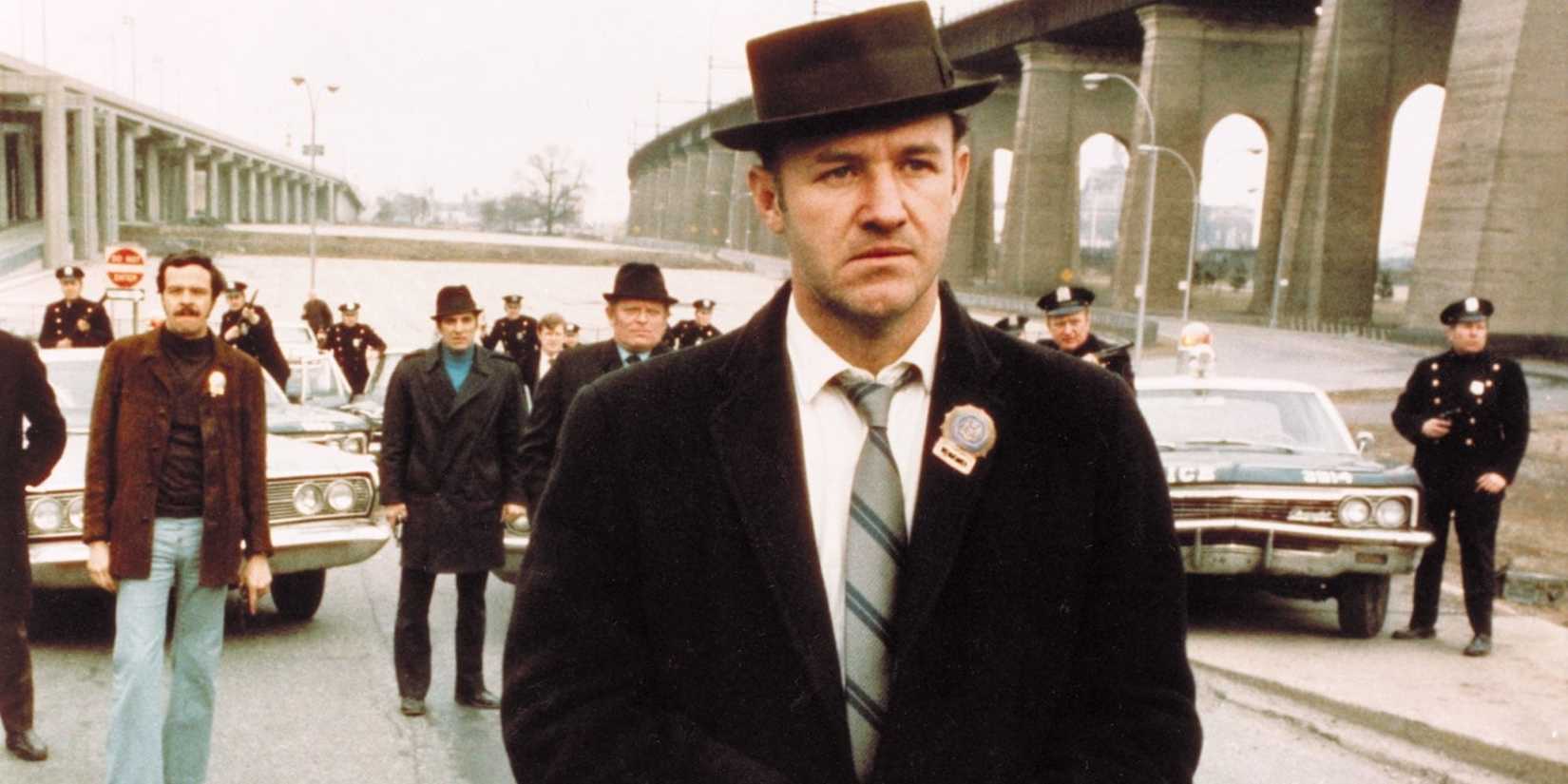
William Friedkin’s The French Connection achieved neo-noir perfection by removing Hollywood polish and replacing it with raw, documentary-style realism, and is credited as one of the greatest neo-noir movies of all time. Transporting classic crime tropes to the freezing, bleak streets of early 1970s New York, the film follows narcotics detectives Jimmy "Popeye" Doyle (Gene Hackman) and Buddy Russo (Roy Scheider) as they attempt to stop a major drug deal and dismantle an international heroin smuggling ring. Out of its eight Academy Award nominations, The French Connection won five Oscars, including Best Picture, Best Director, and Best Actor for Hackman.
The film excels as a neo-noir through its relentless momentum and total refusal to moralize its characters. Hackman’s Doyle is far from a traditional heroic officer; he is abrasive, obsessive, prejudiced, and violently impulsive while his target is surprisingly polite and sophisticated. Friedkin eschews studio lighting and clean choreography in favor of handheld camerawork, naturalistic sound, and chaotic street framing, culminating in one of the most thrilling car chases in cinematic history. Ultimately, The French Connection captures noir’s fundamental obsession with obsession itself, demonstrating how the relentless pursuit of justice can systematically degrade a lawman’s sense of humanity until he becomes as dangerous as the criminals he slaps the cuffs on.
3 'L.A. Confidential' (1997)

Curtis Hanson’s adaptation of James Ellroy's best-selling novel L.A. Confidential is a brilliant neo-noir that relentlessly dismantles the idealized mythology of post-war Los Angeles. Set in 1953 in Los Angeles, the film achieves neo-noir perfection by interweaving the arcs of three distinct LAPD officers: the violent enforcer Bud White (Russell Crowe), the politically ambitious rule-follower Ed Exley (Guy Pearce), and the media-obsessed celebrity cop Jack Vincennes (Kevin Spacey), who, while investigating a recent multiple homicide, begin to uncover deep-seated corruption within their own department.
Hanson directs L.A. Confidential with remarkable precision, managing a vast web of subplots without ever sacrificing narrative momentum or the authentic atmosphere, resulting in one of the most definitive neo-noirs in cinema history. Dante Spinotti’s slick cinematography emphasizes glossy facades hiding rotten interiors, while Kim Basinger’s Oscar-winning performance subverts the traditional femme fatale archetype into an unexpected redeemable figure. L.A. Confidential succeeds because it honors the lush aesthetics of classic film noir while aggressively dissecting the moral hypocrisy of mid-century American culture.
2 'Taxi Driver' (1976)
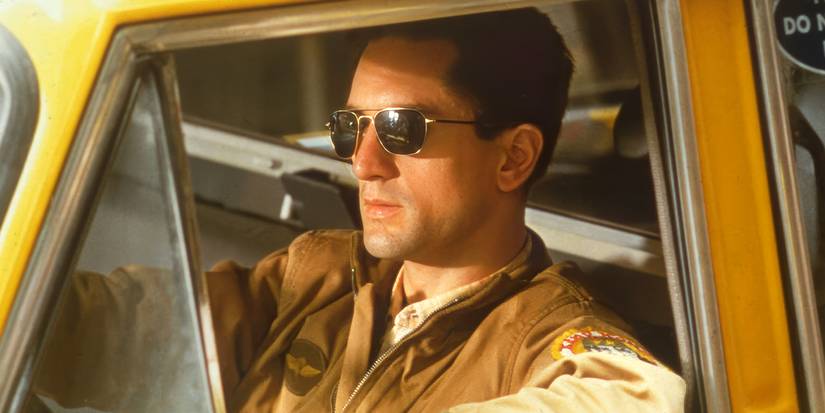
Martin Scorsese’s Oscar-nominated neo-noir Taxi Driver reinterprets noir’s classic urban alienation through a deeply psychological lens, transforming 1970s New York City into a nocturnal, neon-lit purgatory, essentially transcending and redefining the traditional tropes of the neo-noir genre. Robert De Niro stars as Travis Bickle, a lonely, insomniac Vietnam veteran whose job as a nighttime cab driver takes a toll on his fragile mental state, causing him to become increasingly unhinged by the moral decay surrounding him.
Taxi Driver represents neo-noir perfection through its masterful, subjective audiovisual design and was one of the first films to address the psychological trauma and aftermath that many veterans faced while reintegrating back into a society they no longer recognized. Scorsese utilizes slow-motion imagery, steaming sewer grates, and distorted neon reflections to make the city feel like an inescapable fever dream. Rather than following a standard detective plot, the central mystery here is the human psyche itself. Taxi Driver exposes the paper-thin boundary between a hero and a monster, leaving viewers thoroughly haunted by its ambiguous climax.
1 'Chinatown' (1974)
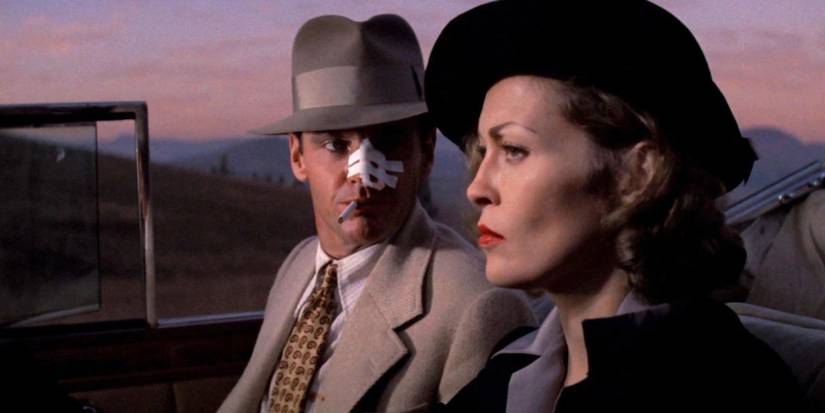
The 1974 neo-noir classic Chinatown is a love letter to classic film noir and stands as the quintessential standard for neo-noir perfection. Set in 1937 in Los Angeles, Jack Nicholson stars as a private investigator, J.J. "Jake" Gittes, who initially takes on what he believes to be an average case of infidelity, only to find himself entangled in a web of corruption, greed, and murder. As Gittes follows the clues, the trail leads him back to a mysterious woman, Evelyn Mulwray (Faye Dunaway) and her wealthy father, Noah Cross (John Huston). Chinatown earned eleven Academy Award nominations, including Best Picture and Best Actor, and went on to win Best Original Screenplay for Robert Towne.
Chinatown achieves genre perfection by subverting classic noir aesthetics and narrative expectations, solidifying it as one of the best neo-noirs in film history. Instead of traditional expressionistic shadows, director Roman Polanski drenches the frame in blinding California sunlight, proving that profound institutional rot thrives in plain sight. By locking the camera almost exclusively to Gittes’s perspective, the audience experiences his gradual, disorienting realization of helplessness in real time. The film’s devastating ending discards classical Hollywood justice, demonstrating that in a truly corrupt world, good intentions often lead directly to tragedy.
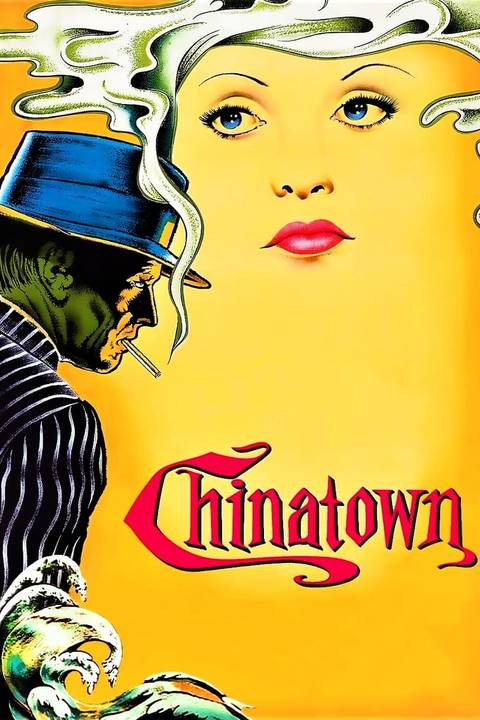
Chinatown
- Release Date
- June 20, 1974
- Runtime
- 130 minutes
- Director
- Roman Polanski
- Writers
- Robert Towne
KioskNews shows a cleaned-up reading view extracted from the publisher’s page — the original always lives on their site, not ours.