India probes website blocks based on forged court orders; police seek logs
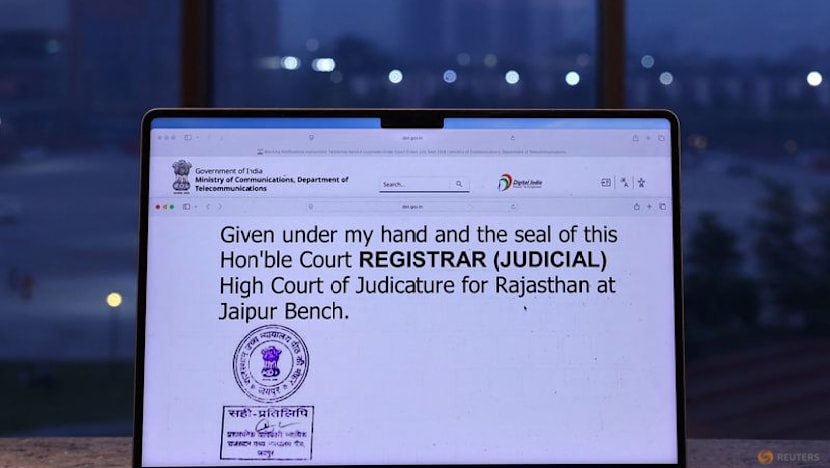
BENGALURU, Nov 12 : India has launched an inquiry into how telecoms officials blocked websites based on forged court orders disclosed by Reuters, while police have sought ministry records as part of a criminal investigation, officials said on Thursday.
An arm of the telecoms ministry this year directed internet providers to block 129 illegal betting websites, but Reuters revealed on Wednesday that the directives were based on forged orders issued in the names of two state high courts and emailed to officials by alleged fraudsters posing as lawyers.
The findings have raised questions about safeguards in India's content-takedown system and prompted concerns that legitimate websites could be blocked using falsified court documents.
The telecoms ministry's inquiry will review its procedures and consider additional checks before officials act on court orders seeking website takedowns, a government official with direct knowledge of the matter said.
"It's serious ... Maybe in future some genuine websites may also be blocked in the same manner," the official said.
The official, who spoke on condition of anonymity, said the ministry was trying to identify those behind the email addresses used to send the forged orders, which were issued in the names of the Rajasthan and Allahabad high courts.
The ministry plans to revoke the blocking directives issued on the basis of the forged orders and remove related documents from its website, the official added.
As of Thursday, correspondence with the alleged fraudsters and copies of the forged orders remained available online.
The telecoms ministry did not respond to queries. Reuters is first to report details of the government's response.
CRIMINAL INVESTIGATION
The case comes amid growing concern over fake and AI-generated legal material. India's Supreme Court in July struck down a tribunal ruling that relied on non-existent judgments, while a US judge in June disqualified lawyers over fabricated legal citations.
Police opened a criminal investigation after checks by the Allahabad High Court found that one of the purported orders in its name cited by the ministry had not been issued by the court, according to police documents reviewed by Reuters.
The document contained a fabricated court logo and seal, as well as a fake QR code, Reuters reported on Wednesday.
Ghanshyam Yadav, a cybercrime official in Uttar Pradesh, said police had asked the telecoms ministry for details of its content management system and digital logs to understand how it processed the forged orders and help identify those responsible.
The ministry's response would help determine the next steps in the investigation, he said, adding that police had sent 24 questions to the ministry.
Since the Reuters report, politicians and activists have called for stronger verification of court orders before website takedowns are enforced.
"(Why did the) ministry not even bother to verify the so-called court order ... Beyond scary," Saket Gokhale, an opposition politician, wrote on X.
KioskNews shows a cleaned-up reading view extracted from the publisher’s page — the original always lives on their site, not ours.