52% of Hong Kong’s underprivileged children spend over 2 hours a day on devices
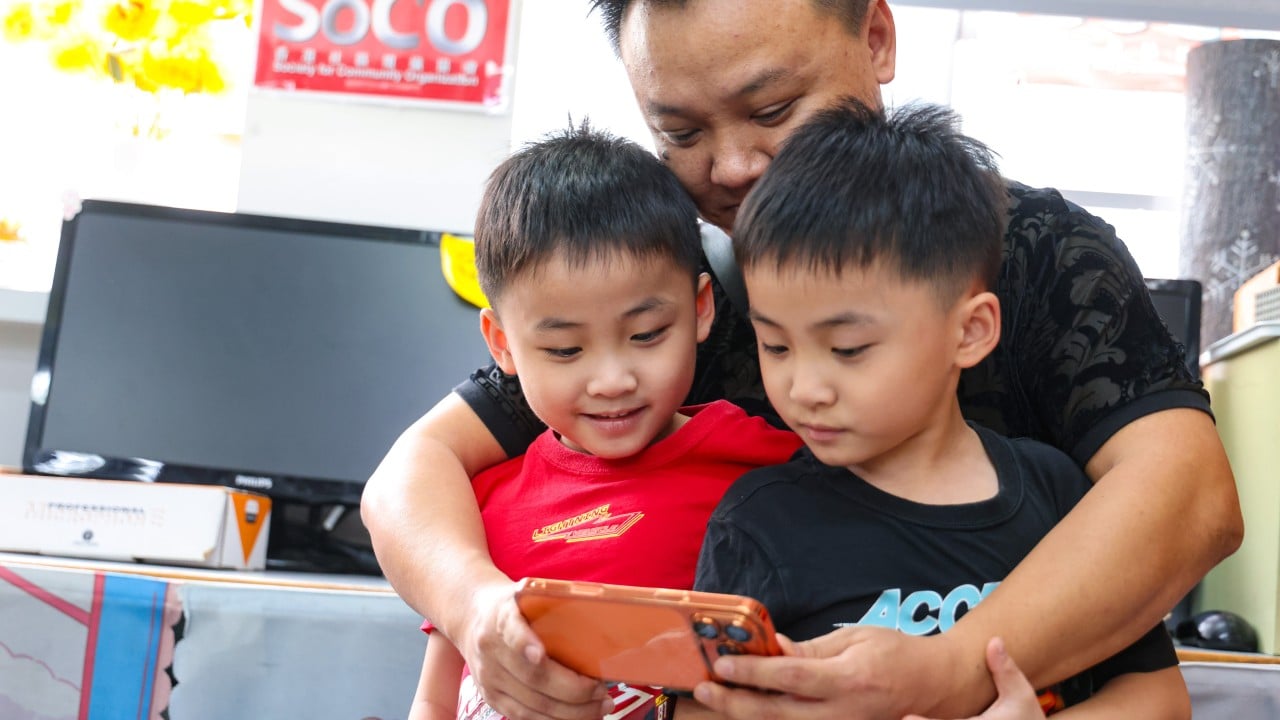
More than half of Hong Kong’s underprivileged children spend more than two hours a day on electronic devices, many of them turning to screens as cheap entertainment despite problems with their eyesight, attention, sleep and addiction, a survey by a community group has found.
The Society for Community Organisation (SoCO), which released the findings on Sunday, urged authorities to keep students on campus for longer, introduce full-day kindergartens and subsidise more extracurricular activities for underprivileged pupils.
Wong Chi-yuen, assistant director of SoCO, said 52 per cent of children spent more than two hours a day on devices, a high proportion, and that their screen time far exceeded the government’s guidelines for six- to 12-year-olds.
“What worries us most is that the damage has already been done. More than half of the children have vision problems and four out of five in our focus groups are short-sighted. Nearly 30 per cent admit they are addicted and many suffer from poor sleep and concentration,” he said.
In guidance last updated in 2018, the Department of Health recommended that children under two avoid screens altogether apart from video calls under parental supervision, that two- to five-year-olds be limited to less than an hour a day, and that six- to 12-year-olds spend less than two hours a day in front of a screen.
The survey covered 254 children from underprivileged families, about two-thirds of them aged six to 11 and the rest 12 to 18. Nearly 60 per cent of their families had a monthly income of between HK$10,000 and HK$20,000 (US$1,275 and US$2,550).
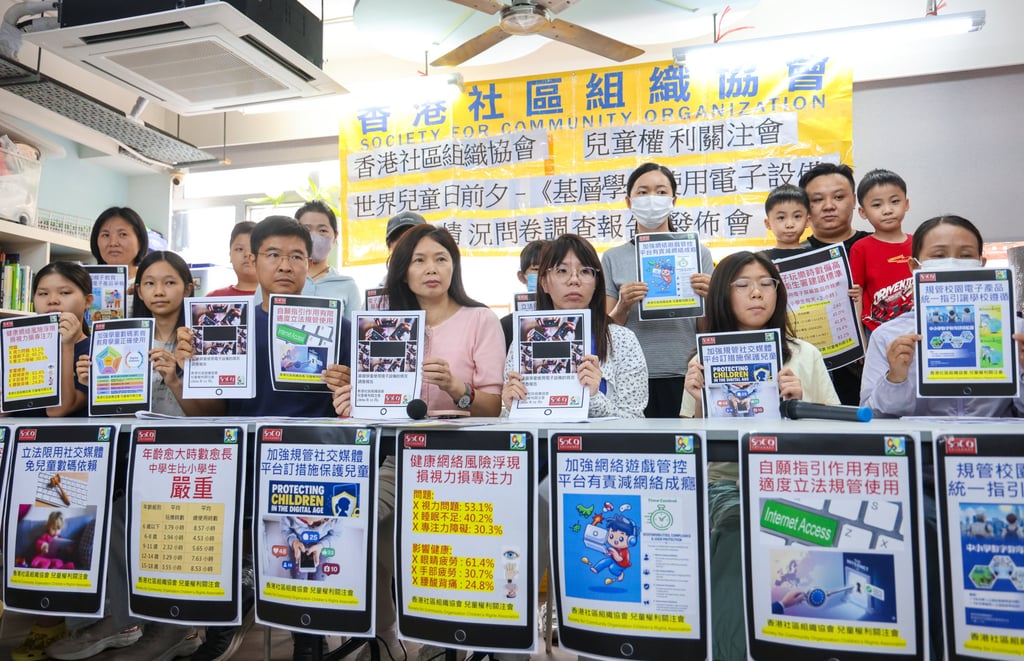
Daily screen time rose sharply with age. Children aged six to eight already averaged 4.53 hours a day on devices, while those aged 15 to 18 logged the highest usage at 8.53 hours, including an average of 3.5 hours on games and videos.
More than half of the children reported vision problems, 40.2 per cent did not get enough sleep, 30.3 per cent had difficulty concentrating and 29.9 per cent admitted to addiction.
Close to three-quarters said they needed devices for online homework, but as many as 72 per cent also watched videos and 58 per cent played games. About 57 per cent cited devices as a cheap way to have fun and nearly 40 per cent said they were simply bored.
Sze Lai-shan, the group’s deputy director, said children from low-income families had few affordable options after school, which was why they ended up on screens.
“When we talk to parents and children, they truly do not know what to do after school. Many activities have long waiting lists and kindergartens are only half-day,” she said.
“If children could stay at school for healthy activities, it would be better than going home to a phone. They have no other choice, so this becomes their only pastime.”
The group also called on the government and schools to extend school hours, introduce full-day kindergartens and open campus facilities after class, alongside more subsidised extracurricular and parent-child activities and reserved places for underprivileged students.
Nearly 80 per cent of the children surveyed backed laws to regulate their device use. The top measures they supported included legislating proper device use in class, a ban on smartphones in schools and caps on online gaming.
The latest policy address announced an interdepartmental group led by the Department of Justice to review the risks of minors’ use of social media and artificial intelligence (AI) platforms and to assess whether legislative or administrative changes were needed.
The move follows Australia’s ban on social media for children aged under 16 and proposed curbs in the United Kingdom.
KioskNews shows a cleaned-up reading view extracted from the publisher’s page — the original always lives on their site, not ours.