What is a homemaker’s work worth? Indian courts have an answer
In January 2021, actor-turned-politician Kamal Haasan promised Tamil Nadu’s voters that if elected, he would pay the state’s homemakers for the work he said had gone unrecognised and unmonetised for generations. When Congress MP Shashi Tharoor tweeted his support, actor-turned-BJP MP Kangana Ranaut argued that the commodification of women’s unpaid work would disturb women’s supremacy over the private domain. This triggered a debate over whether Haasan had said something progressive or something regressive. What almost nobody pointed out was that nine years earlier, Goa had quietly begun paying married women a monthly sum under the Griha Aadhar scheme, without ever calling it payment for housework.
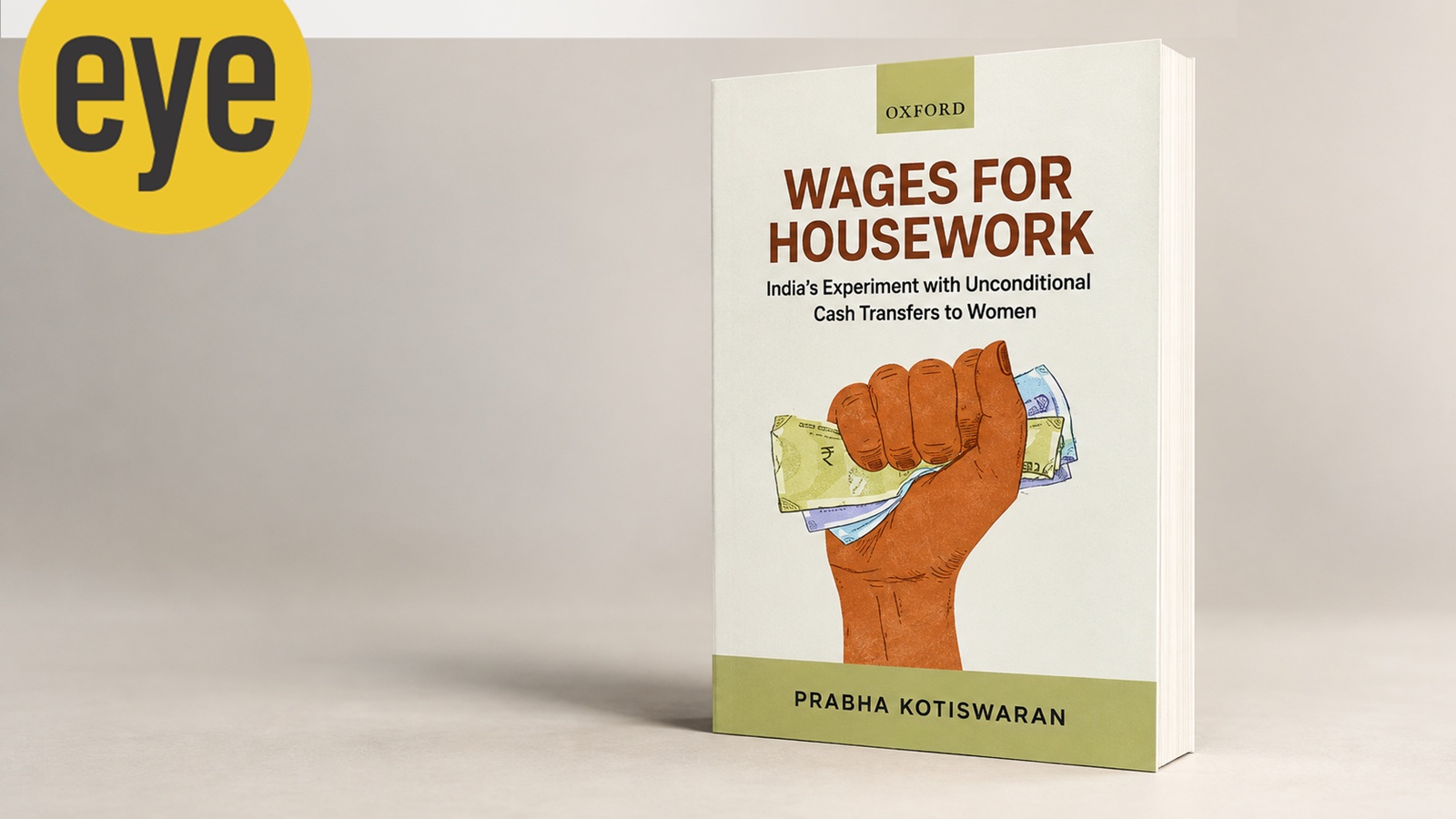
Prabha Kotiswaran’s Wages for Housework is an attempt at asking whether the unconditional cash-transfer schemes of India’s 12 states (at the time of writing the book) amount collectively and mostly unintentionally to the fulfilment of an argument first made over 80 years ago.
Because she isn’t paid, her domestic and care work is invisible — absent from GDP, from the Census and often invisible even to the women themselves, who describe their daily chores as simply niji or personal work rather than valuable work sustaining the economy and society. Kotiswaran traces the origins of the argument to the Wages for Housework (WFH) campaign launched in 1972 by Selma James, Silvia Federici and Mariarosa Dalla Costa in Padua, Italy. They argued that capitalism runs on unpaid female labour whose exploitation stays invisible until priced. However, the majority of the founders considered the demand more as a political perspective and a revolutionary strategy towards recognition of housework than a payout for housewives per se. The campaign lasted in an organised form only until 1977, after which the liberal feminist agenda ‘triumphed’, with feminists turning instead toward workplace equality, including maternity benefits, pay equity and anti-discrimination protections.
Kotiswaran makes a novel attempt in connecting the Wages for Housework movement to its less-acknowledged Indian predecessor: the activities of the All India Women’s Conference (AIWC). Nearly three decades before Selma James, the 1939 report and 1946 Indian Women’s Charter of the AIWC argued that a homemaker’s unpaid labour was economically on par with her husband’s factory wage. Constituent Assembly member Renuka Ray argued that a housewife was as much a working woman as anyone earning outside the home. This reconnect to the past is a valuable scholarly contribution, as it recasts today’s cash transfers not as a foreign import but as an overdue homecoming.
One of the more distinctive features of the book is its attempt to reify the value of women’s unpaid work by invoking tort law — how courts have compensated families for a homemaker’s lost labour after her death or injury. While Indian legal commentators have flagged pieces of this problem before, what sets this book apart is the scale. The author reviews about 300 judgments spanning five decades. She observes that courts have steadily been doing two things at once — broadening what ‘services’ actually covers, from basic housework toward a fuller range of domestic and care work, and separately increasing the compensation amounts themselves, through inflation adjustments, more generous multipliers and reduced penalties for a homemaker’s labour being informal. She asks the question: If courts can bend over backwards to quantify the contributions of women to their households upon death, why not do the same when they are alive?
The interviews among stakeholders that Kotiswaran and her team carried out in Goa, Assam and West Bengal elicit inputs on live academic debate about what cash transfers actually do to women’s employment and education prospects. Kotiswaran lets many different voices — of officials and bureaucrats, husbands and the women themselves — into these debates. The fear that transfers discourage girls’ schooling or pull women from the workforce was directly tested in her three states by asking women themselves. The book concedes that the toughest argument against unconditional cash transfers is that they reinforce the gendered division of labour and the fieldwork doesn’t produce a unanimous answer either.
Story continues below this ad
The final chapter widens the lens from unpaid reproductive labour to all forms of reproductive labour. This chapter covers three groups: nurses and teachers in the formal sector, domestic workers in the informal sector, and government scheme workers (ASHAs, Anganwadi workers, midday meal workers) who are officially classified as volunteers rather than employees. The latter two forms of paid care work are thus devoid of labour protection as well. The proposed ‘Care Manifesto’ calls for a wide range of initiatives from the state, including surveys to fully account for women’s unpaid work, investment in physical infrastructure (water, gas, electricity) and care infrastructure (crèches, nurseries, pre-schools) to reduce the burden of unpaid domestic and care work, among others.
The fight around Haasan’s proposal eventually died out, even as state after state rolled out similar schemes. The real test of these schemes won’t be how much money reaches a woman’s bank account but whether her labour ever stops feeling like niji and starts being counted as work.
The writer is associate professor, Vellore Institute of Technology, Chennai
KioskNews shows a cleaned-up reading view extracted from the publisher’s page — the original always lives on their site, not ours.