Malaysia’s research has potential, now it needs to leave the lab, says higher education minister
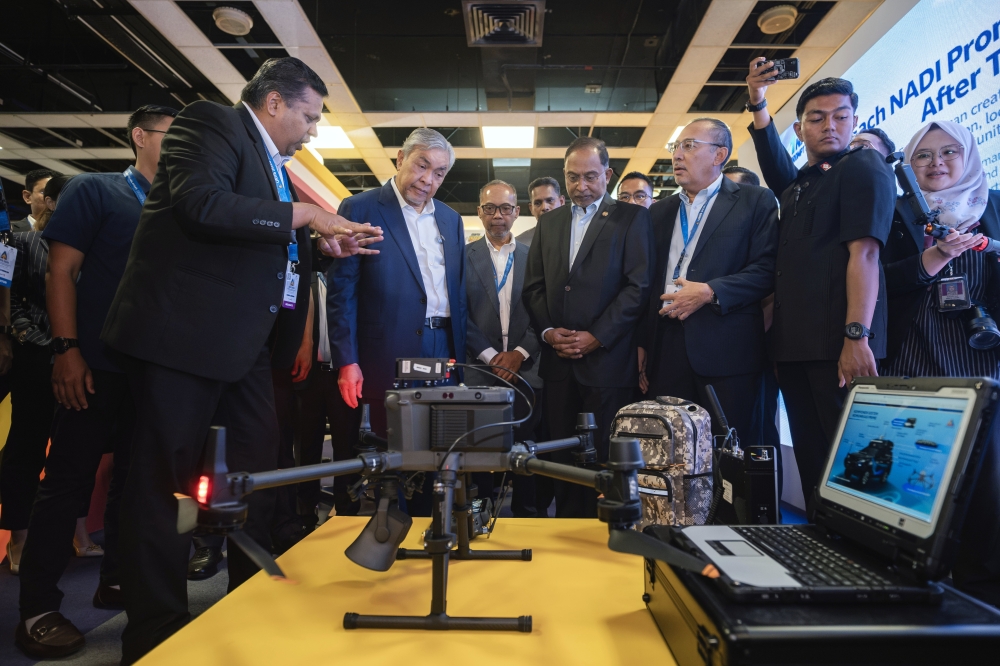

Deputy Prime Minister Datuk Seri Dr Ahmad Zahid Hamidi (second from left) views the Prime Communication System at the University Research and Innovation Investment Summit 2026 at the World Trade Centre in Kuala Lumpur on September 22, 2026, with Higher Education Minister Datuk Seri Zambry Abd Kadir (fourth from right). — Bernama pic
First Published: Tuesday, 22 Sep 2026 3:35 PM MYT
KUALA LUMPUR, Sept 22 — Malaysia’s research and innovation ecosystem has recorded more than 500 matched patents valued at over RM2 billion through the Malaysian R&D Commercialisation Portal, involving more than 120 active missions, showing that the country does not lack ideas or talent.
Higher Education Minister Datuk Seri Dr Zambry Abd Kadir said the milestone demonstrated Malaysia’s immense capacity for innovation, provided the gap between academic research and commercial market demands could be bridged effectively.
“Malaysia had many good researchers, ideas and promising innovations, but too many of them remained at the university level.
“For the first time, we are creating a dedicated platform for university researchers to bring their ideas directly to industry, investors and potential partners,” he said during the opening ceremony of the University Research and Innovation Investment Summit 2026 at the Kuala Lumpur Convention Centre here today.
Meanwhile, Zambry urged local industry players to look inside Malaysian universities for technological solutions before turning to foreign providers.
He said while local institutions possess extensive talent, facilities and intellectual property, a lack of confidence often leads businesses to seek solutions outside the country.
“Research cannot end with a publication. Innovation cannot end with a patent. A prototype cannot remain in the laboratory. A discovery must become a solution. A prototype must become a product. And an idea must become an opportunity,” he said.
Zambry also called on investors to view university researchers not only as academics, but also as innovators, entrepreneurs and potential business partners.
Over the three-day summit, URIIS 2026 will cover at least nine strategic sectors, including food security, healthcare, artificial intelligence, semiconductors, advanced manufacturing, green technology, mobility, defence and biodiversity. — Bernama
KioskNews shows a cleaned-up reading view extracted from the publisher’s page — the original always lives on their site, not ours.