Without political renewal, Israel will remain stuck - editorial

Three days removed from Israel’s pivotal election, many of the questions Israelis had going into the election remain unanswered.
The country is still caught in a political deadlock, with neither side able to secure a clear path forward. For many, the results look remarkably similar to those of Israel’s deadlocked elections in 2019 and 2020.
Unfortunately, so do many of the politicians.
Disappointing takeaways
After the October 7 massacre, years of upheaval, and an endless war that has reshaped Israeli society, one might have expected a greater appetite for political renewal. Instead, Israelis are once again left looking at familiar faces, familiar arguments, and a familiar stalemate.
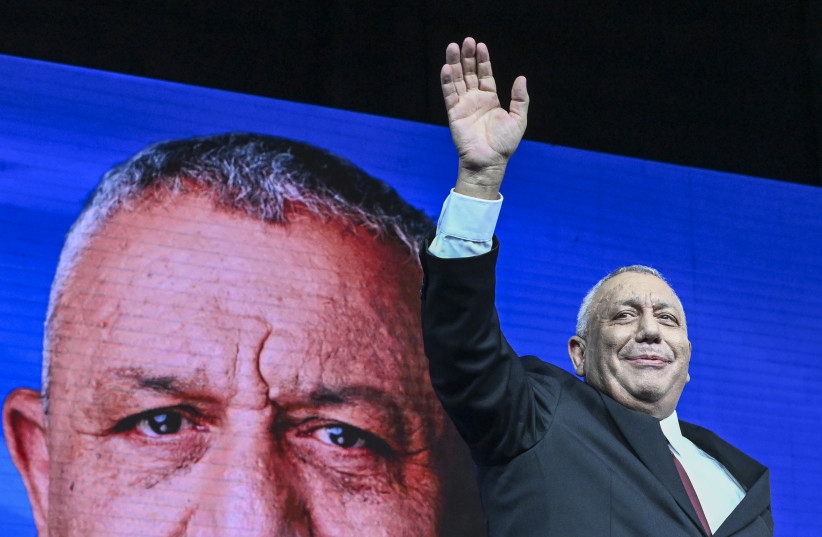
Perhaps the most disappointing takeaway from this election is that, with the exception of Gadi Eisenkot’s Yashar party, new political forces have struggled to break into the conversation. Whether one agrees with their platforms or not, the failure of these parties to gain meaningful traction should concern anyone who wants to see Israel’s political system evolve.
The Haredi Public party, for example, offered haredi voters a genuine alternative to the established ultra-Orthodox parties. Yet, as of Thursday afternoon, it had received just 10,145 votes, leaving it far from parliamentary representation.
People of Israel leader Ofer Winter, who ran with an impressive list of fresh candidates, also fell short of the Knesset, attracting fewer than 100,000 votes before the double-envelope ballots were counted. His party’s performance was further undermined by Likud’s targeted campaign, although it appears he remained well short of the 3.25% electoral threshold regardless.
Yoaz Hendel’s attempt to appeal to reservists exhausted by years of service failed to cross the electoral threshold. His running mate, Yaron Zelekha, built his campaign around economic issues that other parties largely pushed aside. They, too, failed to translate their messages into parliamentary representation, according to the results counted so far.
These parties differed in their ideologies, constituencies, and priorities. Some offered a challenge to established political structures, while others sought to put neglected issues back on the agenda. Their failure does not necessarily mean their ideas lacked merit, or that their potential voters were wrong to seek alternatives.
It does, however, highlight how difficult it has become for new voices to establish themselves in Israeli politics.
There are some important caveats. Yashar is, after all, a new party, and its success in entering the political conversation demonstrates that renewal is still possible. The incoming Knesset will also include many new MKs within established parties. Political change does not always require the creation of an entirely new political movement.
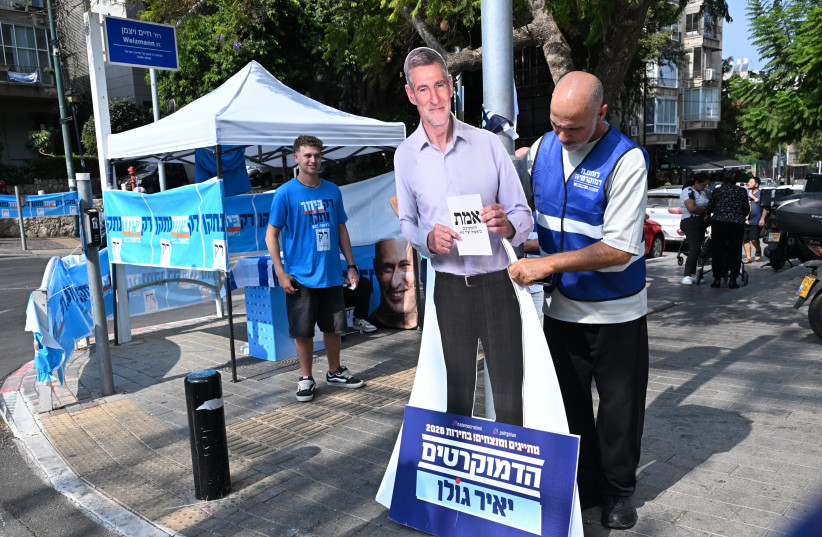
Still, the broader picture is difficult to ignore. Former prime minister Naftali Bennett, who was absent from the previous Knesset, is back in the political arena. Yair Golan, another familiar figure from past Knessets, has returned to the forefront.
The other side
On the other side of the political spectrum, Moshe Feiglin may be presented as a fresh alternative, but he is hardly a newcomer, having already served in the Knesset a decade ago.
There is nothing inherently wrong with experienced politicians returning to public life. Experience matters, and voters are entitled to choose familiar leaders if they believe those leaders can deliver. Nor should novelty, by itself, be mistaken for competence.
New parties can disappoint, and new politicians can bring the same old habits into the Knesset. But the Israeli people, who have undergone such profound trauma since October 7, should be able to expect more from their political system than another contest between deeply entrenched camps.
Israel’s political deadlock will not be resolved by fresh faces alone. At the moment, divisions between the country’s political camps remain too deep, and any government that emerges from the current negotiations will have to find answers to the difficult issues that have divided Israelis for years.
But if one lesson can be learned from the election results, it is that without new voices and new ideas, the country risks remaining trapped in the same cycle of political instability that produced five elections between 2019 and 2022 and repeatedly prevented Israeli leaders from establishing a stable government.
After everything Israel has been through, that would be a missed opportunity at best, and a catastrophe at worst.
The country needs political renewal – not because every new party deserves a seat, but because a democracy that cannot make room for alternatives risks becoming stagnant.
Until Israel finds a way to break that pattern, the deadlock will remain – and the country will continue to struggle to find a way forward.
KioskNews shows a cleaned-up reading view extracted from the publisher’s page — the original always lives on their site, not ours.