Companies may be selective, choosing new sectors, but private investment picking up: Sitharaman
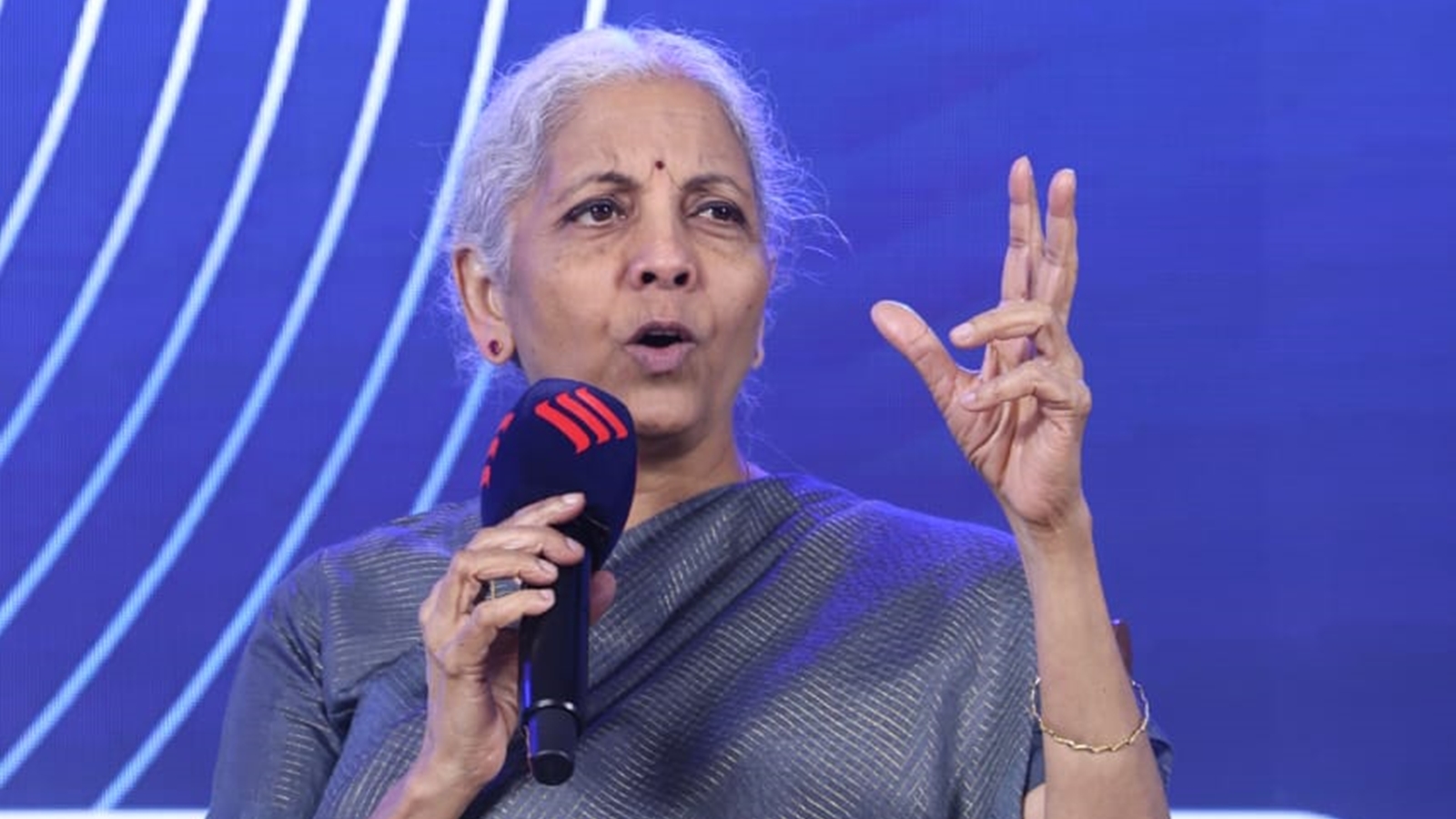
Dismissing concerns about the corporate capex cycle despite strong balance sheets, Union Finance Minister Nirmala Sitharaman said the pickup in private investment might be selective but was picking up. In a fireside chat at Monday’s Financial Express Leadership Awards with Shyamal Majumdar, Editor, Financial Express, Sitharaman also backed the upward revision of the growth forecast for 2026-27 to 7.3%, saying the government has “started doing things differently” that will also continue going ahead, with an important premise of explicitly trusting businesses, industry, farmers, taxpayers, and the people of India.
“Everything we do is based on that premise: that we trust people. Our policies on GST (Goods and Services Tax), income tax and other matters have all been framed on the principle that we trust the taxpayer. That is how the Prime Minister wants all of us to work. Whatever policy we formulate, we must trust business, industry and the taxpayer. That will remain our charter,” she said.
Sitharaman said she is seeing the industry come forward and invest as last year’s GST 2.0 reforms have made consumption and demand more visible. “It may be selective, choosing particular sectors rather than investing in areas where it is already present. But I am seeing private investment picking up… industry now has the confidence that it can see demand in the market, invest, produce and expand to the level it wants to reach. That, I believe, has been triggered by the next-generation GST reforms.”
“The recovery in consumption has provided clear visibility on demand, and that is why I’m seeing private-sector investment happening,” she said.
While stressing that the industry can ask for anything it wants and that she isn’t wary of any demands, Sitharaman said the interaction with the government should be “active and continuous” and they should tell whether they are moving forward. “…the government and businesses are in this together, and we have to take India towards Viksit Bharat. We have reached an inflection point. We should not fail ourselves at this juncture.”
Dominant big companies
On concerns that India is becoming dominated by a relatively small number of very large business groups, Sitharaman said that may have been the case a decade or two ago, but isn’t the complete picture.
“Even today, there are a small number of large companies, no doubt. I’m happy for them; they should be there and grow… (But) MSMEs are flourishing today. We wanted micro enterprises not to remain dwarfs, but to grow into small enterprises, small into medium, and medium into large. That is why the change in the definition of MSMEs has been appreciated: it allows them to grow while continuing to enjoy the benefits,” she said.
Story continues below this ad
The Minister further said growth is happening across companies of all sizes. “India is not an economy with just a few large companies; there are many small and medium-sized enterprises as well. 40% of the country’s exports come from the MSME sector. Industries are emerging at different levels. Startups have demonstrated that small, innovative companies can enter the market, make a splash and establish themselves. The pace at which billionaire companies and unicorns have emerged from startups is spectacular in India’s economic history.”
PLI relook, Tata tussle
When asked about the incentives and support provided by several East Asian economies along with performance accountability and international competitiveness, Sitharaman said India’s approach has been through the production-linked incentive (PLI) scheme where companies need to demonstrate additional marginal production to qualify for incentives. “PLI has shown success, although some sectors have not performed as well. We will have to examine what went wrong there,” she said.
On the friction within the Tata Group and allegations by Congress leader Rahul Gandhi, Sitharaman said these are “very delicate matters, requiring considerable commercial and business acumen, as well as cordiality”, and she would not readily say there is a need for intervention, however serious the issue may be.
“I know the brand value of Tata and the contribution of the Parsi community in making it a huge global brand. I also know the range of activities in which the Tatas are invested. This is a very critical component of the Indian economy, and therefore, the matter must be settled amicably among the parties. They should talk it out and ensure a return to normalcy quickly. It cannot spill out into the public domain like this. Given the maturity expected of that leadership, we would like to see the issue settled soon,” she said.
Story continues below this ad
Jobs and skills
Asked to comment on the employment situation and whether India’s consumption story could be adversely impacted by wages growing slower than profits, the Finance Minister said the consumption story “will remain intact”. This, she said, is reflected in the latest GST collections for October, which were up 23% year-on-year. Further, the government will also do “a great deal” to promote skilling and bridge the gap between employers’ expectations and capabilities of those entering the job market.
“I’ve repeatedly heard industry leaders say that the skill sets with which people graduate from colleges are insufficient. As a result, companies may have to spend six to eight months providing additional training before deploying them in jobs,” she said, adding that the last two Union Budgets have been looking at skilling and the efforts will continue.
“It is also important to realise that, while we need AI in industry to improve productivity across large companies and MSMEs, we also need people who can work with AI. Our school, college and professional curricula need that additional input to ensure that young people enter the workforce job-ready,” she said.
KioskNews shows a cleaned-up reading view extracted from the publisher’s page — the original always lives on their site, not ours.