For the first time, artificial intelligence is a top 10 fear in the U.S.
It’s official—artificial intelligence is one of the top 10 fears in the United States. Well, it’s technically two of the top 10 fears, according to the 12th annual Chapman University Survey of American Fears.
First conducted in 2014, the recurring questionnaire tracks yearly anxiety trends that often range from everyday concerns to existential terrors. This year, 61.1 percent of over 1,200 respondents once again cited “corrupt government officials” as their biggest fear—the same subject was last year’s number one entrant as well as its 11th year on the list. After that, it’s the fear of another world war (51.9 percent). However, “AI harming the political process” wasn’t too far behind for third place at 51.9 percent. The technocentric worry is now essentially tied with the fear of loved ones becoming gravely ill (51.8 percent).
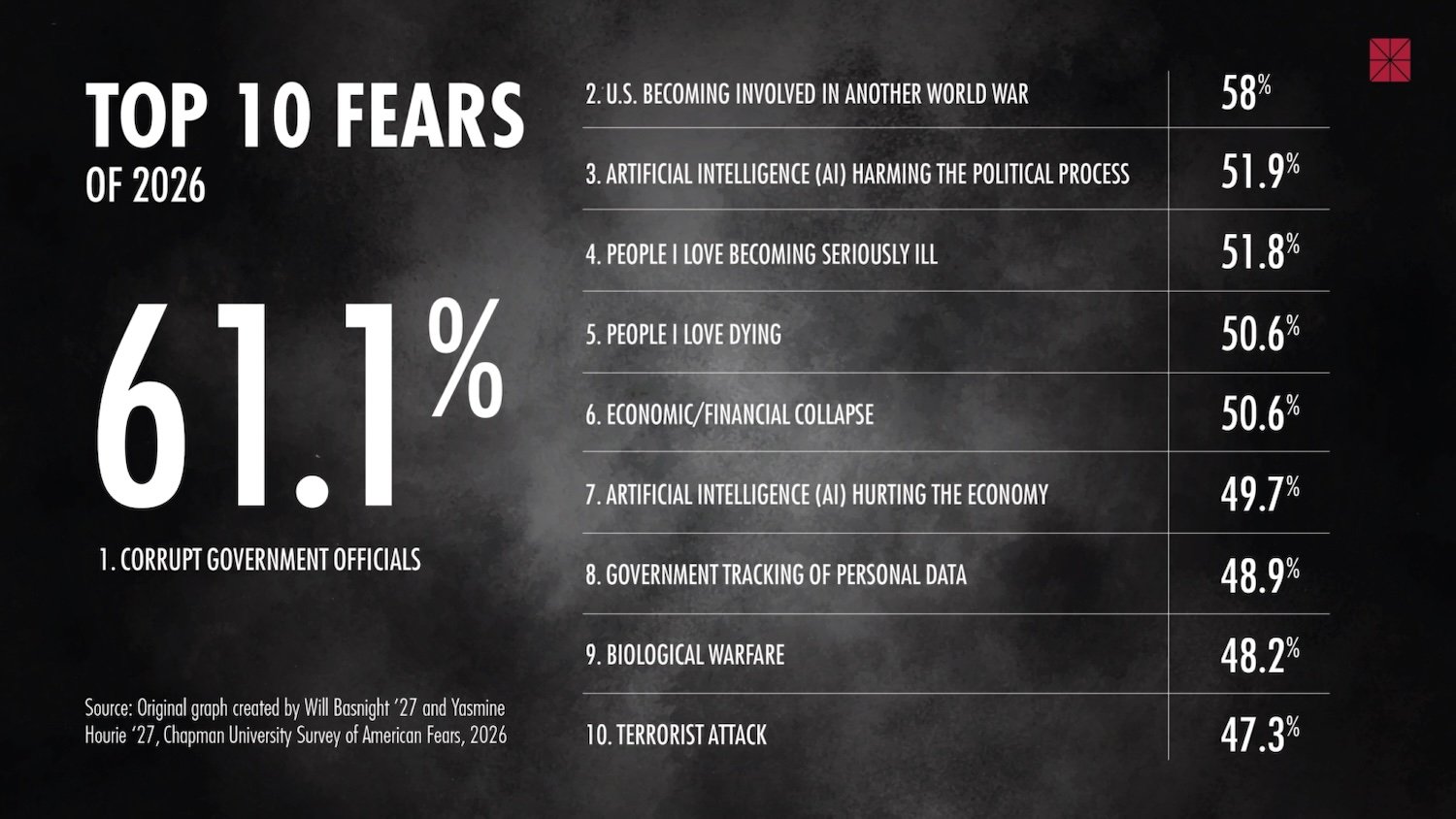
That said, the survey’s own plus or minus 3.79 percentage point margin of error complicates the results a bit. Taking the margin of error into consideration, it’s a tossup when trying to definitively rank the list’s third through tenth fears. Regardless, about 49.7 percent survey takers are also anxious about AI negatively impacting the economy—a double dose of AI-centric woes for the first time in the survey’s history. It’s also the first year researchers at Chapman University in California included questions about AI, but they made it clear it likely won’t be the last.
“As artificial intelligence becomes more integrated into everyday life, understanding these fears will be increasingly important,” said Chapman University sociologist and survey creator Christopher Bader. “We expect concerns about AI to remain a significant part of the national conversation in the years ahead.”
It’s understandable why AI currently vexes so many people. The blanket term now encompasses everything from photorealistic fake images, to dubious search engine chatbots, to nebulous doomsday warnings. Despite these worries, the AI industry’s biggest threats arguably remain the rampant spread of misinformation, coupled with a lack of meaningful regulations or oversight.
But no matter your top technological fear, survey organizers still believe the annual report highlights a very relatable human emotion.
“What I’m seeing more and more over time is that our fear about our loved ones is going to always be there, no matter what’s going on in the world,” said sociologist Ashley Kranjac, director of Chapman University’s Earl Babbie Research Center.
KioskNews shows a cleaned-up reading view extracted from the publisher’s page — the original always lives on their site, not ours.