Malaysia's economy grows 5.5% in Q3, propelled by tech boom
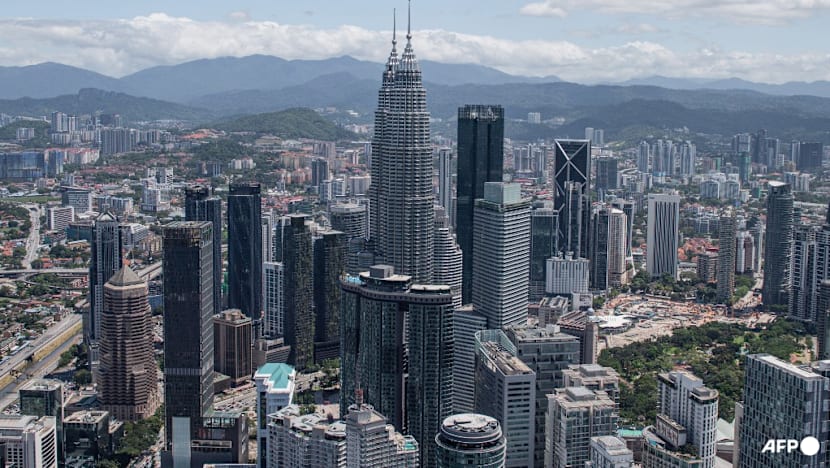
KUALA LUMPUR: Malaysia's economy grew 5.5 per cent in the third quarter, surpassing expectations as a result of sustained household spending and robust tech exports driven by the AI boom, government and central bank data showed on Wednesday (Nov 18).
Economists polled by Reuters and advance estimates released by the government had forecast annual gross domestic product to expand 5.3 per cent in the July to September period, slowing from 6 per cent in the second quarter.
Growth in the third quarter was underpinned by strong domestic demand as well as higher levels of investment and tourism activity, according to data from Bank Negara Malaysia and the Statistics Department.
While some moderation in private consumption was observed during the quarter, this was attributed mostly to base effects, BNM Governor Abdul Rasheed Ghaffour said.
"Looking ahead, the Malaysian economy is well positioned to build on this momentum in 2027, supported by strong fundamentals and positive outcomes from our structural reform," he said.
The government raised its 2026 growth projections in October, and now expects the economy to expand close to the upper end of a 4.8 per cent to 5.3 per cent forecast range.
It expects growth of between 4.2 per cent and 5.2 per cent in 2027.
Malaysia has benefited from the global artificial intelligence boom, which has boosted exports of its semiconductors and other tech goods. Exports rose 5.7 per cent from a year earlier, with shipments of electrical and electronic goods jumping 66.9 per cent, according to Friday's data.
The country has also attracted billions of dollars in data centre investments, though analysts have warned that growth in the sector could slow following US curbs aimed at restricting China's access to advanced AI chips.
BNM kept its benchmark interest rate unchanged for the eighth straight meeting earlier this month. Economists, however, expect the central bank to raise the rate in the first quarter of 2027, amid resilient growth and growing price pressures.
Inflation was expected to edge higher to a range of 1.5 per cent to 2.5 per cent in 2026 and 1.8 per cent to 2.8 per cent in 2027, but it will remain contained, Abdul Ghaffour said.
"Given continued global uncertainty, we will remain vigilant and closely monitor the evolving costs and demand conditions," he said.
KioskNews shows a cleaned-up reading view extracted from the publisher’s page — the original always lives on their site, not ours.