‘Pushing food around the plate’: How weight-loss drugs are changing what Australia eats

Celebrated restaurateur and cookbook author Karen Martini has seen all sorts of trends during her career. The latest, the explosive growth in use of GLP-1 weight-loss drugs, leaves her perplexed.
“What I find most disappointing is groups of well-dressed, thinner men and women out to lunch or dinner, who still want the experience of going out, eating and drinking,” Martini says. “And all they do is push the food around the plates pretending to eat, usually ordering too much to compensate for not eating. I’ve seen this from time to time in restaurants in Melbourne, Sydney and Europe.”
It’s a sad state of affairs for all chefs making beautiful food, she says. “Every chef wants to please the diner and see flavours savoured, and clean plates sent back to the kitchen. We thrive on people enjoying food, rather than pushing it aside and not being able to finish.”
Australians are obsessed with health and longevity, but have an excess weight problem: official figures show 14.6 million of us are overweight or obese (67 per cent of adults and 27 per cent of children).
These excess-weight figures are tipped to tumble, however, as GLP-1 medicines become cheaper and easier to use. This month, the medicine regulator approved two weight-loss pills, Eli Lilly’s daily pill, marketed as Foundayo, and Novo Nordisk Pharmaceuticals’ Wegovy pill, which are set to make weight-loss treatments more attractive for many than the weekly injections available on the market so far. Wegovy will be available for sale on Friday; Eli Lilly says Foundayo will be available “in coming days”.
“I suspect we may look back on their impact on society and say it’s been one of the most significant changes in a long time,” says Ben Willee of Spinach Advertising, whose firm has done campaigns for food companies.
The drugs have evolved from treating diabetes to managing obesity. They reduce their users’ appetite and weight. But they also put them at higher risk of nutritional deficiency and muscle loss, and questions remain about their long-term side effects. Dietitians Australia president Dr Fiona Willer says weight is not the same as health, and she is concerned about the risk of malnutrition among users who don’t plan their meals or get monitored by a health professional.
“You get full on much less food than before, so every mouthful counts when you’re on these drugs,” she says.
Australia’s $160 billion food and grocery sector has found itself at the front line of this GLP-1 boom. Supermarkets, restaurants, meal-delivery businesses, cafes and fast-food chains are considering and changing their offerings, prices and portion sizes to capture a user market that – on one estimate – will grow to 30 per cent of adults, or 7 million people, within a decade.
Broadly, meals for users will be smaller, low-fat, low-spice and filling, with added protein (to prevent muscle loss) and added fibre (to aid digestion). At restaurants, smaller entrees and big plates of protein to share, such as lamb or steak, could become more popular, says Martini.
Pasta, dairy, and even rice are not immune to the protein obsession. Rice brand Sunrice says 28 per cent of Australians are seeking high-protein foods when they shop, which has prompted it to release a “Protein+ Rice” product with 10 grams of protein via “beef-derived collagen peptides”.
Australia is still at an early stage of the GLP-1 wave, says Rolf Weber, who leads meals-delivery business Marley Spoon. Twelve per cent of Marley Spoon’s sales are “GLP-1 support” meals, which are smaller, low in fat, have at least 20 grams of protein, six grams of fibre, and designed to be easy to digest.
GLP-1 drugs are subsidised through the Pharmaceutical Benefits Scheme (PBS) for type 2 diabetes and cardiovascular disease, but not for weight loss alone. People who want the drug for weight loss must pay hundreds of dollars a month, meaning disadvantaged people are either priced out of the life-changing medication or sacrificing other spending. One study found half a million people each month use it for type 2 diabetes, and more still for weight loss. A separate EY Studio+ survey found one in 10 Australian adults used them.
But regulatory approval of GLP-1 tablets (instead of a weekly injection) and the drug’s expected listing on the PBS for weight-loss purposes (slashing prices to just $25 a month) are tipped to ramp up demand.
“It will become more affordable – that means a higher uptake. It will reach some sort of ceiling eventually, but we’re far away from reaching that,” says Weber. He predicts, in time, 20 per cent of Australians will either be on weight-loss medication or taking a break from it.
“I suspect we may look back on [GLP-1’s] impact on society and say it’s been one of the most significant changes in a long time.”
Advertising executive Ben Willee
Consultants EY-Parthenon forecast take-up will rise to 30 per cent in a decade if PBS approval expands to include GLP-1 use for weight loss and secondary morbidities such as hypertension and heart disease. Health Minister Mark Butler has described this class of drugs as “too important” not to have on the PBS, but there are concerns about how much this would cost. A spokesperson for the Department of Health says negotiations on a potential PBS listing for weight management were ongoing.
Next month, a decision will be released on expanding a PBS listing to obese patients with a history of heart attack, stroke or peripheral arterial disease. As yet, no company has sought subsidy through the PBS for weight-loss management alone. PBS listings typically take months, rather than years.
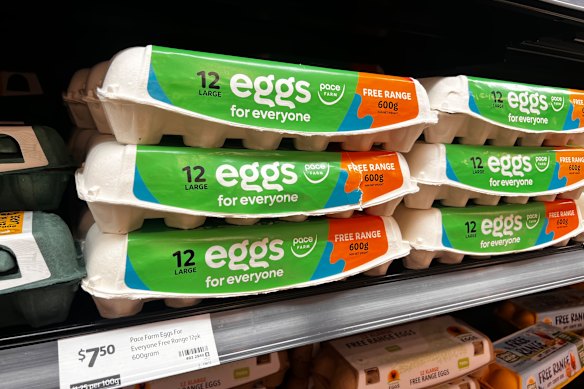
While food retailers do not know whether individual customers use a GLP-1 medication, supermarket giant Coles says protein-rich eggs and mince, fresh produce, fibre-rich foods, nutritionally balanced meals and hydration are increasingly popular among customers.
“For customers eating smaller portions, nutrient-dense foods and convenient meal solutions can also become more important, which is why we continue to look at opportunities across areas such as ready-made meals, pre-prepared fresh produce and salads,” a Coles spokesperson says.
Rival supermarket Woolworths says it’s expanded its range of protein- and fibre-rich food to meet increased demand, particularly protein-boosted options such as snack bars, yoghurts, milks and ready-to-eat meals.
Some fear widespread GLP-1 take-up will lead to fewer visits and lower revenue for a restaurant industry already slammed by the cost-of-living crisis and inflation (an EY survey found GLP-1 users reported they were dining out 44 per cent less). But not everyone is convinced that GLP-1s will lead to fewer meals out, or less money spent at hospitality venues.
Wes Lambert, the chief executive of the Australian Restaurant and Cafe Association, says GLP-1 take-up is still too low to meaningfully affect patronage and revenue.
Nonetheless, he says hospitality venues in high-income areas – where individuals can afford to pay upwards of $500 a month for GLP-1 treatment of non-diabetes-related weight loss – are reporting that diners are swapping unhealthy orders for high-quality items.
“Healthier things tend to cost more, so it is replacing quantity with quality,” he says. “Some venues around the country are indicating that they’ve noticed a small change. But it will take a decade or more, and wider use of GLP-1 medications, before we actually will see the outcome.”
The Australian Food and Grocery Council, which represents the food, beverage and grocery supply industry, describes GLP-1s as “another catalyst for innovation” among food manufacturers. “Eating less does not necessarily mean changing what we eat,” says chief executive Colm Maguire. “Research indicates consumers may look for smaller, more premium products, moments or occasions when they indulge, more protein and nutrients, and taking supplements to complement their diet.”

Ganesh Kashyap, chief executive ANZ at Sunrice Group, agrees. He says GLP-1s sit “within a much broader set of changes in what consumers want, from greater interest in nutrition and protein to convenience and changing eating occasions. I don’t think the impact will necessarily come down to people simply buying less food, as consumers make choices based on a whole range of factors, from nutrition and value, to taste, convenience and occasion.”
Australia’s fast-food market has come under pressure from not only the GLP-1 trend and cost-of-living pressures, but rising company costs for wages and ingredients. The world’s biggest fast-food chain, McDonald’s, is now moving to push back by exploring GLP-1-friendly menu options.
McDonald’s USA president Skye Anderson told investors in September that customers on GLP-1 drugs want more protein and control over portions, so the burger and fries chain is looking at introducing items such as egg bites, burger bowls and a grilled chicken snack wrap, Forbes magazine reports. (McDonald’s and Hungry Jack’s in Australia did not respond to requests for comment).
As Anderson noted, customisation – the ability of customers to add, subtract and substitute ingredients as they wish – is highly sought after by nutrition-conscious customers.
Steven Marks, founder and co-chief executive of Australian chain Guzman Y Gomez (whose shares are up 26 per cent this year)says the Mexican food chain hasn’t changed its menu or portion sizes in response to changing health trends. “We are set to provide guests with choice – whether it’s adding double protein or extra guacamole, or choosing a mini size rather than a regular,” he says.
Setting GLP-1s aside, Australians will no doubt continue to focus on healthy food, encouraged by countless content creators on social media.
“This concept, that it’s not hard to eat healthily and prepare good food, is a really key theme of content creators. There are huge trends, especially on TikTok, in and around healthy eating. Cooking is fashionable again, and air fryers,” says Willee.
Karen Martini worries especially for young people, who might feel pressure to take the weight-loss route, and will therefore miss out on the joys and pleasure of food.
“Nutrition at this age is so important, and there will be massive health issues in large numbers of people earlier in life,” she says.
The Market Recap newsletter is a wrap of the day’s trading. Get it each weekday afternoon.
KioskNews shows a cleaned-up reading view extracted from the publisher’s page — the original always lives on their site, not ours.