7 Near-Perfect Sci-Fi Series Inspired By Albert Einstein

Ben is a Senior Writer on the New TV team at Screen Rant. He graduated from the University of Central Lancashire with a First Class B.A. Degree in English Literature and History.
Born and raised in Ireland, Ben has always had a love for storytelling in all forms of media and operates multiple projects under the name Benjamin Blogs. Ben is a comic book writer and podcast host, in addition to his work as an entertainment journalist. He has worked as both a writer and editor for Screen Rant, Collider, and other media outlets across various departments, including features, news, reviews, and interviews.
Albert Einstein's contribution to our understanding of the wider universe is absolutely astonishing, and it appears to have had a surprising influence over modern sci-fi TV shows as well. Einstein was a German theoretical physicist and mathematician who developed the theory of relativity as we know it today, along with numerous other breakthroughs about how everything works.
While Einstein passed away more than half a century ago in 1955, his ideas form the foundation of many exciting sci-fi projects on the big and small screen to this day. And perhaps most famously, this can be seen in the Christopher Nolan film, Interstellar, which depicts an incredibly accurate look at a black hole which could only have been developed thanks to Einstein's equations and theories.
Beyond this, Einstein's influence can be seen in numerous TV shows, whether tied to specific theories that Einstein worked on, or in directly taking those concepts as a foundation to build an extraordinary and grounded sci-fi story that redefines how we view the universe we exist within.
7 Dark

Image courtesy of MovieStillsDb
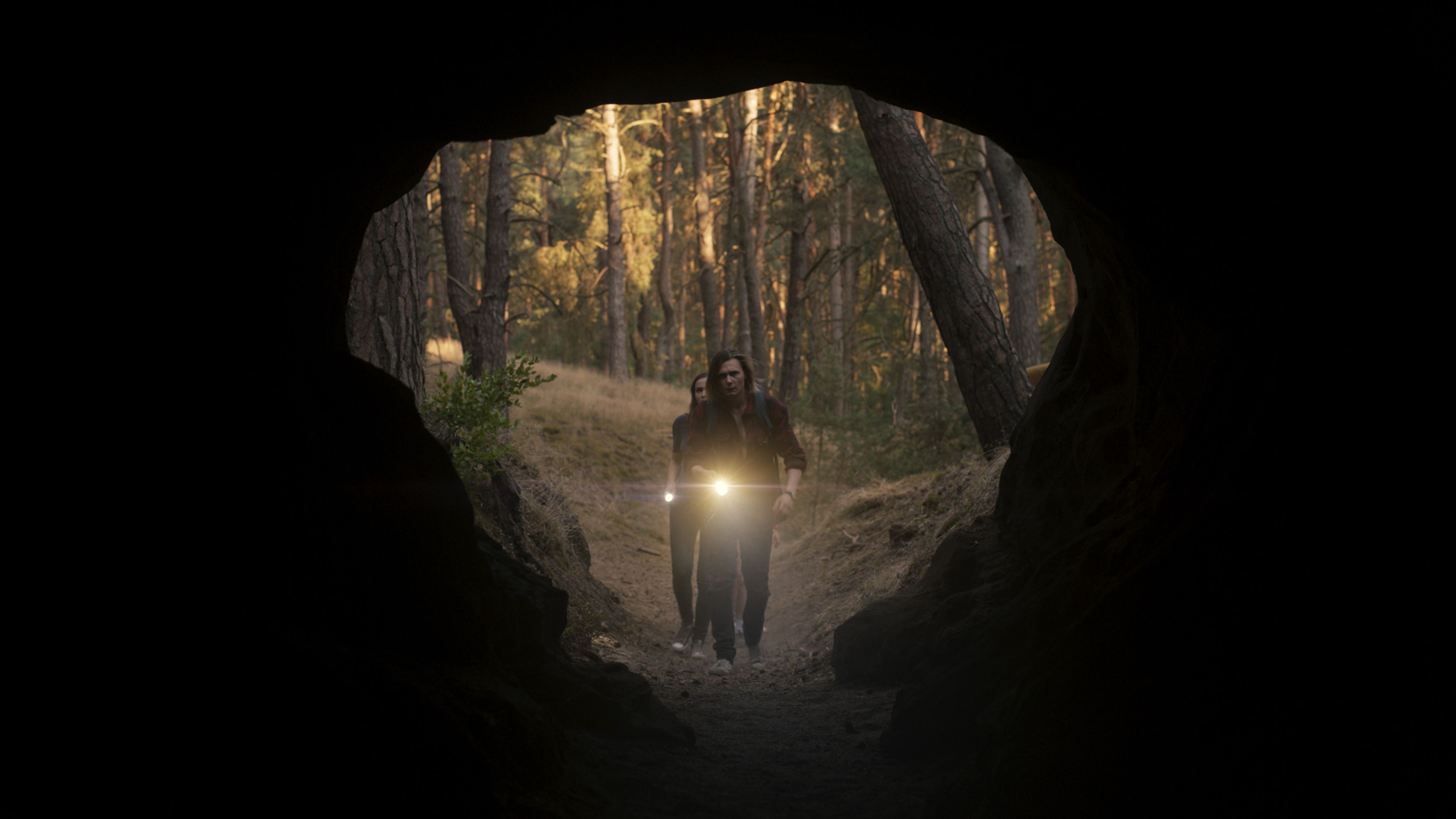
It's fitting that the first entry on this list should be a German masterpiece, Dark. This original series developed for Netflix is a stunning depiction of a small town and the fallout when they discover the presence of a wormhole in a nearby cave that appears to connect different points in time at this one physical location.
The series explores different periods in the town's history, and generations of families who interact with this extraordinary phenomenon to varying effects. But the entire premise of the show is built on the foundation of Einstein's views on the illusion of time, directly engaging with a famous quote from the man himself: "The distinction between the past, present and future is only a stubborn illusion."
Applying Einstein's own theories and ideas as the foundation to explain the core mystery of the series creates a beautiful tribute that also adds credibility and a sense of realism to the show's most ambitious plot, and the efforts pay off in a big way with how much this series was able to build on Einstein's incredible insights.
6 The Expanse
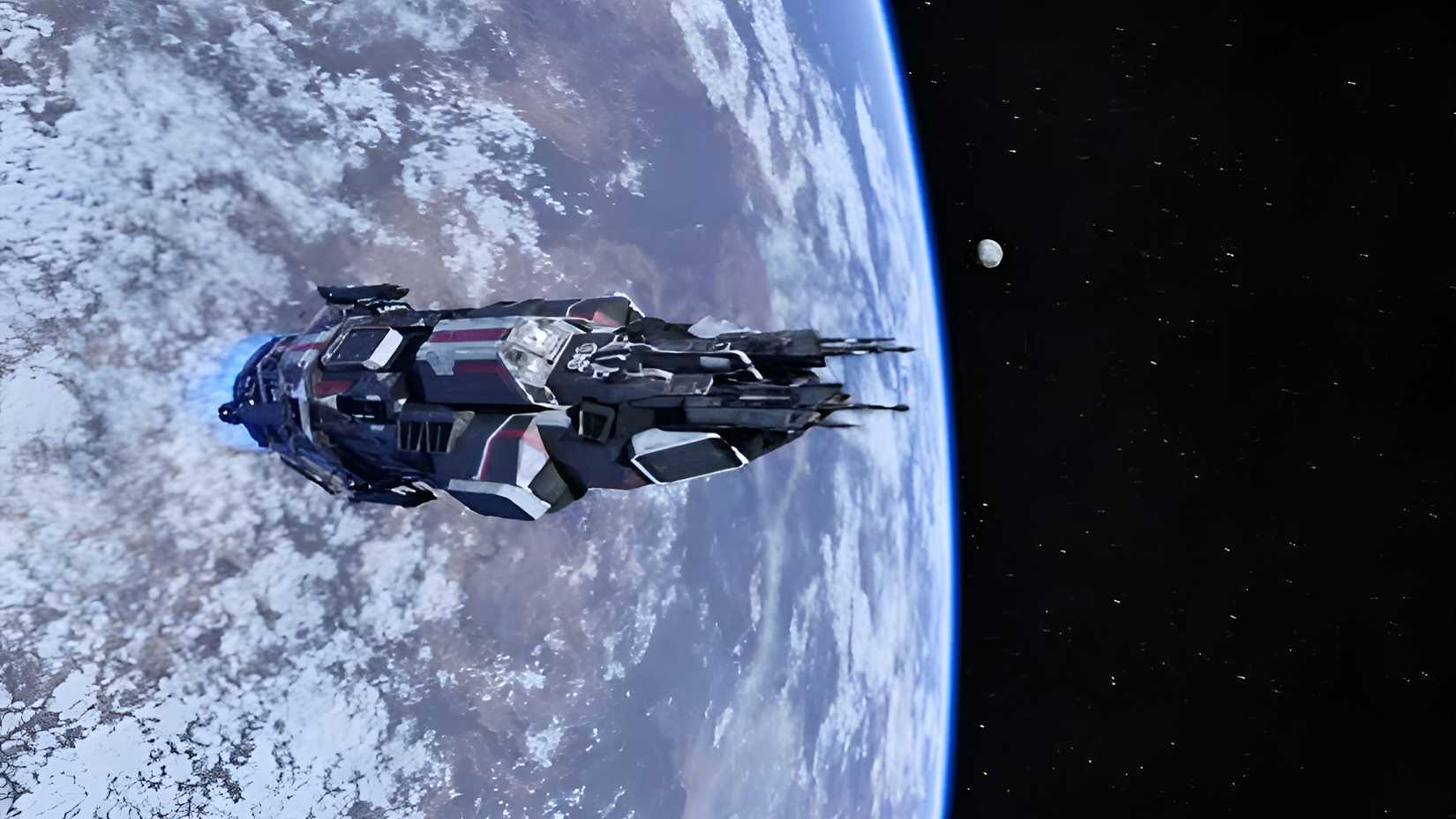
In The Expanse, humanity has colonized many planets, moons, and even large asteroids throughout the solar system, and they have found a way to traverse significant distances in relatively short periods of time. While this doesn't seem like a particularly groundbreaking foundation for a sci-fi series, the show's approach to space travel in particular, and the consequences of gravity are grounded in Einsteinian physics.
In many shows and films that deal with interspace travel, humans are able to perform their duties on spacecraft thanks to the presence of artificial gravity, but this is a tremendous work of fiction. In reality, to achieve a sense of gravity that humans are familiar with, a ship would need to constantly be in motion, which is tied to Einstein's Equivalence Principle. And The Expanse employs this idea beautifully within their narrative.
5 Fringe

Moving into something that may feel a little more supernatural and fiction-heavy, Fringe is a series that sees law enforcement team up with an eccentric scientist, Walter Bishop, whose focus is on the most fringe aspects of science. The series plays with alternate dimensions, spatial anomalies, and the breakdown of spacetime, which frequently causes Bishop to refer back to early 20th-century physics breakthroughs.
Evidently, these breakthroughs are often a clear reference to Einsteins theories, and while the show explores the most exaggerated versions of these ideas, it is a direct escalation of those foundational ideas. From mass-energy equivalence to parallel universes, Einstein laid the foundations that helped to build this story.
4 Doctor Who

Now, Doctor Who is a series that has been on screens since 1963, and in that time, the series has explored a great many corners of the universe thanks to the show's core premise as a space and time exploration story revolving around an alien whose curiosity sees him travel to these far-flung moments and places. But the show has also touched on some profound scientific concepts that were masterfully handled.
Specifically, in the modern era, there have been a handful of episodes that have engaged with ideas around gravitational time dilation and black hole physics. And the best example has to be in the incredible episode, "World Enough and Time." In that story, a large spaceship is caught near a black hole, which causes people on different floors of the ship to experience time at different rates.
And while much of the rest of the series may not cling to Einstein's most compelling or well-formulated arguments, Einstein does have a presence in the rest of the series as a figure whom the Doctor admires, and one who is occasionally seen in special shorts like the 2011 minisode, "Death is the Only Answer," where he appears alongside Matt Smith's Eleventh Doctor.
3 Farscape
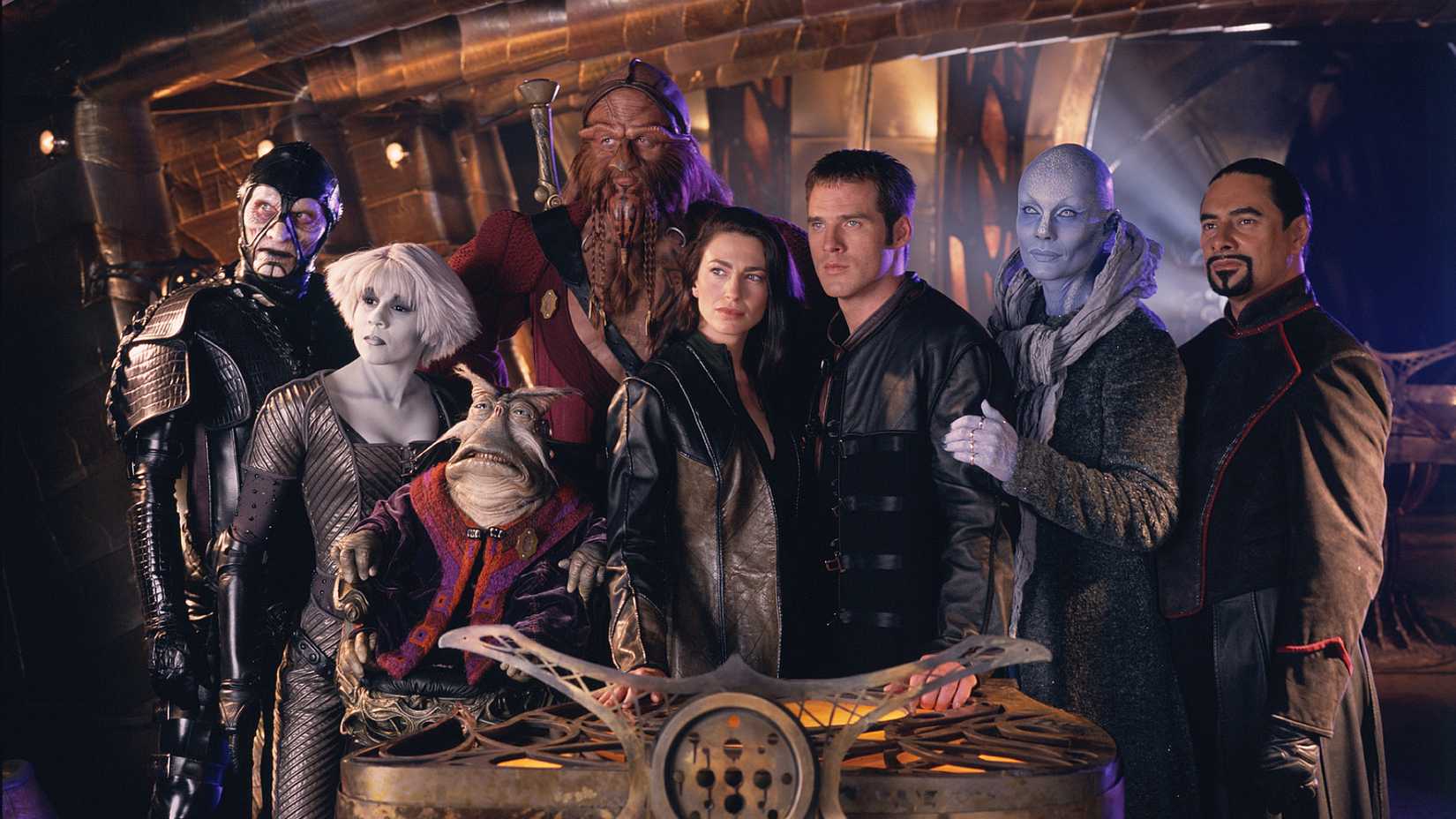
The 1999 series, Farscape is a rare series that actually engages with a protagonist trying to understand and master equations related to spacetime manipulation due to his accidentally triggering a wormhole and results in him being stranded in a distant corner of the universe, surrounded by aliens.
The reason this series ties into Einstein's work so well is down to the exploration of Einstein-Rosen bridges, aka wormholes. John Crichton, the hero of the series, directly engages with Einstein's work and the show builds on a concept that requires us to stretch our imaginations slightly to see how the outlandish story could actually be rooted in some theoretical truth.
2 Steins;Gate

While all of the above shows have been traditional live-action sci-fi stories that attempt to make some sense of scientific frameworks before jumping into a fictional narrative, Steins;Gate is an exceptional anime series that rigorously applies scientific logic and realism to try and create a story that is somewhat conceivable, before ultimately moving into the fiction that obviously makes a show like this so engaging.
The series follows a group of friends who create a machine that is capable of sending messages to the past. However, upon engaging with the past, they find that their present timeline becomes distorted and altered due to their actions and interference. This directly draws on Einstein's explorations of event horizons and cosmic causality, with the series acting on a foundation of cause and effect in a continuous and singular spacetime continuum.
1 Warehouse 13

Finally, Warehouse 13 is a worthy addition to the list not because of grandiose theoretical science being applied to the narrative, or depicting what exists inside and through black holes, but because the show literally creates a fictional connection to the brilliant Einstein in its own lore.
Question 1 of 3
The series follows two US Secret Service agents who are assigned to a warehouse full of supernatural anomalies that require further study and research. In order to construct the right containment facility, the show directly points to the agency getting the help of exceptional individuals, like Einstein, to help design the structure and ensure no reality-warping energies would break free.
Evidently, TV shows have paid tribute to Albert Einstein in a variety of ways. From applying his theories to build a more grounded story, to drastically expanding his theories to create thrilling fiction, and integrating a fictional version of the man himself thanks to his reputation as one of the most intelligent people to ever live. All of these stories benefit from a connection to Einstein, and create a richer story for it.
KioskNews shows a cleaned-up reading view extracted from the publisher’s page — the original always lives on their site, not ours.