6 Books From the Year 1990 That Are 10/10 Masterpieces

I have a problem with books that become classics. People start talking about their importance, their awards, their influence, and suddenly something that once kept readers awake until three in the morning sounds suspiciously like homework. I'd rather know which character made somebody furious, which paragraph they couldn't stop rereading, and whether they finished the book feeling like they'd just been through something personally.
And 1990 gave us an astonishing amount to argue about. Thirty-six years later, these books can still make you laugh at people you probably shouldn't, fall hopelessly in love with fictional strangers, or reconsider things you've believed your entire life. Some demand patience. Others grab you before you've finished the first chapter. But every one of them offers something I would hate for a reader to miss.
6 'Get Shorty' (1990)

A stolen leather jacket starts a feud that eventually sends Miami loan shark Chili Palmer to Hollywood. He's pursuing a debtor who faked his death to collect an airline settlement, but his business soon introduces him to struggling film producer Harry Zimm. Get Shorty follows Chili's growing fascination with filmmaking, particularly after he realizes his own criminal experiences would make a terrific movie. Unfortunately, Harry's financial problems involve dangerous people who aren't especially interested in hearing a good pitch.
Elmore Leonard wrote this gloriously entertaining novel with an ear for dialogue I genuinely envy. Chili's wonderful advantage is that he understands intimidation, negotiation, and dishonest people better than the Hollywood professionals surrounding him. The joke practically writes itself. A loan shark discovers that becoming a movie producer barely requires changing careers. Yet Leonard gives Chili enough intelligence and personality to make his ambition strangely appealing. I love how conversations gradually become contests for control, with everybody pretending they're considerably more sophisticated than they actually are.
5 'The Buddha of Suburbia' (1990)

Karim Amir is a mixed-race teenager growing up in suburban London during the 1970s, desperate to escape the limitations of his family and discover a more exciting life. His father Haroon begins reinventing himself as a spiritual guru for fashionable middle-class English people, while Karim becomes involved in London's theatrical scene. The Buddha of Suburbia follows his messy education in sex, race, class, ambition, and the humiliating business of figuring out who he wants to become.
I adore Karim's willingness to admit how ridiculous the adults around him can be, especially when he's behaving just as foolishly. Hanif Kureishi, who wrote the novel, gives him a voice bursting with curiosity and wicked humor. One of the sharpest ironies comes when Karim discovers that theatrical sophistication doesn't necessarily protect him from racial stereotyping. He's offered opportunities partly because directors expect him to perform their fantasies of Indian identity. Meanwhile, Haroon is selling another carefully constructed version of cultural authenticity. The whole thing is funny until you recognize how exhausting it must be to keep performing somebody else's idea of who you are.
4 'Jurassic Park' (1990)

Jurassic Park begins with a wonderful proposition that becomes increasingly horrifying the longer you consider it. Billionaire John Hammond has financed the cloning of dinosaurs and built an extraordinary wildlife attraction on a remote island near Costa Rica. Paleontologist Alan Grant, paleobotanist Ellie Sattler, and mathematician Ian Malcolm visit to assess the park's safety. Naturally, Hammond believes everything is under control. The dinosaurs have other ideas, particularly after a disgruntled employee sabotages the security systems.
Michael Crichton's novel is even more ruthless than its famous adaptation. Hammond is considerably less sympathetic, and the scientific warnings feel like accusations against an entire culture of technological arrogance. My favorite detail concerns the park's dinosaur-counting system. Its software is designed to confirm the expected number of animals, overlooking the possibility that there might actually be more. That's brilliant, and frighteningly believable. Meanwhile, Grant must keep Hammond's grandchildren alive through encounters that include an aviary and a terrifying river journey. Crichton makes the extraordinary science convincing enough that I forget these creatures are fictional. Then he makes me desperately wish humanity had left them alone.
3 'Omeros' (1990)
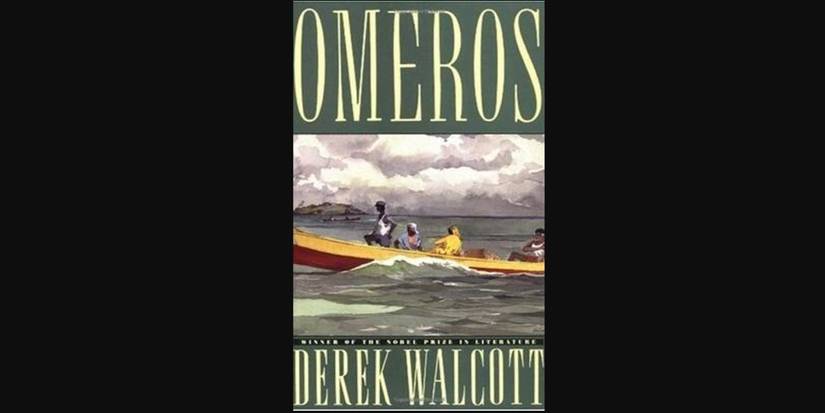
Two fishermen, Achille and Hector, compete for the affection of Helen on the Caribbean island of Saint Lucia. Another fisherman, Philoctete, suffers from a wound that refuses to heal. Their lives unfold against the island's complicated history of colonialism, slavery, and cultural displacement. Derek Walcott wrote Omeros as an epic poem, drawing upon classical mythology while giving extraordinary dignity to people whose struggles rarely occupy the center of traditional heroic literature.
Achille's imagined journey to ancestral Africa is among the most affecting passages. He encounters an ancestor who questions the meaning of his name, exposing how much history was lost through slavery and forced displacement. And Philoctete's wound becomes heartbreaking because its physical pain expresses something much older than his individual suffering. Walcott's language can be demanding, but the rewards are enormous. He makes the sea, the fishermen's labor, and the island's landscape feel inseparable from the lives unfolding there. I particularly admire his refusal to treat the Caribbean as somebody else's picturesque destination. These people possess histories worthy of an epic, and Walcott gives them one.
2 'Possession' (1990)

A young academic named Roland Michell discovers drafts of an intriguing letter written by celebrated Victorian poet Randolph Henry Ash. The correspondence suggests that Ash may have conducted a secret relationship with another poet, Christabel LaMotte. Roland joins forces with LaMotte scholar Maud Bailey, and their investigation sends them through archives, private collections, and long-forgotten personal documents. Possession becomes an extraordinary literary mystery as the researchers grow increasingly attached to people who have been dead for more than a century.
COLLIDER The Mystery Desk
Case File 0481 · Open
Collider/ Movies/ Mystery/ Which Classic Mystery Movie Are You
8 Questions · 2 Minutes Which Classic Mystery Movie Are You? Every answer counts toward the verdict.
Four films that solve a mystery four completely different ways, from a comedy with three separate endings to a thriller told backwards. One of them has been describing you all along.
The Suspects01🕯Clue1985
02🪟Rear Window1954
03📦Se7en1995
04📸Memento2000
Prime suspect
Evidence logged automaticallyExhibit 01 of 08Film Night
What kind of film night are you after? Pick the one that sounds most like you
Press 1 to 4 to log an answer
Prime suspect
Evidence logged automaticallyExhibit 02 of 08Character Witness
How would your friends describe you? Be honest
Press 1 to 4 to log an answer
Prime suspect
Evidence logged automaticallyExhibit 03 of 08Whereabouts
What do you do when you are stuck at home? One answer only
Press 1 to 4 to log an answer
Prime suspect
Evidence logged automaticallyExhibit 04 of 08The Twist
How do you react to a plot twist? Pick the closest answer
Press 1 to 4 to log an answer
Prime suspect
Evidence logged automaticallyExhibit 05 of 08The Scene
Pick a room. No wrong answers here
Press 1 to 4 to log an answer
Prime suspect
Evidence logged automaticallyExhibit 06 of 08Testimony
What is your memory like? Pick the closest answer
Press 1 to 4 to log an answer
Prime suspect
Evidence logged automaticallyExhibit 07 of 08Closing Argument
How do you feel about endings? Think about the last film that got you
Press 1 to 4 to log an answer
Prime suspect
Evidence logged automaticallyExhibit 08 of 08The Verdict
What should a mystery film do to you? Last one
Press 1 to 4 to log an answer
Case Closed Verdict Your Mystery Movie Is
🕯 Clue Jonathan Lynn · 1985 You are the most fun thing in the room, and you are not remotely in control of it.
Clue is a murder mystery built from a board game, played at farce speed by one of the best comic ensembles ever assembled, and it refuses to commit to a single answer. That is you: loud, quick, impossible to plan around, and the reason anybody had a good time. Case Notes
- You keep the energy up and the plan loose, and people have a much better evening because of it.
- Three different endings were sent to different cinemas in 1985, so the answer depended on which screen you walked into.
- It flopped completely, found its audience on video, and went back into cinemas for its fortieth anniversary with the endings randomised again.
- Your flaw is that chaos is excellent company and a terrible plan.
Chaotic Quick Sociable Unserious
🪟 Rear Window Alfred Hitchcock · 1954 You watch, and you notice the thing everybody else walks past.
Hitchcock trapped James Stewart in one room with a broken leg and a view of his neighbours, and built an entire thriller out of a man looking out of a window and being right. You are the one who clocks the detail nobody announced, and you are usually correct before you can prove it. Case Notes
- You are quietly the most observant person in your circle and you notice changes before anybody mentions them.
- The courtyard was one of the largest sets ever built at Paramount, with thirty-one apartments and working plumbing.
- It was nominated for four Academy Awards including Best Director and is still taught as the cleanest thriller ever constructed.
- Your risk is that watching and doing something about it are not the same, and you know it.
Observant Patient Curious Detached
📦 Se7en David Fincher · 1995 You take things on, and you do not put them down.
Fincher made a serial killer film where the detectives are losing the entire time, shot it so dark the studio complained, and refused to change an ending that everybody told him would sink the film. You have that same refusal in you, and it has cost you more than you let on. Case Notes
- You are the one who keeps going after everybody else has accepted it cannot be solved.
- New Line wanted a different ending and Brad Pitt reportedly refused to make the film without the one they shot.
- It turned Fincher from the director who had a bad time on Alien 3 into the defining thriller director of his generation.
- Your weakness is that carrying something this long does real damage, and you are usually the last to notice.
Relentless Serious Principled Haunted
📸 Memento Christopher Nolan · 2000 Nobody can quite follow your thinking, and you get there anyway.
Nolan told the story backwards, so the audience knows as little as the man at the centre of it does, and the whole film becomes an argument about how much of what you believe you simply decided to believe. You arrive at the right answer by a route nobody else would have taken. Case Notes
- You work things out sideways, and explaining the route takes longer than the answer did.
- It was nominated for Best Original Screenplay and Best Film Editing in 2002 and won neither, which still annoys people.
- It cost around nine million dollars, made over five times that, and built the career that led to everything after.
- Your flaw is trusting your own version of events slightly more than the evidence supports.
Lateral Private Analytical Unreadable
Evidence Log
Clue
Rear Window
Se7en
Memento
Copied to clipboard
Case filed by COLLIDER Collider.com · The Mystery Desk
And what a magnificent thing A. S. Byatt accomplished here. She didn't simply invent two Victorian poets and describe their accomplishments. She wrote their poetry, letters, and intimate exchanges with such convincing individuality that they begin feeling like actual historical figures. I particularly love how protective Maud becomes of Christabel, resisting the academic desire to reduce a woman's complicated life to somebody else's romantic discovery. Meanwhile, Maud and Roland's own guarded attraction develops alongside the correspondence they're studying. Two love stories begin speaking to each other across time. I almost resent the cleverness of it, because the intellectual pleasure is enormous while the emotional consequences creep up on you.
1 'The Things They Carried' (1990)
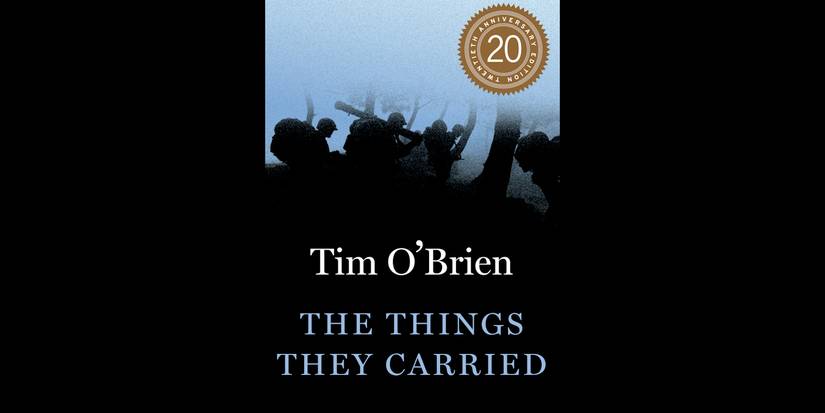
Tim O'Brien wrote this interconnected collection of stories, drawing on his experience of the war while continually questioning how fiction can communicate emotional truth. Lieutenant Jimmy Cross carries letters from Martha, a college student who doesn't love him the way he wishes she did. His soldiers carry ammunition, medical supplies, photographs, religious objects, and small possessions that help them endure the Vietnam War. The Things They Carried begins with those physical burdens before exploring the memories, fears, guilt, and grief that accompany the men long after particular battles have ended.
There's a passage in “On the Rainy River” where the narrator considers fleeing to Canada rather than serving in Vietnam. He desperately wants to avoid the war, yet the prospect of public shame becomes unbearable. Later, “Speaking of Courage” follows Norman Bowker driving around a lake, imagining conversations he cannot bring himself to have about his experiences and the death of his friend Kiowa. These stories absolutely destroy me because the men aren't searching for grand historical recognition. They want somebody to understand what happened to them. O'Brien constantly challenges the distinction between an event and the story somebody tells about it, making even our confidence as readers feel uncertain. I've read plenty of extraordinary war literature. Very little has made me understand so intimately how a person can return home and still be unable to leave the war behind.
KioskNews shows a cleaned-up reading view extracted from the publisher’s page — the original always lives on their site, not ours.