Ahead of 2027 trial runs, India’s first bullet train corridor energises overhead electrical system on 50-km Surat–Bilimora stretch
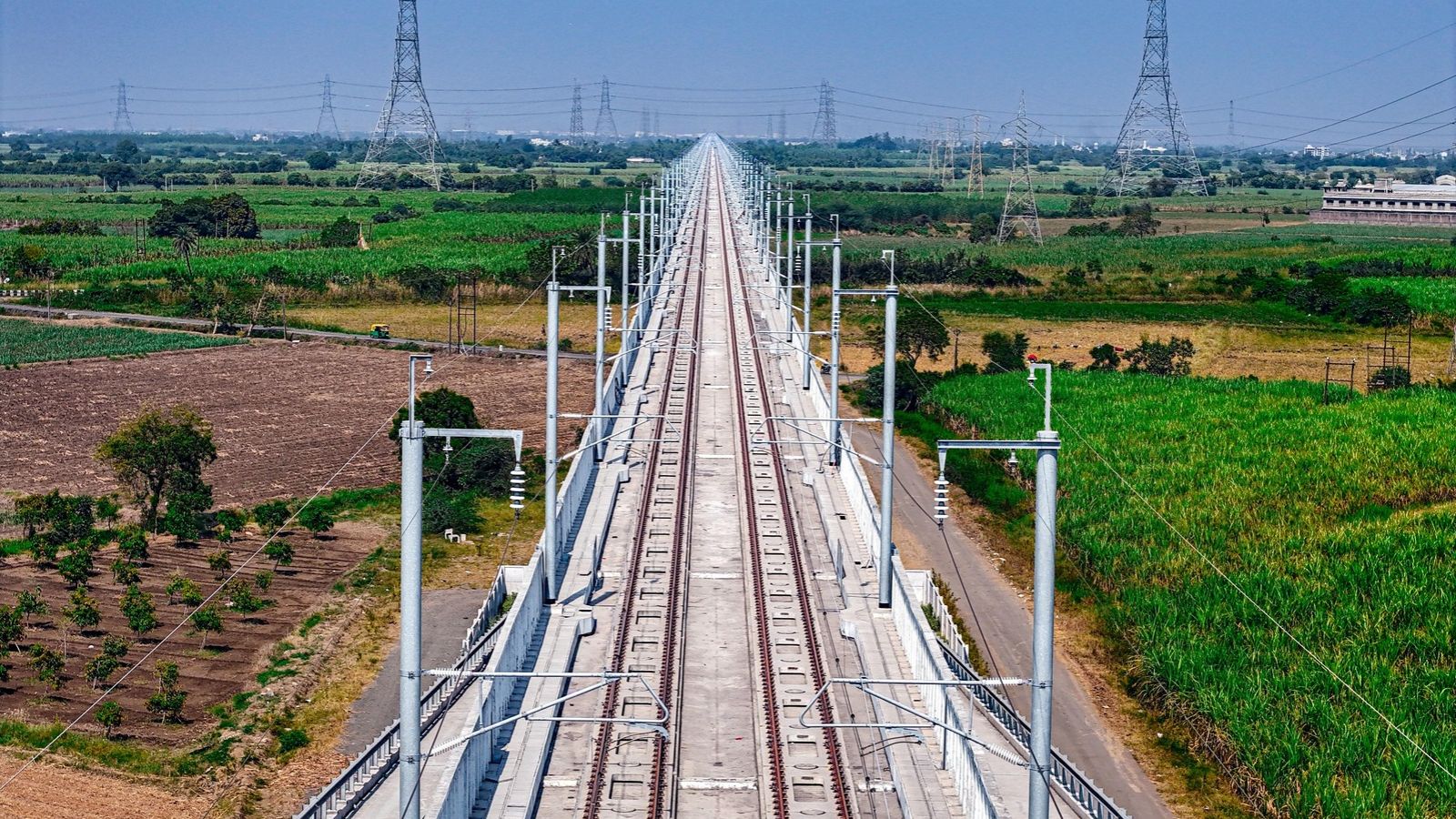
Energisation will be carried out progressively in smaller sections under the supervision of technical teams to ensure safety and compliance with prescribed procedures.
AI Narration
Listen
00:00
With trial runs of India’s first bullet train targeted for 2027, the project has taken another step towards testing, energising the overhead electrical system along the 50-km Surat–Bilimora section on Friday.
The National High Speed Rail Corporation Limited (NHSRCL) said on Saturday that the Overhead Equipment (OHE) system was energised on November 20 on both the Up and Down lines of the elevated section. The milestone marks an important step towards further testing activities on the Mumbai–Ahmedabad high-speed rail corridor, the NHSRCL said in a statement.
Energisation will be carried out progressively in smaller sections under the supervision of technical teams to ensure safety and compliance with prescribed procedures.
The project is moving towards trial runs in 2027. Railway Minister Ashwini Vaishnaw said in September that testing of the indigenous bullet train was expected to begin in May or June next year. He also indicated that trials could continue for two to four months before passenger services are inaugurated. The Centre has separately stated that the first high-speed rail service is expected to commence in August 2027, initially on the Surat–Vapi section.
The Surat–Bilimora stretch is the first section of the 508-km corridor to have its overhead traction system energised. The project uses a 2 × 25 kV overhead traction system, with 14 traction substations planned along the route to draw electricity from the national grid and supply it to the trains, NHSRCL said on Saturday.
The first traction substation, at Bilimora in Navsari district, has completed installation work in its control panel, changeover switch, transformer and circuit-breaker buildings. The Gujarat substations will receive power from GETCO’s 220 kV Ambetha Grid Substation. The entire electrical network will be monitored through a centralised control centre.
The approximately 50-km elevated alignment between Surat and Bilimora includes bridges across four rivers and a steel bridge over National Highway 53. Around 94,000 noise barriers have been installed along the viaduct to minimise noise impact on surrounding areas.
Story continues below this ad
With the overhead electrical system now live, the NHSRCL has advised residents, commuters, construction workers and members of the public not to approach or touch the installations or undertake unauthorised work near these.
KioskNews shows a cleaned-up reading view extracted from the publisher’s page — the original always lives on their site, not ours.