10 Great Fantasy Novels That Predate Lord Of The Rings

Tom is a Senior Staff Writer at Screen Rant, with expertise covering everything from hilarious sitcoms to jaw-dropping sci-fi epics.
Initially he was an Updates writer, though before long he found his way to the TV and movies team. He now spends his days keeping Screen Rant readers informed about the TV shows of yesteryear, whether it's recommending hidden gems that may have been missed by genre fans or deep diving into ways your favorite shows have (or haven't) stood the test of time.
Tom is based in the UK and when he's not writing about TV shows, he's watching them. He's also an avid horror fiction writer, gamer, and has a Dungeons and Dragons habit that he tries (and fails) to keep in check.
Sign in to your ScreenRant account
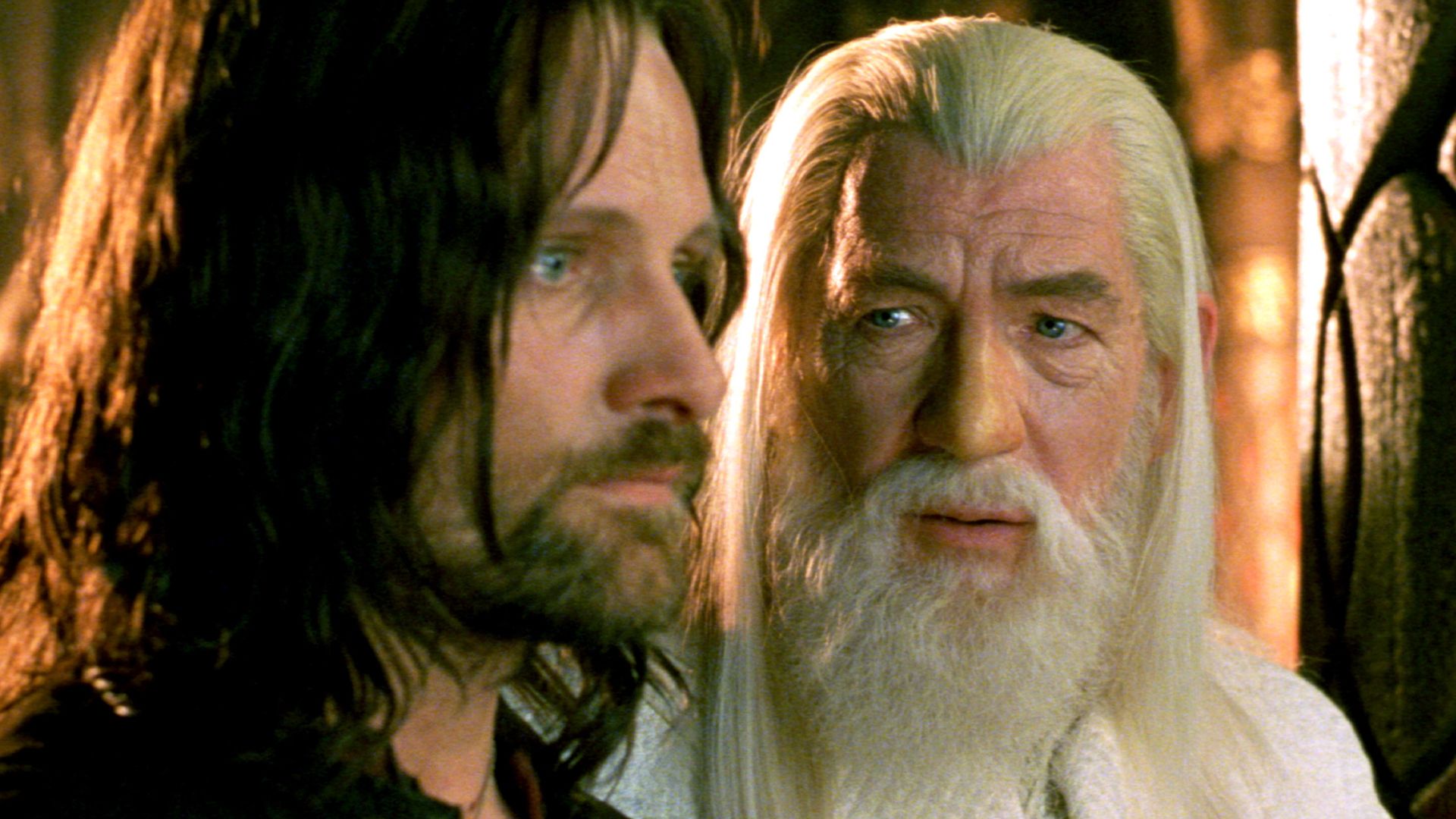
No work of fiction has a greater claim to shaping modern fantasy than J.R.R. Tolkien’s The Lord of the Rings trilogy. The sprawling trilogy, not to mention Tolkien’s other works in the wider Middle-earth mythos like The Hobbit, helped define the genre as it exists today, influencing generations of authors who embraced its conventions or deliberately challenged them. However, Tolkien didn’t invent fantasy. By the time his fellowship left the Shire when the first LotR book was published in 1954, dozens of other authors had already been exploring enchanted fantasy worlds for centuries.
While The Lord of the Rings is foundational, J.R.R. Tolkien wasn’t writing in a vacuum. He had literary inspirations himself, and the fantasy genre already had decades of established works long before Tolkien came along. The fantasy novels that came out before Lord of the Rings reveal just how rich literary fantasy already was when the father of the modern genre came along. These books might lack Middle-earth’s pop culture prominence, but each helped establish a different part of literary fantasy’s current identity. What’s more, they all remain entertaining stories too.
10 The Princess And The Goblin By George MacDonald (1872)
A Princess And A Miner Discover That Courage Matters More Than Status

Beneath the mountains surrounding Princess Irene’s home in George MacDonald’s 1872 fantasy novel The Princess and the Goblin, goblins are preparing to strike against the people living above them. Her unlikely ally is Curdie, a miner’s son whose practical knowledge is as essential to their survival as the enchanted thread left by Irene’s mysterious great-great-grandmother. The Princess and the Goblin combines these elements into an adventure where the underground passages feel dangerous, the magic remains elusive, and neither child can succeed through bravery alone.
The importance of George MacDonald and The Princess and the Goblin extends beyond introducing familiar creatures. His 19th-century story makes trust, imagination, and moral courage active forces within an enchanted world, helping establish what are now core themes of the fantasy genre. Tolkien read MacDonald in childhood, and although his later opinions of the author were mixed, the influence of MacDonald’s fantasy on Middle-earth isn’t too hard to find (especially when it comes to, for obvious reasons, Tolkien’s orcs and goblins).
You can purchase The Princess and the Goblin by George MacDonald here.
9 Lud-in-the-Mist By Hope Mirrlees (1926)
Forbidden Fairy Fruit Exposes The Cracks In A Respectable Town

Respectability becomes a remarkably fragile defense against enchantment in Lud-in-the-Mist. The titular prosperous town in the 1926 novel belongs to Dorimare, a country whose citizens have tried to exclude discussing anything pertaining to neighboring Fairyland from acceptable conversation. Unfortunately, banning the supernatural does little to stop the trade in fairy fruit. When its influence reaches Mayor Nathaniel Chanticleer’s family, the conflict becomes personal. Hope Mirrlees uses fantasy to construct a tale around civic embarrassment, buried history, and parental anxiety, creating a setting where a comfortable household feels as vulnerable as a kingdom under siege.
Lud-in-the-Mist feels incredibly ahead of its time, especially when it comes to moral nuance and thematic depth. Unlike many of her early 20th century fantasy author contemporaries, Hope Mirrlees refuses to make enchantment entirely comforting or entirely corrupting. Fairyland represents desires and experiences that Dorimare’s orderly society cannot accommodate, giving the mystery a richness beyond identifying a villain. Its mixture of domestic life, menace, and beautiful strangeness remains strikingly accessible and relatable for modern readers, especially since it challenges the idea that elaborate fantasy worlds must revolve around warfare.
You can purchase Lud-in-the-Mist by Hope Mirrlees here.
8 The King Of The Golden River By John Ruskin (1841)
A Mountain Quest Turns Kindness Into The Most Powerful Magic

Gold promises an escape from hardship in John Ruskin’s The King of the Golden River, but pursuing it reveals the difference between prosperity and greed. Young Gluck lives with two cruel older brothers, whose selfishness helps destroy their fertile valley. An encounter with a supernatural king introduces the possibility of transforming a mountain river into gold. Written in 1841 and published in 1851, this short story may not be a full-length novel, but its importance to the early literary fantasy Tolkien would build upon almost a century later is difficult to overstate.
A particularly influential aspect is that John Ruskin uses the landscape to make the moral conflict in The King of the Golden River feel tangible. Mountains, water, and weather participate in the story rather than merely adding dramatic flare and atmosphere. The importance given to creating a sense of place and geography being an active influence on the narrative are all also celebrated aspects of Tolkien's Middle-earth stories. What’s more, Ruskin’s focus on ecological sensitivity and distrust of exploitation also remains immediately recognizable to modern fantasy readers and were key themes of Tolkien’s own work, especially The Lord of the Rings.
You can purchase The King of the Golden River by John Ruskin here.
7 The Crock Of Gold By James Stephens (1912)
Irish Folklore And Ancient Gods Collide In A Mischievous Philosophical Adventure

The Crock of Gold presents readers with a world in which leprechauns, philosophers, and gods inhabit the same unruly reality. The 1912 novel by author James Stephens follows several narrative arcs, with the central focusing on a woodland philosopher whose affairs become entangled with stolen fairy treasure and the arrival of Pan. Another strand details a competition between Pan and the Irish god Angus Óg. The plot wanders through conversations, misunderstandings, and supernatural interventions, making this a fantasy driven by differences in world view as much as by physical danger. Even its seemingly minor disagreements can end up having extraordinary consequences.
As far as contribution to modern fantasy is concerned, The Crock of Gold was a trailblazer in blending myth with ordinary life. This may be commonplace in fantasy now, but it definitely wasn’t in 1912. James Stephens draws from Irish folklore while allowing Greek divinity into the same imaginative landscape, breathing new life into both and never being afraid of reinterpreting literary tradition to make characters or concepts fit his own story. It’s exactly the kind of imaginative repurposing of traditional fantasy and mythological concepts that Tolkien would later use to bring Middle-earth to life.
You can purchase The Crock Of Gold by James Stephens here.
6 She: A History of Adventure By H. Rider Haggard (1887)
An Immortal Queen Makes Eternal Life Look Terrifying

Long before Sauron waged a war across millennia and returned from apparent death in The Lord of the Rings, immortality was a source of obsession and dread in 1887’s She: A History of Adventure. Guided by an ancient inscription, Horace Holly and Leo Vincey travel into Africa and encounter Ayesha, the formidable ruler known as She-who-must-be-obeyed. Her extraordinary longevity binds the adventure to a romance reaching across centuries. Haggard turns archaeological discovery into an entrance to the impossible, with the remnants of vanished civilizations suggesting that recorded history conceals something far stranger.
J.R.R Tolkien’s interest in She: A History of Adventure was famously documented in his 1966 interview with Henry Resnick for a fantasy fanzine. Scholars of his work have also explored parallels between Haggard’s supernatural queens and several figures in Tolkien’s own writing, such as Galadriel. Its colonial attitudes and racial assumptions are definitely products of their time that haven’t aged well, but the book still remains a literary fantasy achievement. H. Rider Haggard makes ideas like beauty, domination, and grief, inseparable from the supernatural, establishing the importance of giving fantasy a psychological edge long before doing so was commonplace.
You can purchase She: A History of Adventure by H. Rider Haggard here.
5 Phantastes By George MacDonald (1858)
The Land Of Fairies Becomes A Dreamlike Test Of Desire, Pride, And Imagination

A bedroom transforming into an enchanted landscape is central to Phantastes, the foundational 1858 fantasy novel by George MacDonald. Its protagonist, Anodos, enters Fairy Land from the comfort of his home and encounters living trees, mysterious women, and a sinister shadow that changes his perception of everything around him. His pursuit of an elusive Marble Lady gives the wandering narrative a recurring focus, but this structurally ambitious narrative follows the shifting logic of dreams. MacDonald makes the enchantment of Fairy Land as beautiful as it is dangerous, with each encounter challenging Anodos’s assumptions about himself and the things he desires.
Published almost a century before The Lord of the Rings, Phantastes helped establish adult fantasy as a space for psychological exploration alongside supernatural adventure. It was one of the first fantasy novels to use an impossible world as a tool to ask serious emotional and moral questions. It’s an approach that’s commonplace today, but MacDonald’s philosophizing still feels fresh and rewarding over 150 years later, particularly as Anodos gradually confronts the possessiveness beneath his romantic ideals. The novel’s episodic structure and symbolic imagery demand patience, but its unsettling forests and elusive wonders remain a satisfying fantasy reading experience.
You can purchase Phantastes by George MacDonald here.
4 The King Of Elfland's Daughter By Lord Dunsany (1924)
A Mortal Marriage Reveals The Heartbreak Hidden Inside Fairy-Tale Wishes

Winning an elven princess’s love is only the beginning of The King of Elfland’s Daughter. When the people of Erl ask for a ruler with magical ancestry, Alveric crosses into Elfland and brings back Lirazel. Their marriage produces a son, Orion, but also exposes the distance between mortal existence and the timeless realm she has left. Lord Dunsany builds his 1924 novel not around Alveric’s successful fairy-tale adventure, but its consequences. Familiar fantasy elements like the enchanted sword and perilous border crossing matter, yet living with the result proves more difficult than completing the quest.
Even reading a century later, the depth and skill with which Lord Dunsany crafts the fantasy world of The King of Elfland’s Daughter is phenomenal. Elfland feels fundamentally different from the human world, and the musical prose gives that difference emotional force. Dunsany's impossible realm truly feels like a real place that readers have no problem imagining that a person could spend a lifetime missing. It’s not known exactly how much Dunsany directly influenced Tolkien. However, The King of Elfland’s Daughter predates The Lord of the Rings by over three decades, so the then-contemporary fantasy foundations Tolkien built upon inarguably included elements of Dunsany’s work (especially when it comes to Aragorn and Arwen).
You can purchase The King of Elfland's Daughter by Lord Dunsany here.
3 The Well At The World's End by William Morris (1896)
A Young Adventurer Finds An Entire World Between Home And His Heart’s Desire

For anyone interested in the history of traditional The Lord of the Rings-style epic fantasy quests, 1896’s The Well at the World’s End is essential. Author William Morris centers his saga on Ralph, the youngest son of the King of Upmeads, who leaves home and eventually seeks a legendary well whose waters promise extraordinary renewal. The destination may be the catalyst for Ralph’s quest, but it's the changing countries he travels through and encounters he has along the way that are the heart of the story. Morris gives the journey enough texture that crossing the landscape feels like entering a world beyond the immediate plot.
The deliberately archaic prose of The Well at the World’s End may take a little while for some to adjust to, yet is also an essential aspect of the charm. This is textbook grand romantic fantasy in the traditional sense, where adventure, love, and moral testing unfold across a heroic journey. William Morris was a substantial influence on Tolkien, who explicitly sought to emulate aspects of his writing. The importance of The Well at the World’s End to wider fantasy also can’t be overstated when it comes to worldbuilding. Its fictional landscapes and competing kingdoms are an early example of the deep lores that are now expected from modern high-fantasy novels.
You can purchase The Well At The World's End by William Morris here.
2 Titus Groan By Mervyn Peake (1946)
A Crumbling Castle Becomes An Entire Civilization Of Secrets And Rituals

A vast castle supplies almost everything Titus Groan needs to create an unforgettable fantasy world. The inhabitants of the sprawling ramparts and battlements of Gormenghast live according to traditions so ancient their purpose has become forgotten. The birth of Titus, heir to the castle’s House of Groan, should guarantee continued stability, but the ambitious kitchen servant Steerpike has other ideas. As the opening novel of Mervyn Peake’s Gormenghast trilogy, Titus Groan establishes a world whose architecture feels inseparable from its eccentric inhabitants and the oppressive society they’ve created.
Mervyn Peake’s great achievement with Titus Groan was demonstrating how much fantasy can accomplish without relying on conventional spellcasting or heavy supernatural elements. Grotesque comedy is used to explore ideas like loneliness and cruelty, with this thematic depth complimented by extraordinary visual detail. Published less than a decade before The Lord of the Rings, Peake’s novel represents a similar, but much less widely celebrated, turning point. It's the birthplace of many of the more gothic aspects of modern fantasy fiction, as well as its fascination with morally grey characters.
You can purchase Titus Groan by Mervyn Peake here.
1 The Worm Ouroboros By E.R. Eddison (1922)
Heroic Fantasy Reaches Astonishing Heights Of Splendor And Ruthless Ambition

Few early fantasy novels embrace grandeur as wholeheartedly as The Worm Ouroboros. Its central struggle pits the lords of Demonland against Witchland (though it should be noted these kingdoms aren’t filled with literal demons and witches). The chapters of the 1922 novel are filled to the brim with warfare, sorcery, perilous expeditions. What's more, rather than trying to water down the flamboyancy with realism, the narrative and prose style doubles down on it. Author E.R. Eddison deliberately draws on older heroic literature like Homer's Ancient Greek epics, Norse sagas like Beowulf, and Arthurian legend to give the boasts, loyalties, and rivalries of his fantasy characters an extravagant intensity.
That intensity is central both to the historical importance of The Worm Ouroboros and its continuing appeal. E.R. Eddison helped demonstrate how a fictional fantasy world could sustain a large, ambitious heroic narrative decades before J.R.R. Tolkien’s trilogy appeared. The two were contemporaries who read one another’s work, though they had different thematic approaches. Eddison’s aristocratic warriors pursue glory without the humility central to Tolkien’s heroes. Still, both also rewarded patience and ability to get through difficult prose rewards with spectacular imagery, meaning there’s a lot that The Lord of the Rings fans will fall in love with here.
You can purchase The Worm Ouroboros by E.R. Eddison here.
- Movie(s)
- The Lord of the Rings (1978), The Lord of the Rings: The Fellowship of the Ring, The Lord of the Rings: The Two Towers, The Lord of the Rings: The Return of the King, The Hobbit: An Unexpected Journey, The Hobbit: The Desolation of Smaug, The Hobbit: The Battle of the Five Armies, The Lord of the Rings: The War of the Rohirrim
- TV Show(s)
- The Lord of the Rings: The Rings of Power
- Video Game(s)
- The Lord of the Rings Online (dupe), Middle-Earth: Shadow of War, The Lord Of The Rings: Gollum, The Lord of the Rings: Return to Moria
- First Film
- The Lord of the Rings (1978)
- Cast
- Norman Bird, Anthony Daniels, Elijah Wood, Ian McKellen, Liv Tyler, Viggo Mortensen, Sean Astin, Cate Blanchett, John Rhys-Davies, Billy Boyd, Dominic Monaghan, Orlando Bloom, Christopher Lee, Hugo Weaving, Sean Bean, Ian Holm, Andy Serkis, Brad Dourif, Karl Urban, Martin Freeman, Richard Armitage, James Nesbitt, Ken Stott, Benedict Cumberbatch, Evangeline Lilly, Lee Pace, Luke Evans, Morfydd Clark, Mike Wood, Ismael Cruz Cordova, Charlie Vickers, Markella Kavenagh, Megan Richards, Sara Zwangobani, Daniel Weyman, Cynthia Addai-Robinson, Lenny Henry, Brian Cox, Shaun Dooley, Miranda Otto, Bilal Hasna, Benjamin Wainwright, Luke Pasqualino, Christopher Guard, William Squire, Michael Scholes, John Hurt
- Created by
- J.R.R. Tolkien
KioskNews shows a cleaned-up reading view extracted from the publisher’s page — the original always lives on their site, not ours.