Beijing doubles down on Type 071 amphibious warships, signalling a Taiwan focus
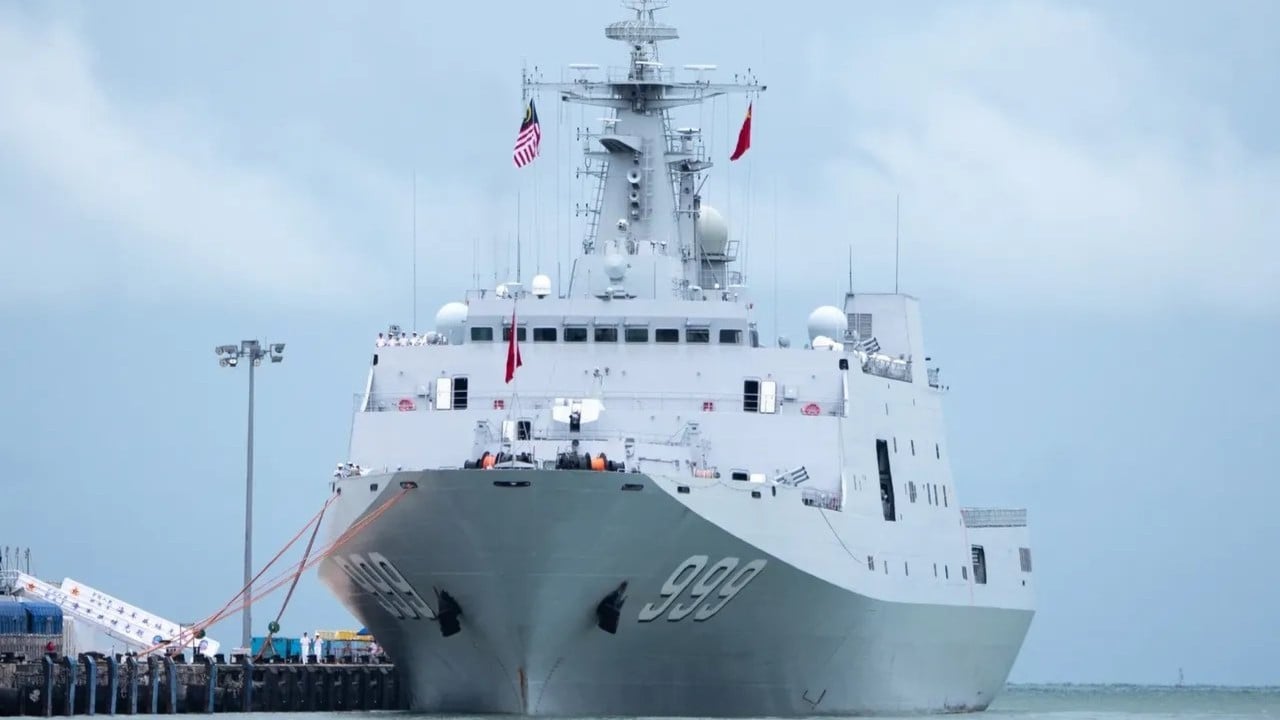
Beijing is accelerating production of its Type 071 amphibious transport docks by expanding construction to a second shipyard, potentially strengthening its ability to move troops and military equipment across the Taiwan Strait in a conflict.
The expansion comes amid long-standing United States assessments that Beijing lacks enough landing ships and logistical support for a large-scale assault on Taiwan, suggesting the People’s Liberation Army (PLA) may be moving to address a significant shortcoming in its ability to conduct such an operation.
Recent assessments indicate that six new Type 071 vessels are at various stages of construction or fit-out at two shipyards, including four at Hudong-Zhonghua’s Changxing Island facility in Shanghai and two at CSSC Offshore & Marine Engineering Group’s Longxue shipyard in Guangzhou.
09:58
Will Batanes become the next South China Sea flashpoint?
According to Janes Fighting Ships, two of the vessels in Shanghai were launched in August and October but have yet to enter service, while the other two remain under construction.
Naval News reported on Friday that one Type 071 had been launched in Shanghai in August, with two more under construction there and another two in Guangzhou, confirming simultaneous production at two yards for a class previously built exclusively in Shanghai. The report, however, did not account for another Type 071 launched in Shanghai last month.
Designed to carry troops, armoured vehicles, helicopters and hovercraft, the Type 071 is a key component of China’s amphibious fleet.
According to the International Institute for Strategic Studies’ “Military Balance 2026” report, the Chinese navy operates eight Type 071s and four larger Type 075 helicopter assault ships. While it is not clear when the six new hulls will be commissioned – or whether all are destined for the PLA Navy – adding them to the existing fleet would increase its Type 071 force by 75 per cent to 14 vessels.
Jim Fanell, a retired US Navy captain and former intelligence director of the US Pacific Fleet, viewed the simultaneous construction as evidence of Beijing’s determination to ramp up its amphibious capabilities.
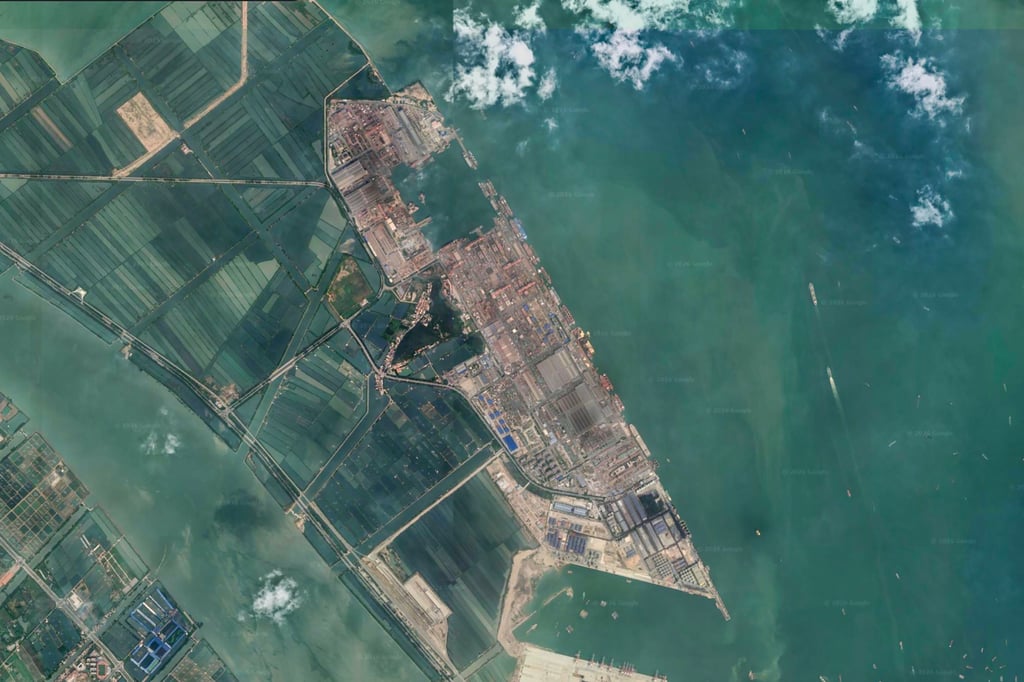
Using two naval shipyards to construct this class of amphibious warship simultaneously indicated how urgently Beijing was pursuing the capability to attack Taiwan, he said.
Fanell estimated that the six additional vessels could carry 3,600 to 4,800 marines and 24 hovercraft, based on a capacity of 600 to 800 personnel and four craft per ship.
He envisaged the larger fleet operating alongside the PLA Navy’s Type 075 helicopter assault ships and the catapult-equipped Type 076 Sichuan, which is undergoing trials, in formations similar to US Navy expeditionary strike groups.
Based on the number of amphibious assault ships and transport docks in service or under construction, Fanell said the PLA “could likely field at least five [such groups] by 2030”.
Under the structure he described, each group would include an amphibious assault ship, two Type 071 transport docks, a Type 055 cruiser and up to two destroyers or frigates. His projection assumes the Sichuan enters operational service, although Beijing has not announced plans to form such strike groups.
Lyle Goldstein, a specialist in Chinese naval warfare at Brown University in the US, said he was “a little bit surprised” by the renewed construction after several years without new Type 071s.
He suggested the restart could reflect confidence in the established design, a shift in shipbuilding priorities or an urgency to develop a credible option for an assault on Taiwan. The additional vessels could also improve the PLA Navy’s ability to conduct operations in the East and South China seas.
In a conflict, Goldstein envisaged the additional Type 071s operating alongside Type 075 and Type 076 assault ships, helicopters and drones to deploy elite troops during the initial stages of an amphibious operation.
He suggested those forces could seize positions near key ports, bridges or other critical locations – potentially in northern and eastern Taiwan – before larger numbers of troops and supplies arrived aboard slower civilian vessels.
With 14 Type 071s, the PLA could divide its forces across three to five target areas, he said, potentially using diversionary attacks and targeting less heavily defended areas to improve the chances of establishing a foothold, even if some landings failed.
Such operations would nevertheless carry substantial risks. Goldstein acknowledged that the ships would be heavily targeted by Taiwanese forces and potentially by countries intervening on Taiwan’s behalf, making surprise, speed and coordination essential.
This comes as the Pentagon’s December 2025 report on Beijing’s military capabilities identified significant amphibious assault limitations, concluding that the PLA Navy almost certainly lacked the conventional air and maritime lift capacity for a large-scale attack on Taiwan, and noting no significant expansion of its tank landing ships and medium-sized landing craft.
Beijing sees Taiwan as part of China to be reunited by force if necessary. Most countries, including the US, do not recognise Taiwan as an independent state, but Washington is opposed to any attempt to take the self-governed island by force and is committed to supplying it with weapons.
Fanell argued that organising additional amphibious warships into expeditionary strike groups could help address long-standing doubts about the PLA Navy’s ability to transport sufficient forces across the strait.
To further offset any capacity shortfall, the Pentagon report noted, the PLA Navy has continued to train with commercial roll-on/roll-off ferries, signalling an effort to integrate dual-use civilian vessels into its amphibious operations.
02:55
Taiwan concludes annual war games, including preparing for PLA sea blockade
Goldstein went a step further, disputing the premise that Beijing faced major lift and logistics constraints at all. With mainland China’s extensive port infrastructure and decades of groundwork, he argued, the PLA could draw on hundreds or even thousands of civilian vessels to pour reinforcements and supplies across the strait.
“I’m not convinced of any major shortcomings in China’s amphibious lift and logistics,” he said.
Yet for Goldstein, the significance of the additional warships was not limited to their potential use in a conflict. A larger amphibious fleet could also strengthen Beijing’s ability to pressure Taiwan without launching an assault.
He said he still believed Beijing sought to “win without fighting”, suggesting the additional warships could be “part of an effort to step up its capabilities for intimidation”.
KioskNews shows a cleaned-up reading view extracted from the publisher’s page — the original always lives on their site, not ours.