UK lawmakers demand new law to address AI threat to human rights
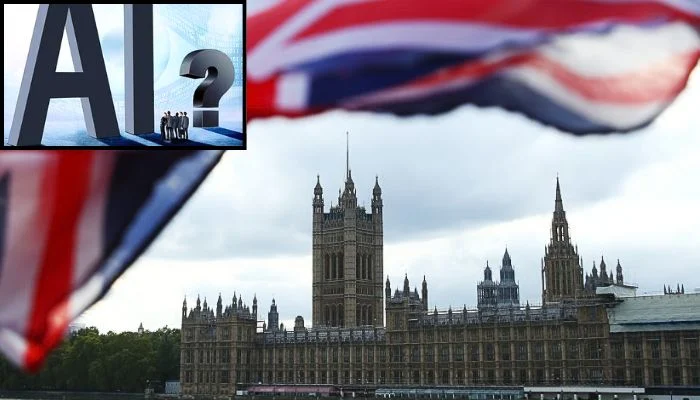
The rapid expansion of artificial intelligence has triggered a profound parliamentary debate regarding fundamental freedoms. A cross-party panel of lawmakers in the United Kingdom has formally demanded sweeping legislative intervention. The Joint Committee on Human Rights released a comprehensive assessment warning that existing statutory frameworks fail to adequately protect citizens from emerging technological hazards.
Lawmakers emphasised that current regulations remain fragmented and difficult to navigate. This leaves dangerous gaps in institutional protection across digital sectors. "Nowhere in the world, including the UK, has a current legislative and regulatory approach to AI that is fit for purpose," stated Labour MP and committee chair Alex Sobel.
Legislative Frameworks and Regulatory Deficits
Parliamentary investigators determined that current oversight mechanisms target downstream users rather than upstream creators. This leaves national regulatory authorities without adequate authority to inspect algorithms before public release. Committee leadership insisted that comprehensive legislation must govern every stage of the technological supply chain. Experts noted that unchecked algorithms frequently inherit systemic biases from raw internet data.
These flaws result in discriminatory outcomes for marginalised demographics. Also, malicious actors exploit automated systems to manufacture and distribute sophisticated disinformation campaigns at unprecedented scale. The JCHR report explicitly highlights severe abuses, including the creation of sexualised images of women and girls alongside unconsented facial scanning. "The AI Bill should establish a regulatory regime that classifies different risk levels and mandates more demanding obligations for higher risk AI systems and models," the report asserts.
Industry Warnings and Global Perspectives
Industry leaders have begun echoing parliamentary concerns regarding the speed of technological advancement. Dario Amodei, chief executive of the artificial intelligence firm Anthropic, recently published an essay titled "We Must Pace the Frontier" urging a deliberate slowdown in model development.
Amodei warned that within six to twelve months, systems might reach capabilities capable of leading a swarm that could take over the entire internet. Prominent technology executives, including OpenAI co-founder Sam Altman and Grok founder Elon Musk, publicly endorsed these precautionary measures. Meanwhile, political figures have balanced these warnings against international competition. Observers note that geopolitical rivalries complicate efforts to establish unified global guardrails. Government representatives maintain that national security institutions remain actively engaged in testing frontier models to establish robust security baselines. A government spokesperson noted that AI is advancing at an extraordinary pace while creating both opportunities and risks, emphasising that the UK hosts the best-resourced security institute in the world to develop necessary standards and safeguards.
Proposed Enforcement and Accountability Mechanisms
To counter these vulnerabilities, parliamentary investigators outlined several mandatory structural reforms. The committee advocated for the creation of a single, independent AI oversight body operating on a statutory basis. This agency would possess explicit enforcement powers to monitor model performance and penalise non-compliance.
Proposed measures include strict prohibitions against invasive technologies such as subliminal techniques and inappropriate use of profiling or biometric data. Legislators stressed that accountability must extend across the entire lifecycle of digital models.
Government officials acknowledged the complex nature of the technological revolution. They stated that the administration continues leading global efforts to understand and manage emerging risks. Observers suggest that upcoming legislative battles will define the balance between technological innovation and civic protection for decades. Ultimately, achieving a sustainable technological future depends on whether global policymakers can harmonise rigorous statutory oversight with the fierce pace of commercial innovation.
DISCLAIMER: The Views, Comments, Opinions, Contributions and Statements made by Readers and Contributors on this platform do not necessarily represent the views or policy of Multimedia Group Limited.
Tags:
DISCLAIMER: The Views, Comments, Opinions, Contributions and Statements made by Readers and Contributors on this platform do not necessarily represent the views or policy of Multimedia Group Limited.
KioskNews shows a cleaned-up reading view extracted from the publisher’s page — the original always lives on their site, not ours.