Rolling Loud: The Movie Review: Owen Wilson Comedy Is Better Than It Has Any Right To Be
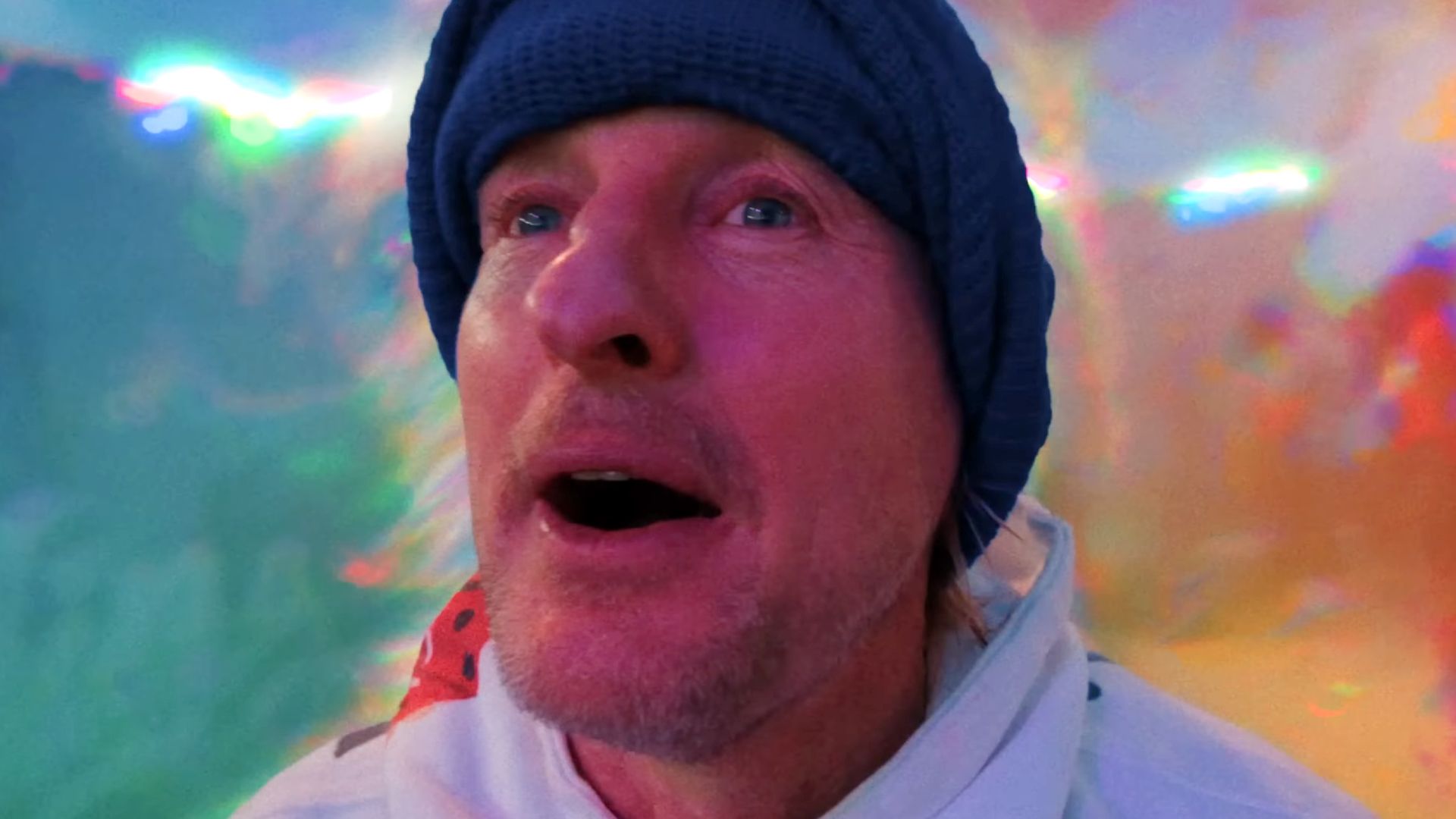
The Owen Wilson-led Rolling Loud: The Movie is a commercial disguised as a comedy, but it's rescued by a solid supporting cast and some sweet moments.

Brennan Klein (he/him) is a senior news writer at Screen Rant, host of the Attack of the Queerwolf podcast, and contributor at Alternate Ending and Horror Press. He has been writing and podcasting about pop culture (especially horror movies) for over a decade at platforms including Blumhouse, Fangoria, Dread Central, The Backlot, and Arrow in the Head.
The name on everybody in the industry's lips these days has been Ketchup Entertainment. The small media company resurrected the Looney Tunes movie Coyote vs. Acme after it was shelved by Warner Bros. as a tax write-off, turning it into a $110 million success. As the first movie they're distributing in North America following Coyote vs. Acme, Rolling Loud: The Movie drops at a time when more eyes are on Ketchup than ever before. While there's hardly any movie that could withstand that pressure, this brand exercise disguised as a comedy is certainly not up to the challenge.
Rolling Loud, which was written and directed by Jeremy Garelick (Netflix's Murder Mystery 2), takes place at the real-life hip hop festival of the same name. It follows a furniture salesman (Owen Wilson) who tells his wife (Jolene) that he's taking their 13-year-old son (Christian Convery) to his grandfather's cabin, but secretly takes him to Rolling Loud. He almost instantly loses his son, and his panicked efforts to find him – aided by his nepo baby coworker (Matt Rife) and a chaotic volunteer (Christine Ko) – take him on a grand adventure around the festival.
Rolling Loud Is A Feature-Length Commercial
A feature literally titled Rolling Loud: The Movie and produced by Live Nation Productions was obviously only ever going to be an exercise in branding, but it's honestly shocking the degree to which this is the case. While it at least makes narrative sense that Wilson's character would explore every area of the festival (if you don't already have a strong sense of the stages, amenities, and other opportunities for fun that are available at Rolling Loud, you sure will by the time the credits roll), the movie stops dead multiple times to essentially just read brand copy.
The tepid comedy here isn't really worth having to slog through all the movie's deeply unsubtle marketing tactics.
Poor Jolene even has to navigate an impossible line where her character, who hadn't heard of Rolling Loud until minutes before, has to name-drop the exact hotel outside which the festival takes place. Meanwhile, that's not the only brand that the Owen Wilson movie is repping. In addition to splashing lavish attention on the artists who agreed to cameo in the movie (particularly Travis Scott and Sexyy Red), the amount of airtime the delivery app Gopuff gets during the third act is downright obscene.
While product placement and brand deals are often the only ways that smaller movies like Rolling Loud are able to get off the ground these days, the tepid comedy here isn't really worth having to slog through all the movie's deeply unsubtle marketing tactics.
Most of the scenes centering on Owen Wilson mistake chaos for comedy, mostly just featuring a lot of characters talking at once while he endlessly explains his objective without varying his approach one iota. The editing is ruinous, erasing all the air between a group of actors' deliberately paced, improvised-sounding line deliveries, so these scenes give the disorienting impression of being both too slow and too fast at the same time.
Rolling Loud Is Saved By Its Supporting Cast
Wilson himself isn't doing a bad job, and it's not his fault that he is playing a henpecked bore who only has the illusion of a character arc, because the movie only pretends to care that his relationship with his wife is toxic in both directions.
Rolling Loud is at its best when it gives its supporting cast time to shine. This includes Christian Convery, who necessarily disappears for a huge chunk of the movie, but makes the most of his scenes and gives real pathos to the interactions with his father (this is a significantly better movie about fathers and sons than about husbands and wives).
While I understand that Matt Rife's comedy (about which I personally know very little) is divisive, he gives an excellent performance here. His character is obviously using the comedian's carefree frat bro persona as a shield, but very poorly. The character is about 10% bro, 90% vulnerable goofball, and Rife is a surprisingly earnest anchor for both the movie's standout comedic moments and its more heartwarming scenes.
Meanwhile, Christine Ko, who is more of a known quantity on the small screen in shows like The Great Indoors and Dave, commits wholeheartedly to an unusual character who is simultaneously more competent than both men and more of a risk-taking wild card. She and Rife ping off one another well and provide an edge to scenes that could have otherwise just been saccharine and samey.
Together, these actors make Rolling Loud: The Movie a much more tolerable affair than it would have been otherwise. While it is no comic masterpiece, it is entirely watchable, which is more than I can say about plenty of other 2026 comedies.
KioskNews shows a cleaned-up reading view extracted from the publisher’s page — the original always lives on their site, not ours.