7 million pages of military records from the War of 1812 are finally online
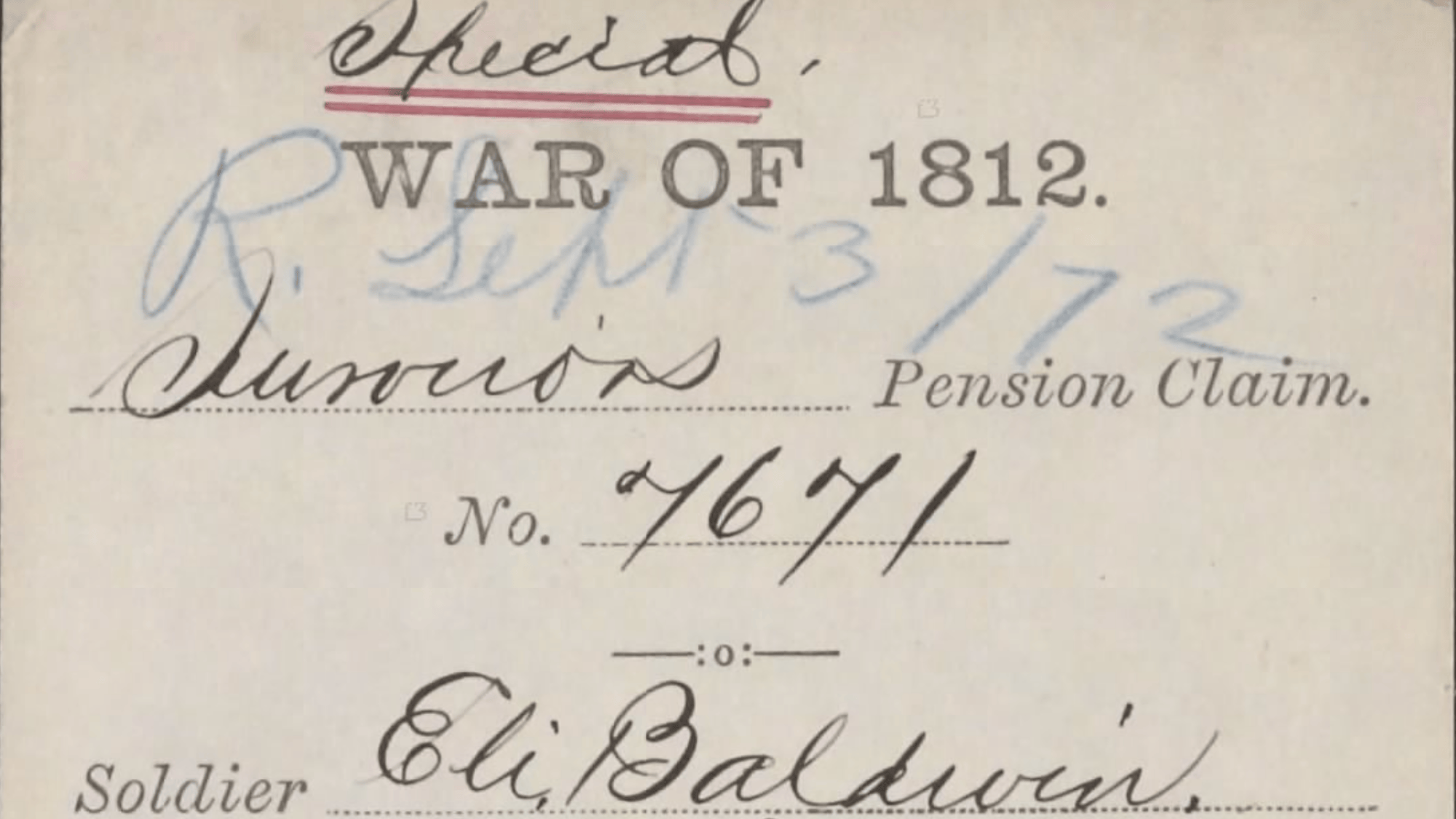
After 16 years of painstaking work, the National Archives and its collaborators have finally completed digitizing over 180,000 pension applications submitted to the United States government following the War of 1812. The project is more than just preservation for preservation’s sake. The over 7.2 million pages contain long-forgotten and missing details about 19th century Americans, their families, and their everyday lives.
While archivists previously digitized a similar collection related to the American Revolutionary War, the new documents will help fill in knowledge gaps between early 19th century military events and the 1850 federal census. Patricia Oxley, president of the Federation of Genealogical Societies (FGS), explained the project was also incredibly time-sensitive.
“In the specific case of the War of 1812 pension records, there is an added priority due to their frail state where not acting may mean sacrificing these for future generations,” Oxley said in a recent announcement.
The somewhat new United States of America declared war on the United Kingdom on June 18, 1812, citing objections to trade restrictions with France amid the Napoleonic Wars, as well as the Royal Navy’s impressment of American sailors. Although the conflict famously included a British attack on Washington D.C. that resulted in the burning of the White House and U.S. Capitol, little shifted geopolitically between the two nations following the ratification of the Treaty of Ghent on February 17, 1815. The U.S. tallied around 15,000 casualties, while the U.K. and Canada saw about 10,700 deaths. Another 9,000 Indigenous fighters died while enlisted between the two sides.
Today’s military records are meticulously documented and stored digitally, but applying for benefits such as pensions was a much more labor-intensive process during the 19th century. With the burden of proof on each applicant, veterans were required to supply lengthy accounts of their service. Each War of 1812 pension file is liable to contain not just combat information, but the names and personal details of fellow soldiers, family members, spouses, and countless other relations.
“Our users have been asking for the War of 1812 pension records for some time, and I expect this collection to be very popular based on the rich war time detail it contains,” added Brian Hansen, general manager at Fold3, Ancestry’s military records service and National Archives collaborator.
The collection also includes a full-text search feature using handwriting recognition technology. This lets users explore the files based on every named individual, and not simply the primary veteran applicants. The pension records are currently available for free on Fold3’s website, and are being added to the National Archives catalog on a rolling basis.
KioskNews shows a cleaned-up reading view extracted from the publisher’s page — the original always lives on their site, not ours.