Gujarat Professor Calls For Ban On All Religious Rituals On University Campus
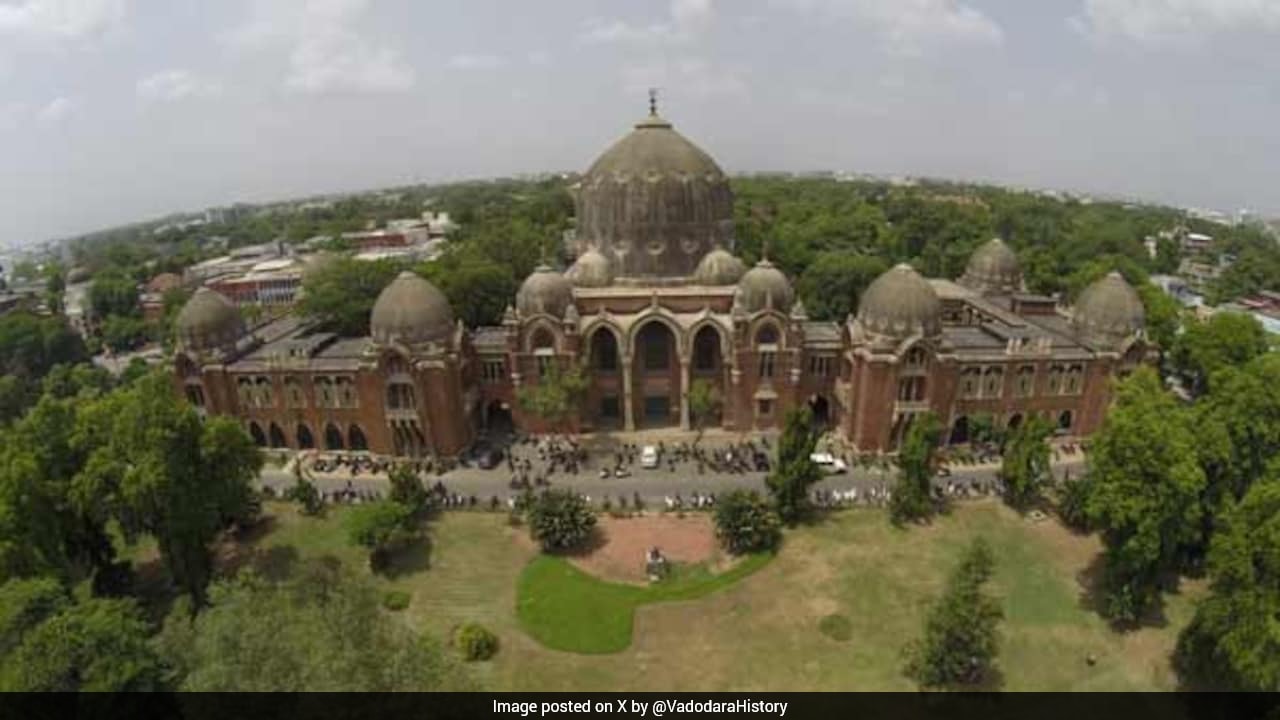
A senior faculty member at The Maharaja Sayajirao University of Baroda wrote an open letter to Vice Chancellor Prof BH Bhanage, demanding an official policy to curb religious performances on university premises, triggering a massive row on campus.
Jagrut Gadit, Head of the Electrical Engineering Department, raised concerns over public religiosity in an educational institution funded by taxpayers. The open letter followed Gadit's public refusal to participate in a lamp-lighting ritual before a garlanded image of Maa Saraswati during an official undergraduate orientation event, where he cited constitutional boundaries against mixing state-funded academic platforms with faith-based performances.
Constitutional secularism and the principles governing public institutions formed the primary backbone of the professor's written stance. Citing the landmark 1973 Kesavananda Bharati Supreme Court verdict, which established secularism as part of the basic structure of the Indian Constitution, Gadit argued that state-funded institutions must remain non-religious.
He expressed dismay that routine campus events, such as facility inaugurations that once involved simple ribbon cuttings, have increasingly turned into religious rituals with invited priests reciting shlokas. To maintain these boundaries, he noted that he had refused department-distributed sheera prasad from a Satyanarayan katha held on campus and declined to donate to students organising Ganesh Utsav at university hostels.
The correspondence specifically detailed the campus rituals and religious practices Gadit wants discontinued to preserve the academic environment. He explicitly requested a clear institutional policy banning all aartis, pujas, Satyanarayan kathas, ritual lamp-lightings accompanied by Sanskrit shlokas and camphor, as well as the practice of inviting Brahmins to perform vidhis for inaugurations.
Furthermore, he called for prohibiting student-organised religious festival celebrations such as Ganesh Utsav on hostel grounds and stopping the collection of campus donations for such events.
Beyond ritual performances, the letter addressed the widespread display of religious signs and symbols across campus facilities. Gadit argued that universities must remain spaces for open-minded rational inquiry and critical thinking, where subjects such as atheism can be freely explored.
He stated that hanging images of deities on office walls, inside laboratories or in classrooms amounts to bringing individual faith preferences into public academic spaces, arguing that true spiritual discipline involves preventing personal religious practices from encroaching upon those spaces.
Concluding his communication, Gadit offered recommendations for the administration to restore what he described as the secular character of the heritage institution.
KioskNews shows a cleaned-up reading view extracted from the publisher’s page — the original always lives on their site, not ours.