Zelenskyy accuses Russia of using cluster warheads in deadly strikes
Ukrainian President Volodymyr Zelenskyy accused Russia of using cluster munitions overnight as it renewed strikes on Kyiv and multiple other locations.
At least four people were killed, according to Ukraine's foreign ministry. Another 34 people were injured, including five children, Zelenskyy said Thursday, hours after Russia released American Stephen Hubbard and U.S. special envoy Steve Witkoff met with Russian President Vladimir Putin and called him a humanitarian.
"Last night, the Russians used, among other weapons against Kyiv, three ballistic missiles with cluster warheads," Zelenskyy wrote on X Thursday. "The distinguishing feature of these missiles is that they detonate in the air as they approach the target, striking everything within a 400-meter diameter."
More than 100 countries have banned the use of cluster bombs under the Convention on Cluster Munitions, an international treaty that was adopted in 2008. The munitions spread smaller "bomblets" over a wide area that can hit civilian locations indiscriminately.
Russia, like the United States, did not sign on to the treaty.
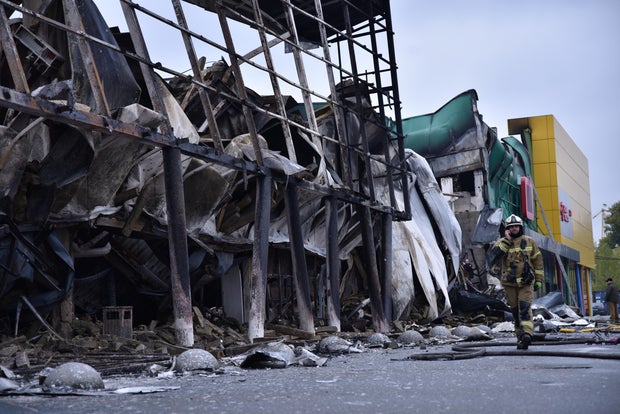
Russia's Defense Ministry said, meanwhile, that air defenses downed 808 Ukrainian drones overnight, and that two people were reported injured, The Associated Press reported. More than 600 drones were fired toward Moscow between late Wednesday and early Thursday, according to Mayor Sergei Sobyanin.
The developments came after Kremlin spokesman Dmitry Peskov was quoted by Russian news agencies as saying Moscow would study proposals on the Ukraine war brought to St. Petersburg by Witkoff, but that the talks would take a long time.
"Almost immediately after another round of talks, Russia launched a pointed attack," Zelenskyy said. "This means there has been no real change in its attitude toward everything that is happening."
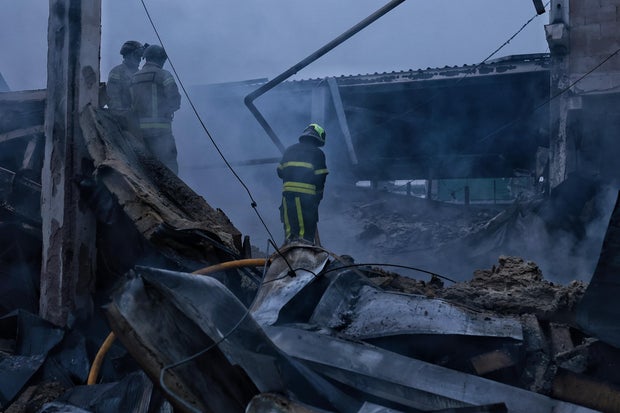
Twelve regions came under attack from Russia overnight, according to Zelenskyy, who said one attack hit Pechersk, Kyiv's historic center, and damaged monastery buildings, homes, shops, cafés and other civilian infrastructure.
Since Oct. 11, there have been 170 strikes on energy infrastructure sites across Ukraine, the Ukrainian president said.
Zelenskyy said earlier this week that if President Trump "cannot rein Putin in," he should provide long-requested interceptor missiles so Ukraine can defend itself. Secretary of State Marco Rubio later said that Mr. Trump has been "frustrated" by what he described as false accusations that "he is doing things to deliberately harm Ukraine." He insisted that nothing had been "deliberately denied to Ukraine," but added: "It's simply, it's a balance between our obligations to other partners and frankly our own ... requirements for our own facilities as well."
Frank Andrews contributed to this report.
In:
Khrushchev's great-granddaughter on Stephen Hubbard's release, Witkoff calling Putin a humanitarian
KioskNews shows a cleaned-up reading view extracted from the publisher’s page — the original always lives on their site, not ours.