No more VAT on system loss in electricity bills starting October

Already have Rappler+?
to listen to groundbreaking journalism.
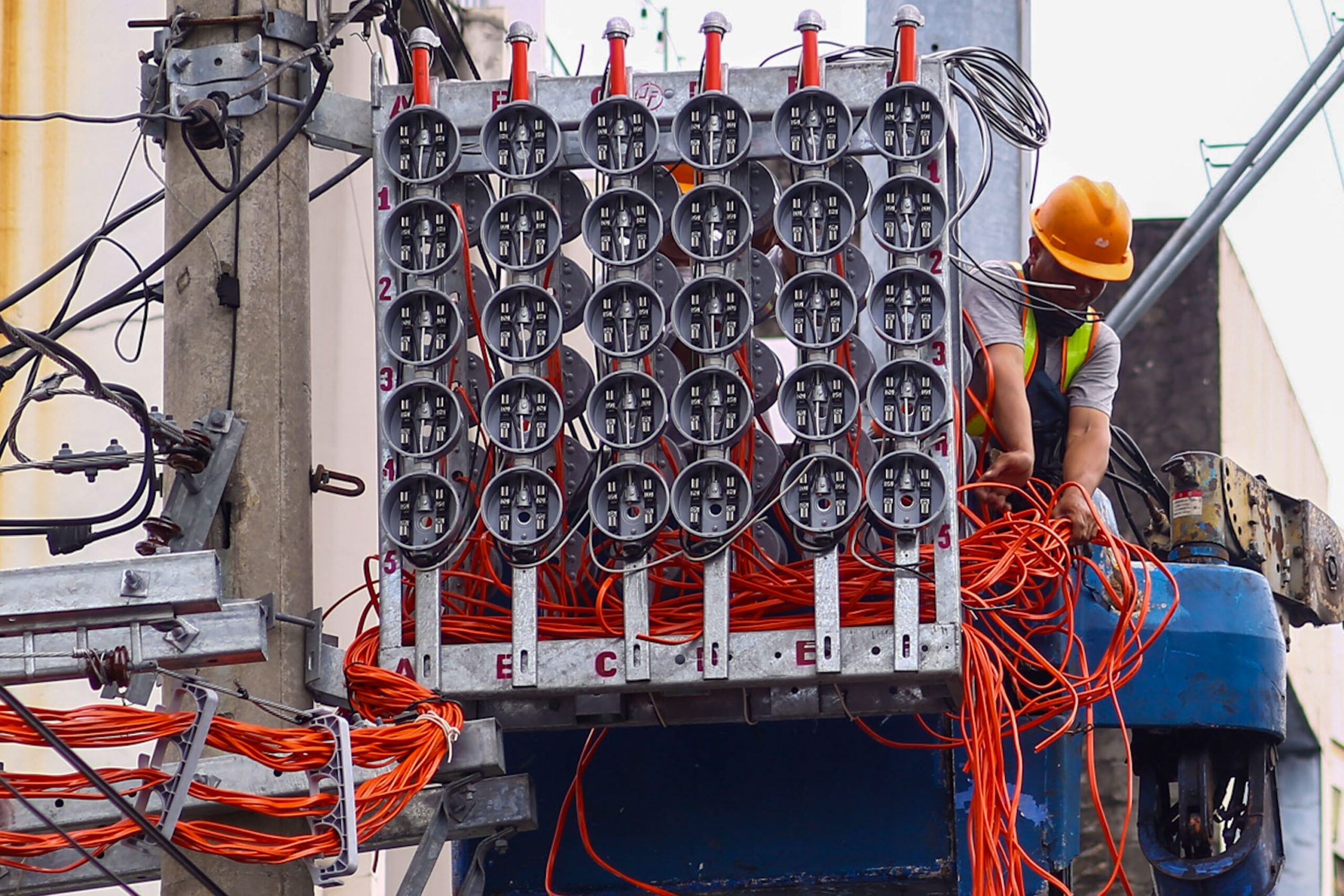
POWER. Electric company contractors install wires for newly installed electric meters on a utility pole along Jose Abad Santos Avenue in Manila on September 3, 2026.
Rappler
While the VAT removal is still welcome relief, expect savings to be modest as the much larger underlying system loss charge is unlikely to disappear from electricity bills anytime soon
AT A GLANCE
- Starting this October, customers will see a reduction in their electric bills due to the removal of value-added tax (VAT) on the system loss charge, although the charge itself remains.
- The government is planning to phase out recoverable non-technical losses, but immediate removal could financially harm electric cooperatives without support, with an estimated P7.5 billion needed for necessary upgrades.
- The Energy Regulatory Commission (ERC) has also standardized 'Other Charges' and capped late payment fees to prevent double charging and ensure transparency in billing.
This is AI-generated. Read the article for full context. Report any errors.
MANILA, Philippines – Your electric bill this October will likely be slightly less now that you no longer have to pay value-added tax (VAT) on the allowable system loss charge starting this billing cycle forward.
Following new rules from the Energy Regulatory Commission (ERC) that put the tax exemption into effect and change how the charge appears on electricity bills, a Meralco spokesperson confirmed to Rappler that “the VAT removal on system loss will be effective this October billing.”
This means customers should begin seeing the VAT reduction in their October bills, although they will continue paying the underlying system loss charge itself. (READ: Meralco rates dip slightly in September despite higher generation costs)
The change, however, addresses only the tax imposed on system loss, not the system loss charge itself. System loss refers to electricity lost before it reaches paying customers. Some are non-technical, which arise from electricity theft, illegal connections and faulty metering, while technical losses occur as a natural consequence of electricity passing through power lines.
Removing the underlying system loss charge will take considerably longer. The government has proposed phasing out recoverable non-technical losses, but the National Electrification Administration (NEA) has warned that removing this immediately would push many electric cooperatives into losses without first giving them financial support for equipment updates. The government estimates around P7.5 billion would be needed for a four-stage program to eliminate non-technical system loss. (READ: NEA seeks extra P7 billion to eliminate non-technical system losses)
Technical losses pose an even longer-term problem since they cannot be completely eliminated. The Department of Energy (DOE), ERC, NEA, and electric cooperatives are still in the process of making plans to determine what improvements are needed to lower them, such as upgrades to lines, substations, and other infrastructure. The government has targeted completion of this plan in 2027, meaning the system loss charge itself is unlikely to disappear from consumers’ bills anytime soon even as the VAT on it is removed.
Tighter rules on ‘other charges’
The ERC separately issued another resolution standardizing the “Other Charges” that utilities may collect. These may generally be imposed only for specific customer-requested or account-related services, such as certain connection, disconnection, and reconnection activities.
The rules are intended to prevent double charging. Expenses already recovered through distribution, supply, and metering rates cannot be collected again under Other Charges. Utilities may recover only incremental costs such as direct labor, deployment and fuel, and replacement materials. Administrative and overhead expenses cannot be separately passed on to consumers.
The ERC also capped late payment fees at 2% of the current month’s bill or the unpaid portion, whichever is lower. The fee may be imposed only once per bill and must be separately shown on the next billing statement. – Rappler.com
KioskNews shows a cleaned-up reading view extracted from the publisher’s page — the original always lives on their site, not ours.