How did past Super El Niños affect the Philippines?
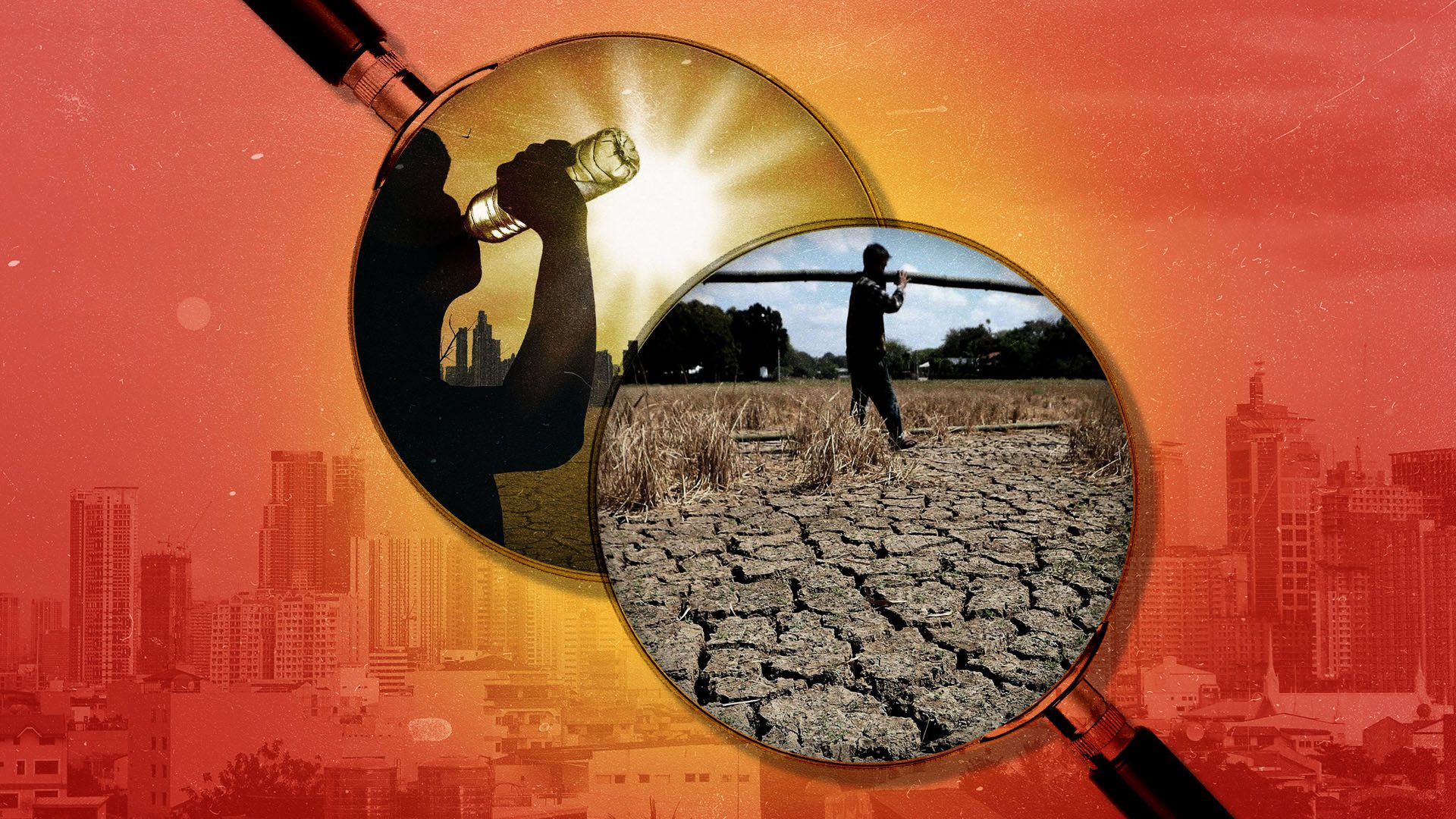
A “very strong” El Niño — informally called Super El Niño — is expected to start causing droughts in the Philippines by the end of November and continue until March 2027.
This phenomenon can have two critical impacts, the Philippine Atmospheric, Geophysical and Astronomical Services Administration (PAGASA) has warned. On one hand, dry spells and drought will threaten agriculture, water supply, and the broader economy. On the other, short-term but heavy rainfall may still affect the western parts of the country.
The Philippines is no stranger to this devastating climate event. The United Nations (UN) said that going by its experiences with past El Niño events, the country has a “strong and well-established sensitivity” to this phenomenon.
According to the World Meteorological Organization, at least three “very strong” El Niños in the past had been as strong, based on the US-based National Oceanic and Atmospheric Administration’s (NOAA) Relative Oceanic Niño Index (RONI): 1982 to 1983, 1997 to 1998, and 2015 to 2016.
All these events have had a RONI of 2.0°C and above for five consecutive overlapping three-month periods, making them “very strong” El Niños. They occur roughly every 10-15 years, according to the World Resources Institute.
And while the 2026-2027 El Niño is projected to outpace the records set by these previous climate events, looking back on past Super El Niños can give a glimpse of what’s to come.
1982 to 1983
This El Niño was the largest event in a hundred years, according to the UN Department of Humanitarian Affairs. Based on the latest data as of November 2026, it had a peak RONI of +2.4°C.
It was said to have caused droughts on almost every continent, as well as floods and cyclones, especially in the Pacific. The Woods Hole Oceanographic Institution attributed an estimated 1,300 to 2,000 deaths and more than US$13 billion in damage to property and livelihoods to this devastating El Niño event.
The intense climate event came as a surprise, as scientists at the time were unable to predict its onslaught, according to Carbon Brief. A Washington Post report said only a few meteorologists and oceanographers had even heard of El Niño back then.
In the Philippines, the drought conditions brought on by this bout of El Niño affected 19% of the entire country over a period of more than nine months, according to the UN University’s (UNU) 2000 report.
The UNU said that the Visayas and Mindanao were worst hit, where crop failures of rice and corn were documented. On the flip side, flooding caused by excessive monsoon rains and tropical cyclones during this time also damaged rice and corn crops in Ilocos Region, Cagayan Valley, Central Luzon, the Bicol provinces, Western Samar, and Northern Leyte.
The same report found that coconut and sugarcane production was also severely affected. Water reservoirs were almost depleted, affecting hydropower supply and irrigation water.
Overall, this drought caused an estimated $450 million in losses, according to a 2009 study by the Philippine Institute for Development Studies (PIDS). This study and a 2019 World Bank Group report quantified these total losses as follows:
- a loss of 640,000 metric tons of rice and corn
- insurance claims mounting to P38 million
- hydropower generation loss of P316 million
- 450,000 hectares of affected farmland
A large fire also erupted in a rainforest in Mindanao, the Food and Agriculture Organization (FAO) reported, adding that prolonged droughts can make certain forest vegetation types prone to disturbance by wildfires. A 2014 SunStar report looking back on these events also reported how farmers witnessed food shortages and wildfires.
1997 to 1998
Just a little more than a decade later, another very strong El Niño hit, reaching a peak RONI of +2.3°C. Globally, this phenomenon killed some 21,000 people and caused damage to infrastructure worth $36 billion, according to the World Food Program and FAO.
In the Philippines, this El Niño made a devastating impact, causing drought in 68% of the country, compared to only 28% in 1972 and 16% in 1982. The World Bank’s 2019 report said that total agricultural losses then totaled around $87 million.

The UNU’s 2000 report also listed the following effects:
Water supply
- dwindling water supply for urban and rural households in many parts of the country
- the Angat Dam servicing Metro Manila reached critically low levels, resulting in drastic measures being taken: water supply was reduced by approximately 10%, and service was shortened by four hours daily
Forest fires
- forest fires burned 9,400 hectares of second growth and logged over forest — including in Palawan, where some endangered species live — equivalent to an estimated P150 million in damages.
Health
- outbreaks of malaria, dengue or H-fever, diarrhea, and cholera reported by early 1998
- acute malnutrition, especially among indigenous peoples
- 72 reported deaths, with 42 due to food poisoning from eating root crops not well-prepared for human consumption
The World Bank’s 2019 report also pointed out that another factor that made this El Niño event unique was its overlap with the Asian financial crisis.
“These losses compounded the human and economic consequences from the financial crisis,” the group wrote in their report.
The World Bank and UNU listed the following economic effects:
- GDP growth slowing to only 1.2% in the second quarter of 1998, which was the economy’s worst performance since 1992
- P7.24 billion in fisheries losses as of November 1998
- total power generation from hydropower plants dropped from 19% in 1992 to 1% in 1998, owing to hydroelectric plants suffering considerable deficits due to a decrease in water supply
- an increase in poverty from 25% in 1997 to 28% in 1998, which the World Bank said was more attributable to El Niño agricultural shocks than the Asian financial crisis
2015 to 2016
Less than a decade later, another very strong El Niño formed, reaching a peak RONI of +2.3°C. Around the world, the event severely affected more than 60 million people, according to the UN. It was one of the factors that made 2015 the hottest year on record, during which more than 7,000 people died from heat waves, based on a 2016 UN Office for Disaster Risk Reduction report.
The 18-month El Niño started in February 2015 and ended in July 2016, and caused damage across 85% of the Philippines, according to the April 2019 National Drought Plan for the Philippines. Luzon and Mindanao were said to have borne the brunt of the damages.
This plan listed the following effects brought on by the El Niño event:
- P10 billion in crop damages
- 1.48 million metric tons of crops lost, including rice, corn, cassava, banana, and rubber
- over 400,000 farming households and 556,000 hectares affected
- 23% decline in fish catch due to warmer waters, suggesting at least 100,000 fisherfolk would need to look for alternative sources of income
- P600 million in defensive expenditures
- low dam water levels, where 9 out of 25 dams dried up, 6 were at critical levels, and 10 were below normal water levels
- prevalence of disease due to malnutrition and reduced access to potable water
- approximately 25% of households in Mindanao reported poor food consumption, according to a March 2016 survey
A 2026 UN report said that drought impacts were compounded by pest outbreaks, including rat infestations.
Another UN report from 2017 estimated that total losses may have been as high as $11 billion. This report added that the severe economic impact and perceived lack of government action led to protests.
The most infamous of these protests were the Kidapawan protests that happened on April 1, 2016. The unrest turned violent, which left two protesters dead, two police officers seriously wounded, and 179 farmers and police officers injured, according to the Commission on Human Rights.
The present Super El Niño is set to break records set by its predecessors, with the NOAA Climate Prediction Center November 2026 advisory saying there is an estimated 60% chance for the RONI to be 2.5°C or more for the October-December and November-January periods.
Locally, this El Niño is expected to virtually put the entire country at risk of drought by March 2027.
Has the Philippines and its government learned its lessons from Super El Niños past? – Rappler.com
KioskNews shows a cleaned-up reading view extracted from the publisher’s page — the original always lives on their site, not ours.