Old designs, new watches: How 5 watch brands are revisiting their past
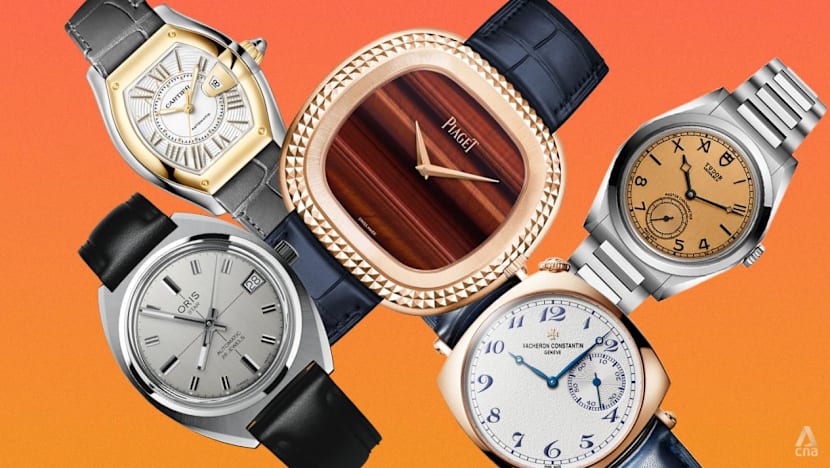
From Cartier’s cult-favourite Roadster making a comeback to Piaget reviving the flamboyance of the 1970s, these new watches show that some designs never really go out of style.
New: You can now listen to articles.

This audio is generated by an AI tool.

10 Nov 2026 04:32AM (Updated: 10 Nov 2026 04:40AM)
The appetite for nostalgia was impossible to ignore at Watches and Wonders 2026, the watch industry’s biggest annual showcase. Across the halls of Palexpo in Geneva, brands large and small continued to mine their archives, unveiling a steady stream of heritage-inspired releases.
The first consisted of updated classics: Revivals of historical or discontinued models featuring contemporary case sizes, materials and movements. Think of them as movie reboots that are as good as, if not better than, the originals.
The second camp was more interpretive. Instead of reproducing a specific reference, these watches borrowed design cues from archival models while remaining thoroughly modern in other respects.
Interestingly, the brands had different reasons for their retrospective behaviour. Cartier revived a cult classic. Oris leaned into historical fidelity. Piaget resurrected an entire aesthetic era. Tudor remixed its own heritage. And Vacheron Constantin preserved an icon.
All five watchmakers are at least a century old, with archives filled with tried-and-tested designs and compelling stories. For today’s buyers, modern reissues also offer the chance to own watches they may have admired but were never in a position to buy when they first appeared.
CARTIER ROADSTER
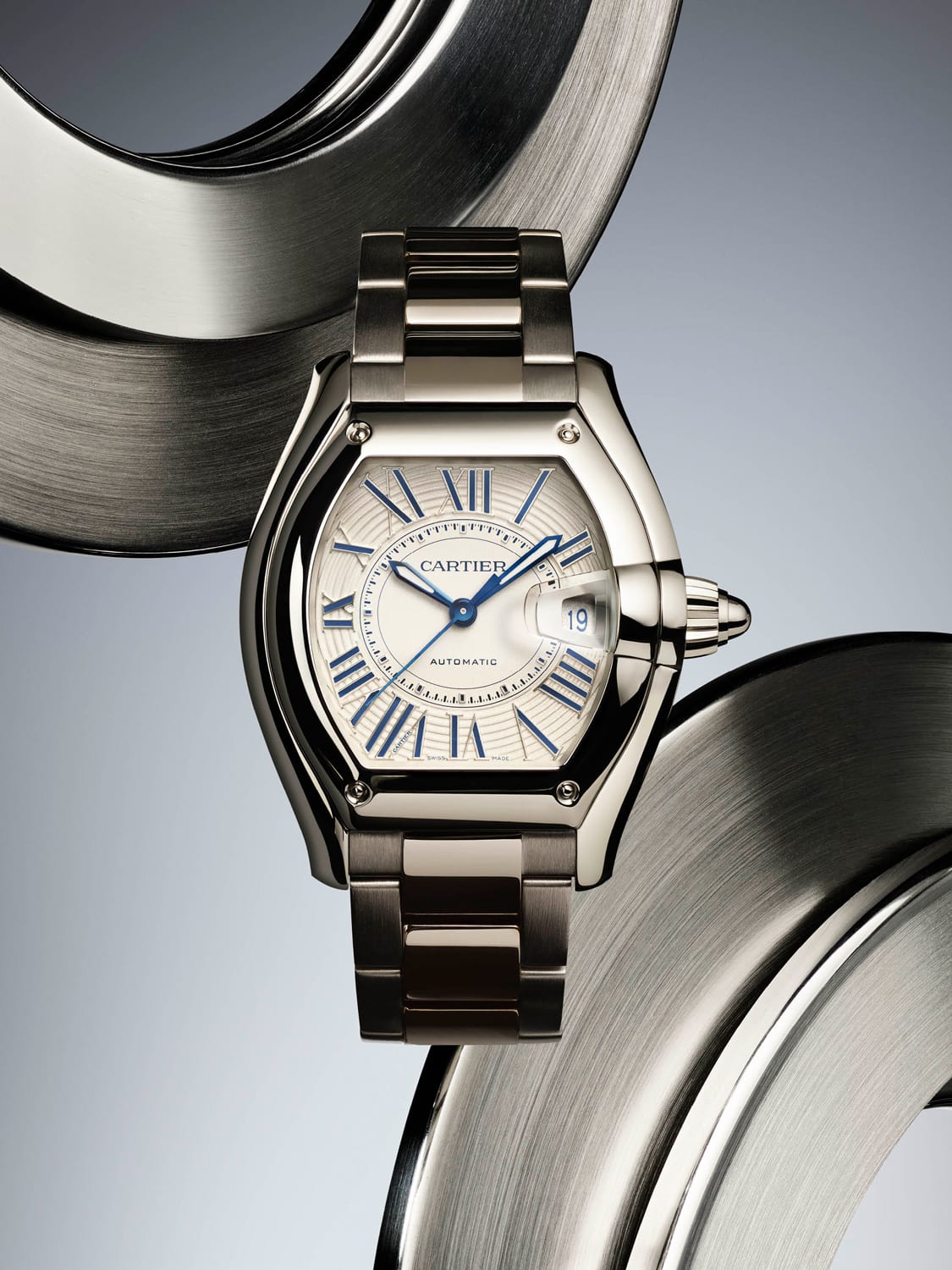
The return of the Cartier Roadster was one of the most welcome surprises this year. The collection made its debut in 2002 and gained a cult following but disappeared from Cartier’s catalogue more than a decade ago.
Inspired by the sleek aerodynamism of 1950s sports cars, the Roadster found favour among collectors whose portfolio already contained numerous Tank and Santos variants. Its 2026 revival comes at a time when enthusiasts are seeking something less familiar than the usual icons.
The seven references in the new collection remain faithful to the original, with the instantly recognisable tonneau-shaped case, integrated bracelet and oversized conical crown inspired by vintage tailfin lights.
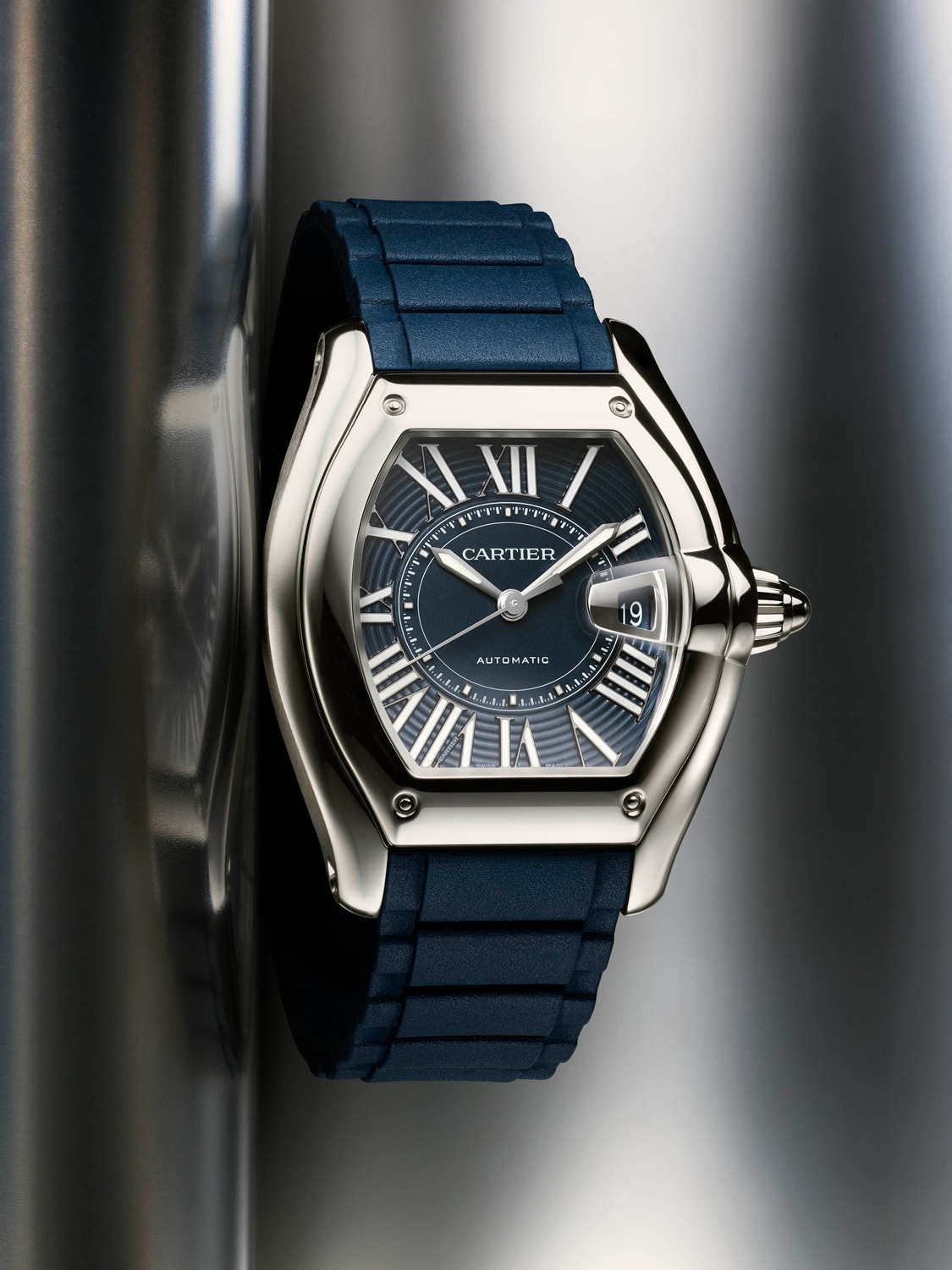
Cartier tweaked the conical crown to improve the silhouette and redesigned the signature Cyclops date magnifier to resemble a vintage headlight. Four rivets on the bezel further reinforce the automotive theme.
The new Roadster comes in two sizes, Large (47mm x 38mm) and Medium (42.5mm x 34.9mm); three metals (stainless steel, 18K yellow gold, and two-tone steel and gold). The Large is powered by Calibre 1847 MC, while the Medium runs on Calibre 1899 MC.
ORIS STAR EDITION
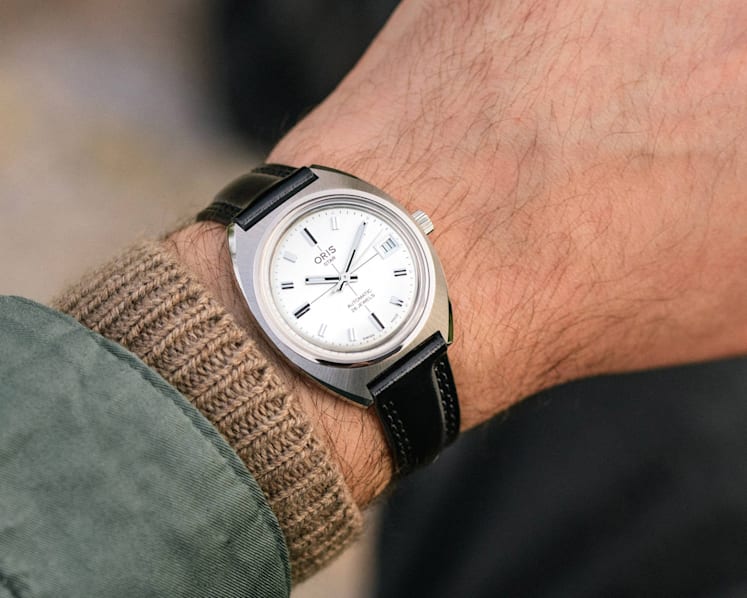
If we’re being honest, no one is going to turn their head if you walk into a room with the Oris Star Edition perched on your wrist.
For some collectors, that’s precisely the point. It’s discreet, but beneath its unassuming appearance lies a significant chapter in watchmaking history.
It’s a matter of horological history: In 1966, the Oris Star became the brand’s first watch equipped with a Swiss lever escapement movement. Oris was only able to adopt the technology after helping overturn restrictive Swiss watchmaking regulations in the mid-1960s.
To celebrate the 60th anniversary of that watershed moment, Oris stayed loyal to the original Star watch. The 2026 Star Edition comes in a stainless-steel case measuring a distinctly vintage 35mm across, retaining the barrel-shaped silhouette of the 1966 original, complete with integrated lugs and a domed plexiglass crystal.
The silver sunburst dial is equally classic, with applied baton indices, faceted hands and a date display at 3 o’clock.
Inside beats the automatic Oris Calibre 733, based on the Sellita SW200 architecture and offering approximately 41 hours of power reserve. The watch is fitted to a black leather strap and features a closed caseback, just like the original.
For collectors who appreciate a good ol’ yarn, the 2026 Oris Star Edition transports the wearer back to a pivotal chapter in Swiss watchmaking history.
PIAGET
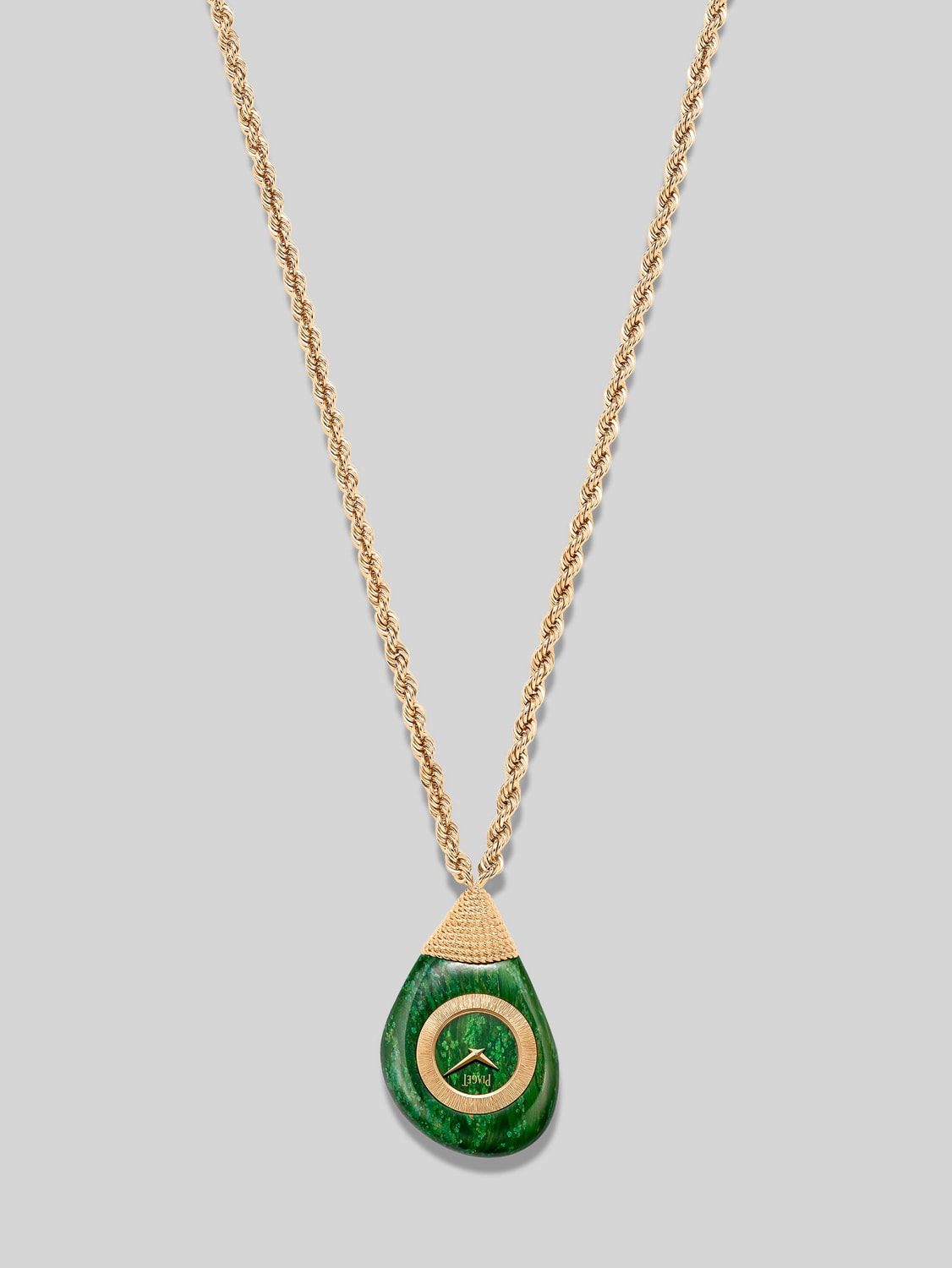
Not everyone wants an everyday watch. Some want a party-ready timepiece that turns heads, steals the spotlight and kickstarts conversations. Piaget understood the assignment and, for Watches and Wonders 2026, built an entire collection around that idea.
To do so, it didn’t reference our current era. Because depressing. Instead, it looked to the hedonistic, wildly glamorous 1960s and 1970s – a heyday for Piaget and its exuberant creations.
Key among the 2026 releases are the celebrated Swinging Sautoirs. First introduced in 1969, these pendant watches were worn on long, draping necklaces (sautoirs).
Moving pendulously as their wearers sauntered about, they became a hit with the European and North American jet-set. You can almost picture them dangling from the necks of caftan-clad, poolside-lounging socialites in a Slim Aarons photo.
The new Swinging Pebbles collection sees hardstones such as tiger’s eye, verdite and pietersite transformed into sculptural pendant watches suspended from intricately twisted gold chains.
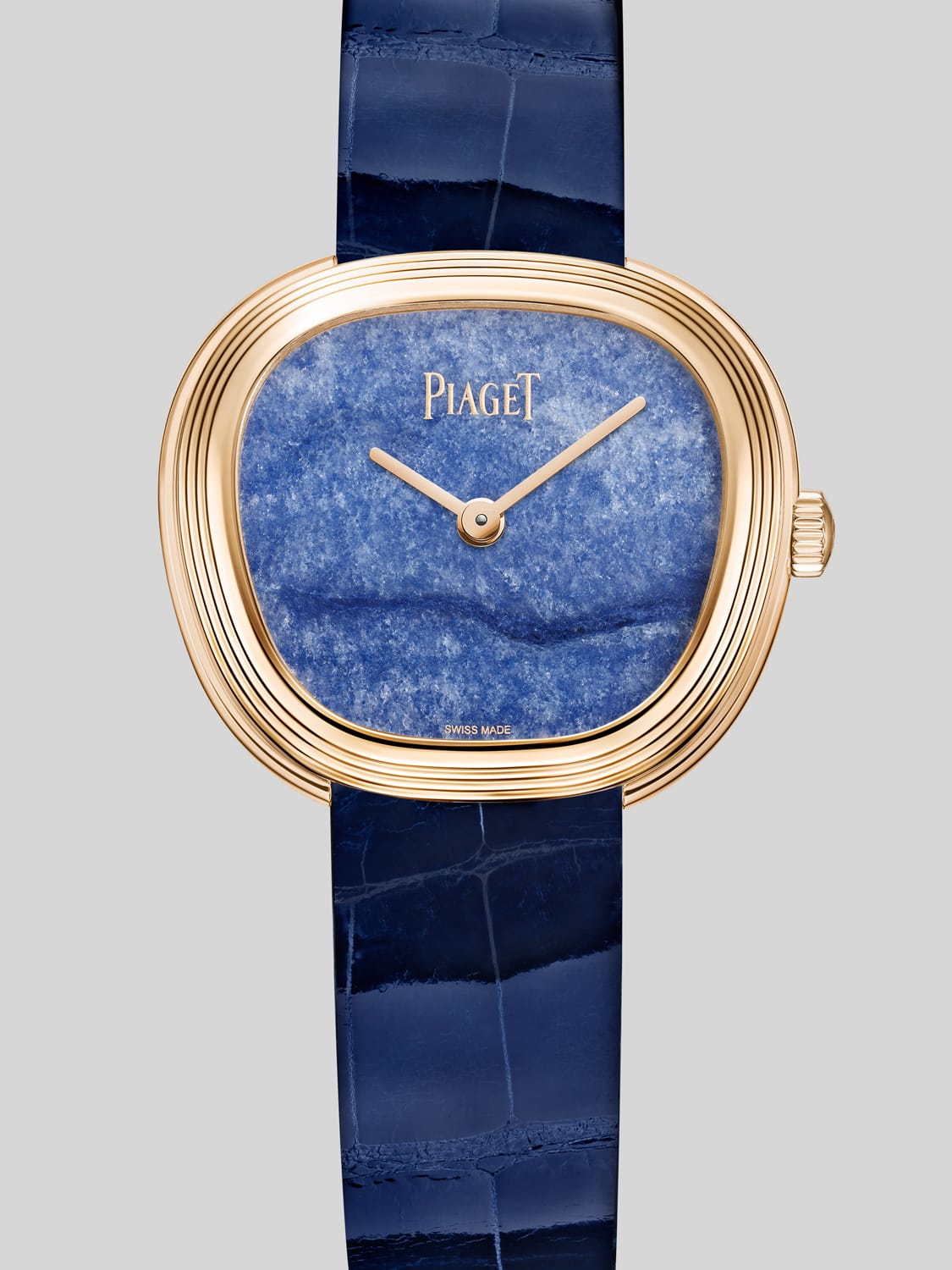
Then there’s the Sixtie collection of asymmetrical trapezoid watches, inspired by the brand’s mid-20th-century creativity. The highlight must surely be the Sixtie High Jewellery Cuff Watch, an exuberant, gem-set confection with a vivid opal dial and hand-engraved case decorated using Piaget’s famed Decor Palace finishing technique.
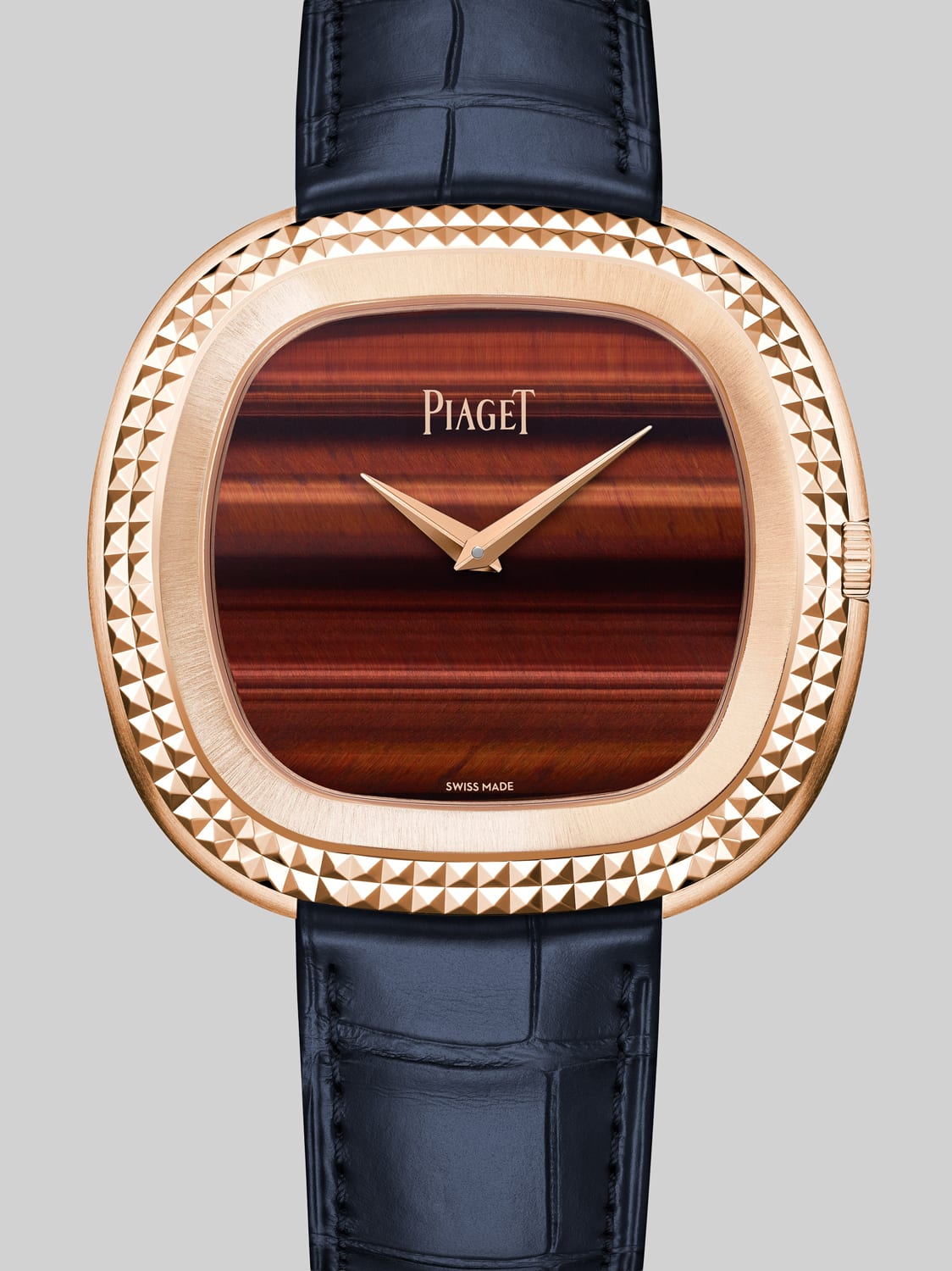
In a throwback to the 1970s, Piaget also unveiled three new rose gold editions of its Andy Warhol watch, named after the legendary artist and his fondness for Piaget timepieces. Each of the cushion-shaped watches features different decorative details and stone dials.
The blue quartz variant comes in a classic case, while the bronzite version features a diamond-set bezel. The third model adds another distinctive ornamental-stone dial.
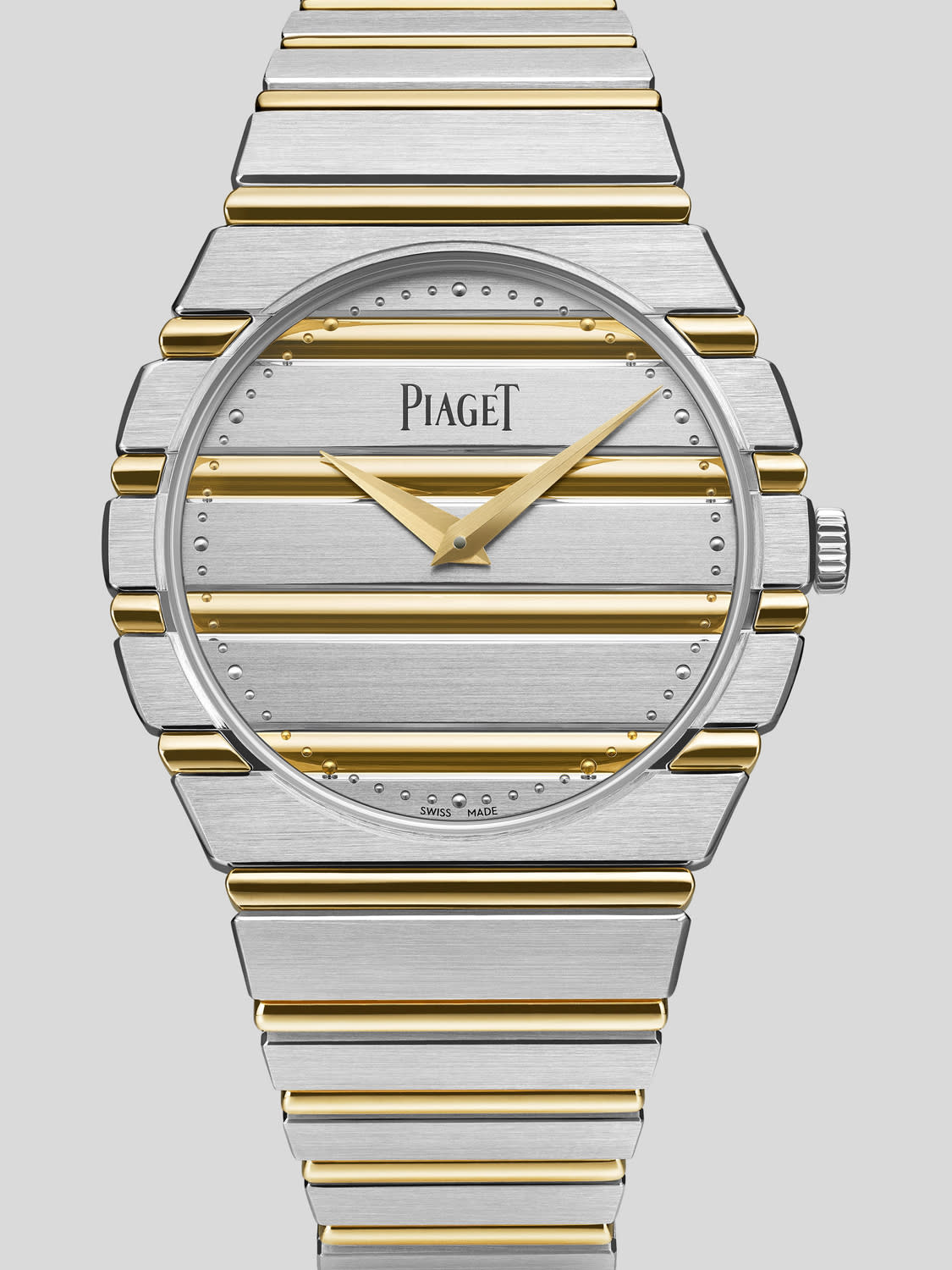
And finally, the Polo 79 collection – which takes its name from the 1979 original – welcomed two new additions. The Polo 79 Blue Sodalite Dial pairs the model’s signature ultra-thin silhouette with a mesmerising sodalite dial. Thanks to the natural veining of the blue hardstone, every watch effectively becomes a one-of-one creation.
Meanwhile, the Polo 79 Two-Tone is a glorious throwback to the bi-metallic excesses of the late 1970s and 1980s. Alternating yellow and white gold across the case, dial and bracelet, it delivers enough brushed and polished surfaces to keep magpies and watch enthusiasts equally captivated.
TUDOR MONARCH
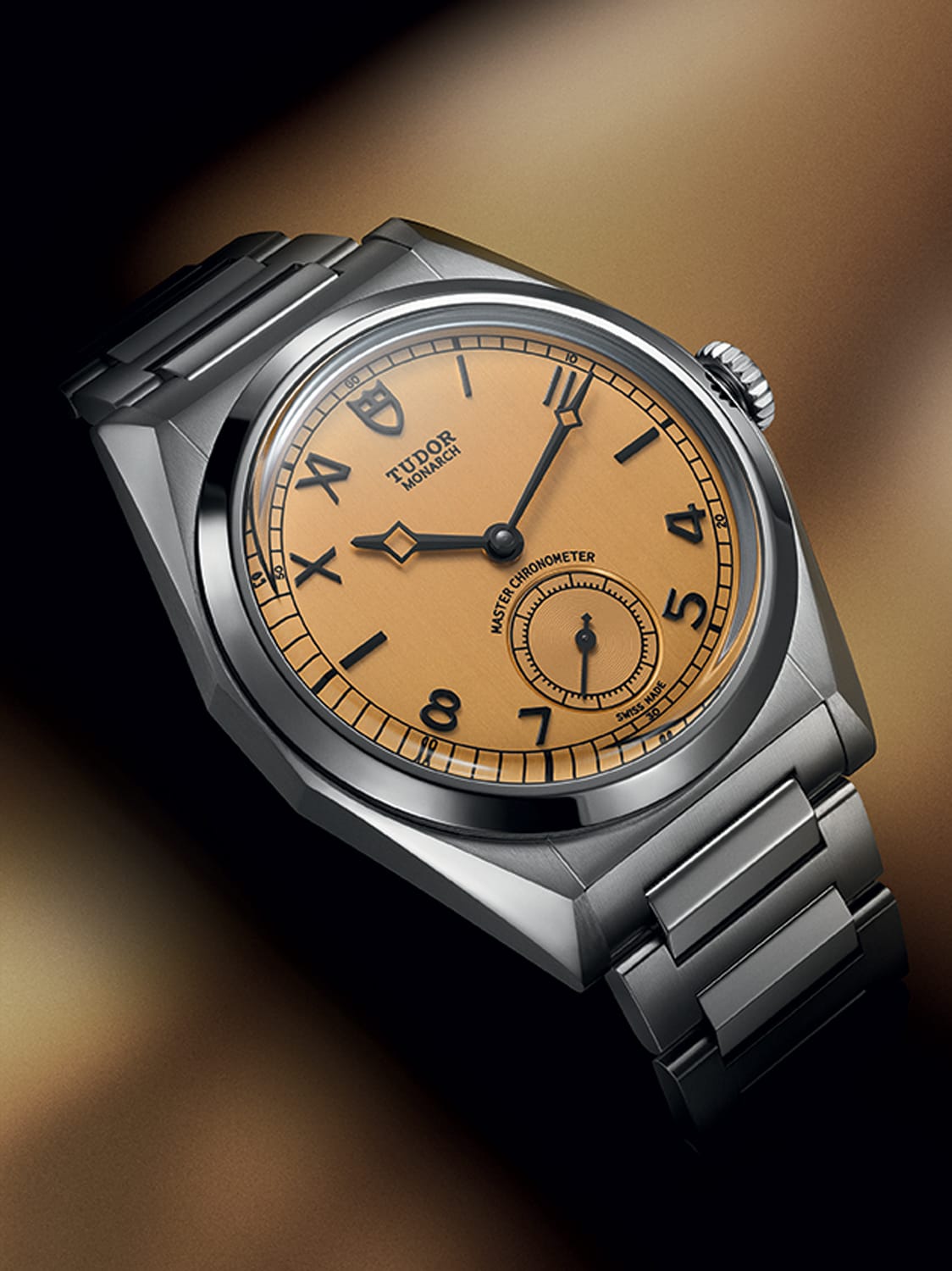
If there were a watch that perfectly demonstrated the difference between a vintage reissue and a vintage-inspired design, the Tudor Monarch would be it.
Revived to mark Tudor’s 100th anniversary, the Monarch doesn’t faithfully recreate its 1990s predecessor. Instead, it cherry-picks some of the brand’s most distinctive design elements from across multiple decades and combines them into a remarkably cohesive package.
The end result? A sharply executed timekeeper housed in a 39mm stainless-steel case with an integrated bracelet and crisp angular surfaces that reference Tudor watches from the 1920s through to the 1940s.
The vertically brushed champagne dial is equally intriguing, featuring a papyrus-like texture and the famous “California” dial layout, with Roman numerals occupying the upper half and Arabic numerals below. Originally developed as an “error-proof” dial, it remains one of the most recognisable and quirky designs in watchmaking.
The blackened hands borrow from Tudor’s famous Snowflake aesthetic of the 1960s and 1970s, while beneath the dial sits the METAS-certified Manufacture Calibre MT5662-2U. Offering chronometer-level precision and anti-magnetic properties, it ensures the watch performs every bit as well as it looks.
What makes the Monarch special is that it doesn’t romanticise the past. Instead, it distils a century of Tudor’s design language into a single watch. The resulting timepiece feels authentic, practical and refreshingly free from nostalgia for nostalgia’s sake.
VACHERON CONSTANTIN HISTORIQUES AMERICAN 1921
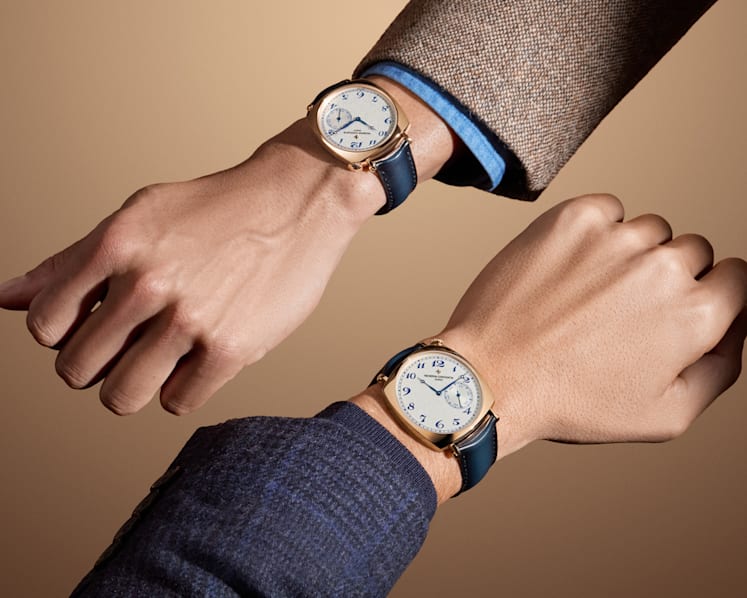
Few watches embody the spirit of the Roaring Twenties quite like the Vacheron Constantin Historiques American 1921. Originally designed for motorists at a time when cars were still a novelty, the watch’s most distinctive feature remains its unconventional dial, rotated 45 degrees clockwise to allow drivers to read the time without removing their hands from the steering wheel.
More than a century later, the design remains delightfully eccentric. The 2026 edition preserves the signature cushion-shaped case and diagonal dial layout that collectors adore, while introducing a fresh aesthetic.
The silver-toned dial now features a finely grained texture that catches the light beautifully, contrasted by vivid blue Arabic numerals and matching blued 18K gold hands. The small seconds display sits neatly at 3 o’clock, creating a pleasing sense of visual balance despite the watch’s asymmetrical appearance.
The watch comes in two sizes, 36.5mm and 40mm, both in 18K 5N pink gold, with a blue patinated calfskin strap.
Despite its age, the Historiques American 1921 doesn’t feel like a relic; it feels timeless. And perhaps more importantly, it’s distinctive enough that it doesn’t have to try too hard to stand out in a room full of watches.
KioskNews shows a cleaned-up reading view extracted from the publisher’s page — the original always lives on their site, not ours.