Cracks in security? Qing dynasty ceramics damaged in British Museum display
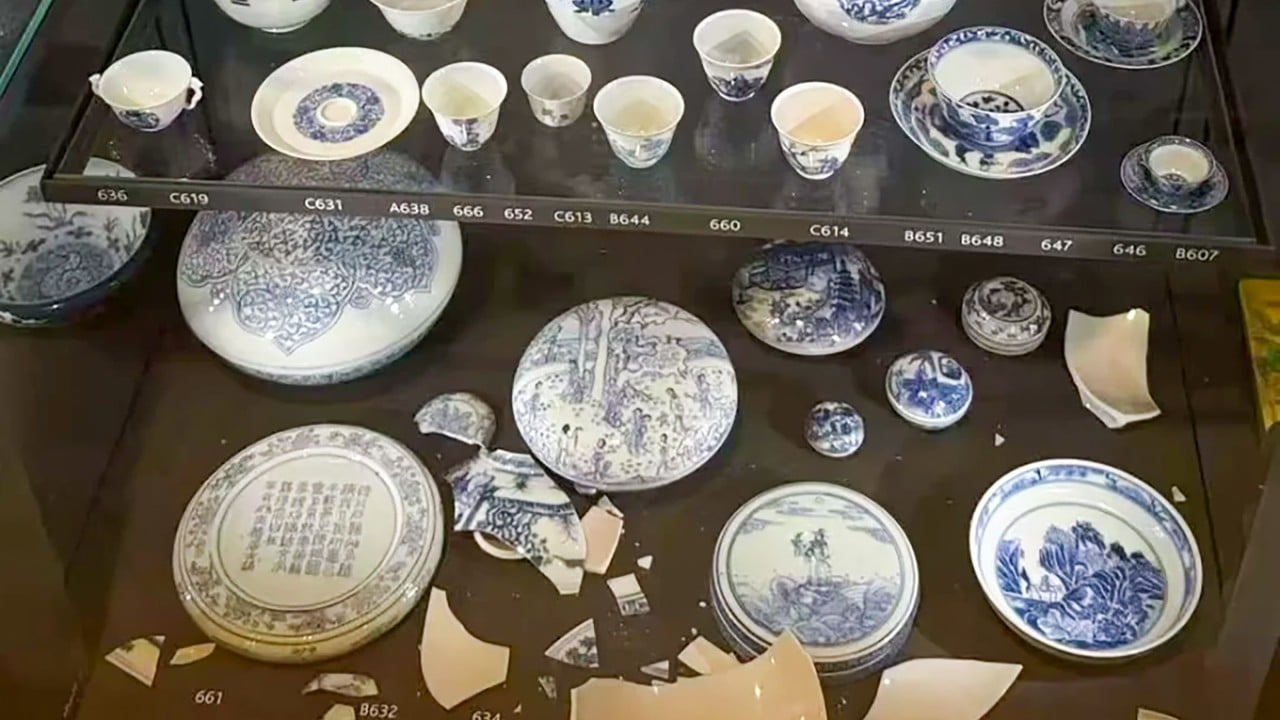
Two Chinese ceramics at the British Museum have been damaged while on display and are being restored, sparking fresh debate over how museums should safely exhibit fragile cultural treasures.
The museum confirmed on Friday that a bowl had fallen from its shelf and landed on a small box on the bottom shelf, damaging both pieces.
“Both objects are already with our expert conservation team for complete restoration,” the museum said.
Southern China’s biggest natural history museum opens in Shenzhen
The museum, which said the incident occurred on October 4, noted that while the shelf and mount showed no signs of failure, it would continue to investigate how the pieces were damaged.
Photos circulating on social media show ceramic shards inside a four-tier display cabinet featuring items from the Sir Percival David Foundation of Chinese Art. A bowl catalogued as B629, originally positioned at the centre of the top shelf, appears to have fallen to the bottom tier, smashing another piece, item 634.
According to the museum’s website, both damaged ceramic pieces date to the Kangxi period (1662-1722) of the Qing dynasty (1644-1911), originating from Jingdezhen in China’s Jiangxi province. The museum’s website says they are “not on display”.
The B629 item, labelled by the museum as “bowl with ladies engaged in cultural pursuits”, is 216mm (8.5 inches) in diameter and 80mm high. The underglaze blue ceramic depicts women in a terraced garden admiring a painting, playing a traditional stringed instrument and taking part in board games while surrounded by attendants, trees and mountains.
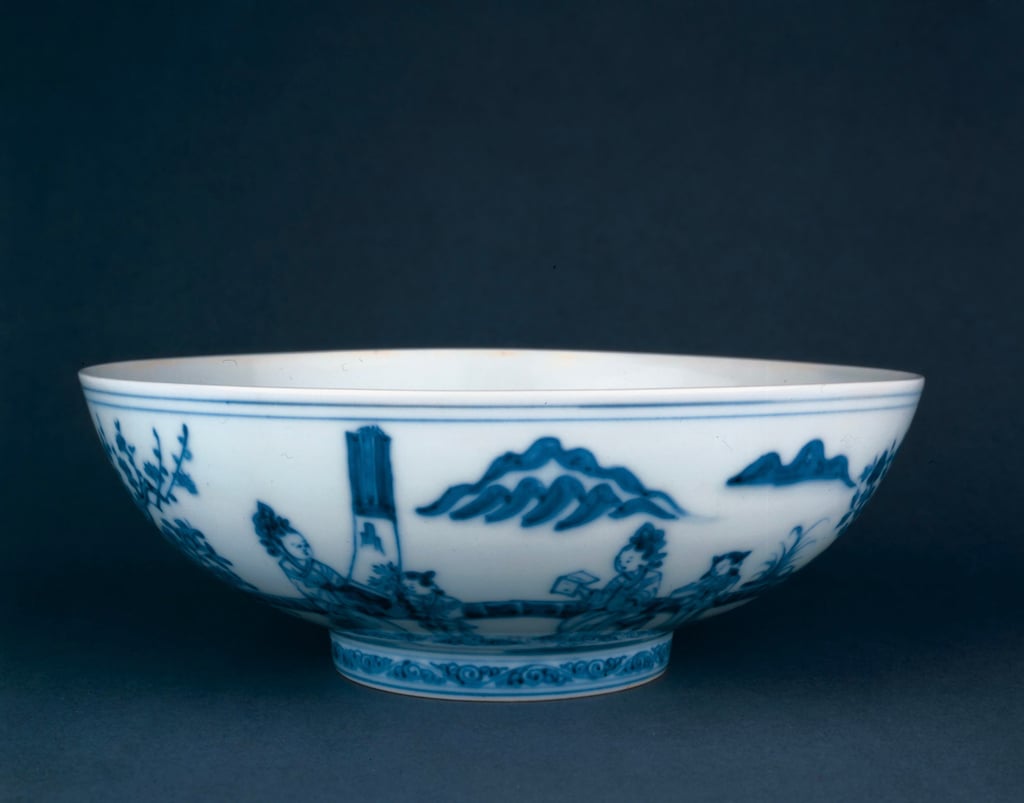
According to the museum’s description, the artefact is “a very fine copy of a 15th century Ming porcelain bowl”.
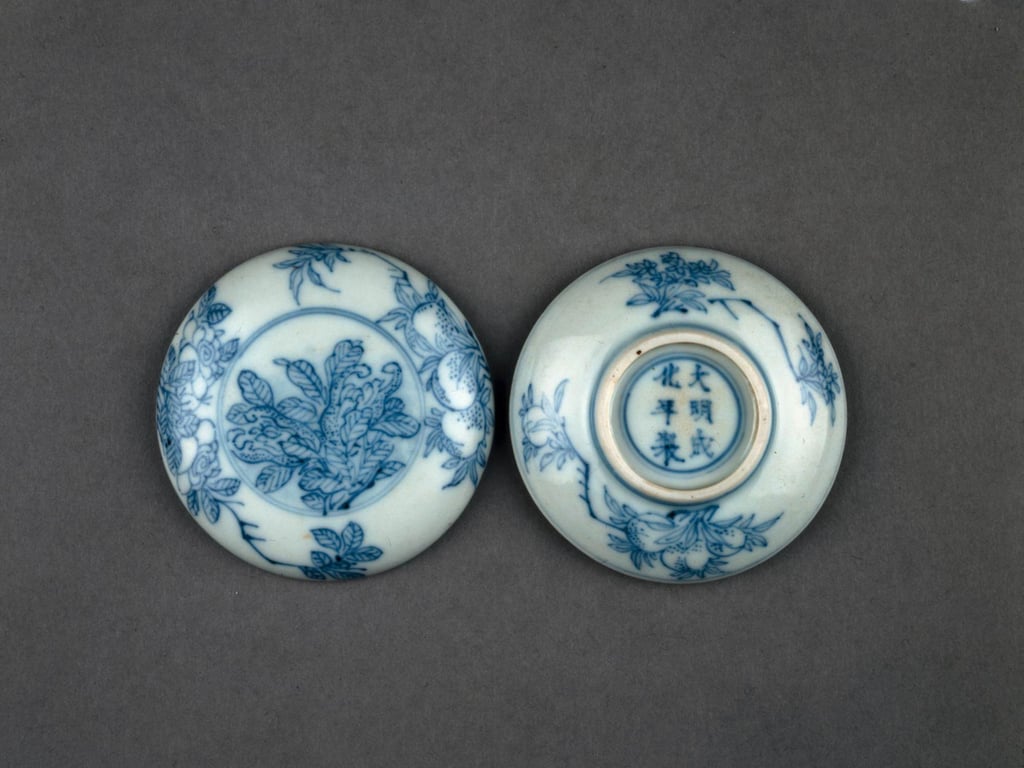
Item 634 is a circular porcelain box with a low-domed cover, 66mm in diameter and 25mm in height.
The centre of the lid depicts a Buddha’s hand citron rendered in a pencilled style with underglaze cobalt blue, framed by peach branches and camellias. The lower section of the box is decorated with a peach branch and a floral spray.
Room 95, where the damaged ceramics were displayed, was closed following the incident and reopened the next day after the broken fragments were removed from the cabinet.
The gallery houses nearly 1,700 objects, showcasing some of the finest Chinese ceramics in the world from the 3rd to the 20th century. The collection was donated to the museum by the Sir Percival David Foundation.
The incident has sparked debate on Chinese social media over how museums should protect fragile works.
02:20
Xi and Trump meet for tea at the White House
“I am more concerned with why the accident happened, how the artefacts will be restored and how similar incidents can be prevented in the future,” said Pan Jinyu, a Chinese-speaking tour guide in London, in a social media post on Thursday.
Pan, while noting this was not the first time the British Museum had made headlines for artefacts being damaged or lost, said: “What is more disappointing than the damage itself is that mainstream UK media have not reported on this yet.”
The incident was not the only vulnerability at the London institution. The museum was rocked by a major scandal in 2023, when an internal investigation revealed that about 2,000 artefacts had been stolen, damaged or lost from its storehouses over several years. The revelation triggered global outrage over the museum’s security protocols, leading then director Hartwig Fischer to step down.
KioskNews shows a cleaned-up reading view extracted from the publisher’s page — the original always lives on their site, not ours.