7 Mystery Books You Can Finish in a Weekend

At any given moment, Scott Simone has at least three books jockeying for his attention. He’ll never turn down a campus novel with a literary bent, nor will he hesitate to add yet another mystery to his Leaning Tower of Pisa-inspired to-be-read pile — which is built upon the bedrocks of too many short story collections, how-are-these-real true crime books, and classics waiting to be cracked open again. Topics that have him ripping through pages the fastest include closed-circle murders, unhappy professors, life-questioning philosophical deep dives, so long as they feature sharp sentences, a dark sense of humor, and at least a little malice.
He’s spent so much time in book shops over the years he is, to his wife’s chagrin, continuing to build a library that doesn’t quite respect the dimensions of the apartment meant to contain it.
Sign in to your Collider account
The weekend is a dangerous time to read a mystery. It starts off innocently, with you settling down with a cup of coffee on Saturday morning, cracking open that one book that's been staring at you from your to-be-read pile. Then you're lost, the book continually twisting you along with its premise, hooking you with each uncovered secret. All the while, those errands you'd planned — the grocery shopping, laundry — settle into the dust of thoughts past. It's then, and only then, the trouble that's been lingering all along screams forth: Monday morning and a hundred unread pages.
But some of the best mystery books ever can save you from that fate. The ones whose size belies the journey that unfolds, packing a series-worth of intrigue into less than 200 pages. Or the ones who creep past that mark, yet seem to end before that Saturday morning bleariness wipes from your eyes. The ones you can finish before the clock strikes at 12:01 AM on Monday morning, if not a single sitting.
'The Perfect Nanny' (2016)
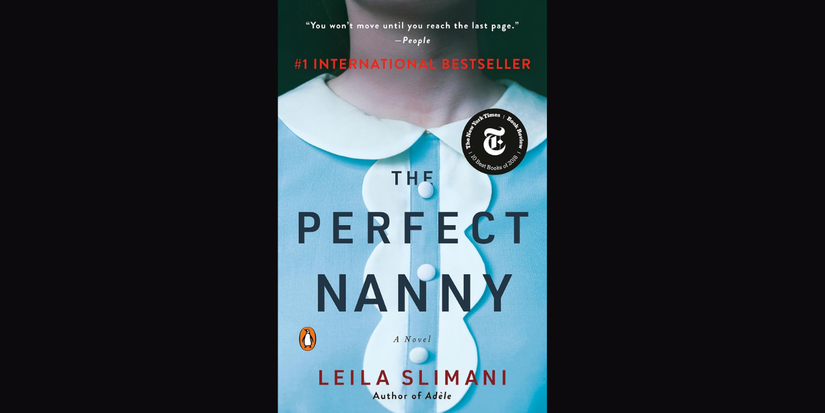
The Perfect Nanny is packaged like an episode of Law & Order: You know the killer from the start. Here it's a nanny who killed two young kids in a Paris apartment. Leïla Slimani then unpacks the mystery of how this nanny, pulled from a dream, descends into the nightmarish monster introduced in those first couple of pages.
Leïla Slimani first paints the perfect portrait of the modern family: Two parents — Myriam and Paul — balancing their careers and marriage, and their two kids growing into a weight threatening to tip the scale. They find Louise, who becomes the stabilizing force. She cooks elaborate meals and tidies the house to spotless perfection, all the while showering the kids with the attention that allows Myriam and Paul to hand her more and more of the child-rearing duties. The rest of the 240 pages have a sickening pull as you watch the occasional strange comment, or moment she lingers a little too long, grow into such tragedy.
'The Colorado Kid' (2005)

"Have you ever come across a mystery you just can't explain?" The question comes during a simple conversation between an intern and two veteran newspapermen. The question opens the door to a mystery the men have been toiling with for decades.
It starts with two teenagers stumbling upon a dead man propped against a garbage can on a beach in Maine. He was carrying no I.D., and no one in town recognized him. The men recount the investigation bit by bit. Stephen King packs a ton into less than 200 pages. The twisting roads that lead investigators to dead ends; the insignificant clue that gives the mystery man a name; and the bizarre timeline and events that brought the man to the beach. King ladders unanswered question atop unanswered question. And you're left with one realization: Mystery itself can be the most unsettling thing of all.
'Elena Knows' (2007)

Claudia Piñeiro explores mother's intuition in a whole new way in Elena Knows. When the police rule Rita's death a suicide, one detail claws at Elena — the rain. Rita hated the church in the rain, so there was no way, Elena thought, she'd climb the building's bell tower in that weather. It's a tiny detail that sends Elena criss-crossing Buenos Aires to find the person she thinks can help prove her intuition right.
Piñeiro adds another detail that adds more propulsion: Elena's Parkinson's disease. It makes each trek in her journey a high-wire act, in which she must judge each step and staircase against her body's ability to cooperate, and whether she's timed the effects of her medication. It acts as a ticking clock across 150 pages, a pressure cooker as Elena jostles with what may have happened to her daughter and how well she actually knew her in the first place.
'We Have Always Lived in the Castle' (1962)

The queen of macabre spends roughly 160 pages sketching a portrait of strange monsters that parallel Lizzie Borden. Sisters Merricat and Constance — along with their sickly Uncle Julian — live holed up in their estate years after someone laced their family's sugar bowl with arsenic and killed four people. Constance stood trial for the murders but walked free. That, in itself, would be enough to keep the town's rumor mill churning. But Merricat adds more grist with her antics. She buries random objects throughout the estate and nails books to trees, not to mention her habit of imagining all the townspeople dead.
But Shirley Jackson, living up to that aforementioned title, doesn't let that drama simmer long. She turns up the heat further with Cousin Charles, who shows a bit too much interest in the family money and butts up against Merricat and all her rituals. What eventually boils over is far more dangerous than the early eccentricities could possibly foreshadow.
Collider Exclusive · Villain Personality Quiz Which Criminal Mastermind Would Be Your Nemesis? Lecter · Joker · Moriarty · Chigurh
Four of the finest criminal minds ever put on screen. One of them would look at you and see something worth their time. Eight questions decide which one comes for you, why they picked you, and what they would want when they arrived.
🍷Lecter
🃏Joker
♟️Moriarty
🪙Chigurh
01
What would a criminal mastermind notice about you first? Great villains choose their opponents carefully. Something about you got their attention.
02
How do they make first contact? The introduction tells you everything about what is coming next.
03
What do you actually believe about right and wrong? Every nemesis is really an argument about the thing you believe most.
04
What finally gets under your skin? Everybody has a pressure point. Finding yours is the whole plan.
05
They have made their move. How do you fight back? This is the part of the film where the audience finds out who you are.
06
What would they use against you? A good villain never brings a weapon you have not already handed them.
07
What do they actually want from you? The money is never the point. Something else always is.
08
How does it end between the two of you? Eight questions in, this is the one that decides who comes for you.
The Case File Is Complete Your Nemesis Is…
Four criminal masterminds. One of them was always going to be yours. Here is who comes for you, why they picked you out of everyone available, and what they want from the encounter.
Hannibal Lecter
Your nemesis does not want to beat you. He wants to know you completely, and he is patient enough to wait for it. The frightening part is how good the conversation is.
- Lecter is the most dangerous kind of opponent: the one who finds you interesting. He never raises his voice, because he has never needed to.
- You keep a great deal to yourself and you are careful about what you show. That reserve is exactly the door he would knock on.
- The films understood something other thrillers missed. The horror is not the violence. It is being perfectly understood by the wrong person.
- He would be unfailingly polite about all of it. That is the worst part.
The Joker
Your nemesis is not after money, territory or revenge. He is after a demonstration, and you are the person he has chosen to prove his point on.
- The Joker only picks opponents who believe in something. Your decency is not a defence against him. It is the entire reason he showed up.
- He has no plan you can predict and nothing you can take away, which removes every tool you would normally reach for.
- His whole argument is that you are one bad day away from being him, and you would spend the rest of your life proving him wrong.
- He would call it a magic trick. You would call it the worst night of your life.
Moriarty
Your nemesis respects you, which sounds flattering until you work out what it means. He chose you because nobody else was worth his time.
- Moriarty is the original criminal mastermind, the template every later one borrows from: a mind the equal of the hero's, pointed the wrong way.
- You enjoy being the cleverest person in the room. He is counting on exactly that, and he has already built the room.
- This is the rare nemesis who would be genuinely disappointed if you lost badly. He needs the game to be worth playing.
- It ends the way these things always end. Two people, one problem, and only one way down.
Anton Chigurh
Your nemesis has no personal interest in you whatsoever, and that is precisely what makes him unsurvivable. You are not a rival. You are a stop on the way.
- Chigurh does not negotiate, gloat or explain. He arrives, he asks one question, and the answer was decided long before you opened your mouth.
- You trust yourself to handle things. He is the one problem in the world that has no interest in how capable you are.
- No Country for Old Men rewrote the screen villain by removing the thing audiences quietly rely on: the sense that talking might work.
- Call it. He will wait.
'The Postman Always Rings Twice' (1934)

The Postman Always Rings Twice is pretty much the blueprint for the modern noir novel. James M. Cain used three simple elements to draw it up: A roadside diner, a drifter, and a married woman. Frank Chambers wanders into the diner and meets the much younger wife of the owner, Cora. Sparks fly, kindling an affair. They don't want Cora's husband snuffing it out, so they decide to kill him.
Cain continues to fuel the fire across 120 pages, until Frank and Cora are blazing one of literature's most destructive paths. One bad plan leads to them scrambling to clean up the mess. Each time they make choices that somehow leave them in worse shape than before. There's murder, there's suspicion, there's betrayal — all come at such a clip there's hardly time to take a breath.
'The Driver's Seat' (1970)

Muriel Spark begins The Driver's Seat in an odd way: She tells you Lise will die. But it doesn't deflate the whole mystery. No, it breathes new life into the genre, shifting the entire notion of what mystery is. Lise boards a plane wearing an eye-searing outfit. She lands in an unnamed European city, and then meticulously follows a strange plan nobody else can see. She shops, and she lies to strangers; she quickly latches onto people before randomly discarding them. All the while, she searches for a man who's her "type."
Spark weaves through time across barely 100 pages, jumping from that present to the police investigation that will follow. Each strange choice reads as a clue. And nothing is ever as it seems, as Lise somehow comes across as the victim, a detective, and the architect of the crime all at once.
'A Study in Scarlet' (1887)

Nothing beats a good origin story. That's especially true when talking of the introduction to literature's most famous detective — one that shapeshifts through generations of books, movies, and shows. And there's not much throat-clearing in A Study in Scarlet, with Sherlock Holmes instantly reading Watson to a T when the duo meet as roommates.
Watson has no idea how he did it, but gets an in-depth demonstration of Holmes' powers of deduction when a dead body shows up in an empty London house. There's blood spattered across the room despite no wounds on the body; a mysterious word written on the wall; and a woman's wedding ring beside the body. It's a sprawling murder mystery that Sir Arthur Conan Doyle somehow squeezes into roughly 100-or-so pages.
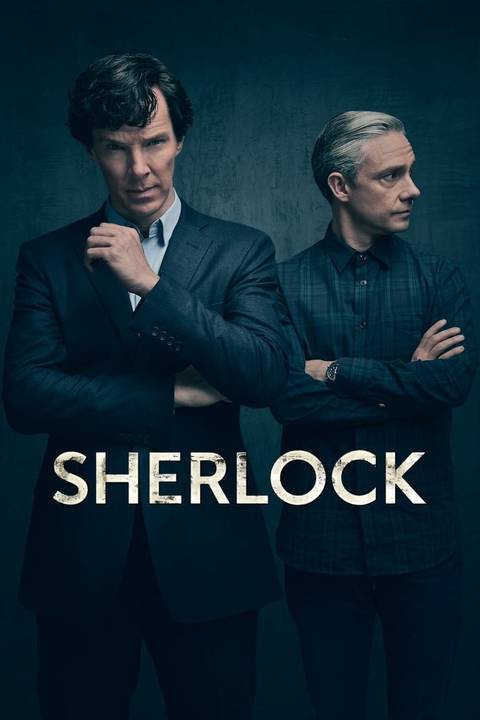
Sherlock
- Release Date
- 2010 - 2017-00-00
- Network
- BBC One
- Showrunner
- Steven Moffat
- Directors
- Paul McGuigan, Nick Hurran, Euros Lyn, Jeremy Lovering, Rachel Talalay, Colm McCarthy, Toby Haynes
-

Sherlock Holmes
-

John Watson
- Writers
- Steve Thompson
- Franchise(s)
- Sherlock Holmes
- Seasons
- 4
- Producers
- Beryl Vertue, Mark Gatiss, Rebecca Eaton, Steven Moffat, Sue Vertue, Bethan Jones
- Creator(s)
- Mark Gatiss, Steven Moffat
- Story By
- Steven Moffat
- Number of Episodes
- 13
- Streaming Service(s)
- Dis, Netflix
KioskNews shows a cleaned-up reading view extracted from the publisher’s page — the original always lives on their site, not ours.