Tor Books Pulls Book Cover Due to AI Artwork Controversy

Paulina is a Contributor for ScreenRant, writing about books. After starting her career reporting breaking news as an undergrad, Paulina completed a Master of Arts in Journalism from NYU in 2026. She has spent the last four years writing about books and pop culture as a freelance journalist, including for Texas Monthly, The Daily Beast, and her Substack, Alienated Young Woman.
A major name in the fantasy publishing world is apologizing to readers this week after fans learned one of its upcoming book covers contained AI-generated artwork.
Tor Books—an imprint of Macmillan known for publishing top names in fantasy, sci-fi, and speculative fiction, including Brandon Sanderson, Jeff VanderMeer, and TJ Klune—is set to release the second book in Ilona Andrews’ epic fantasy series in September 2027. However, the release is already mired in controversy after Tor revealed the book’s cover art, only to pull it within days over concerns that it was created using generative AI.
Why Tor Books Pulled The Cover Art For Its Highly Anticipated Fantasy Release
The book at the center of Tor’s AI controversy is This Crown Will Not Rule Me, its next release from Ilona Andrews (the pen name of married writing duo Ilona and Andrew Gordon). It will be the second in Andrews' Maggie the Undying series, a planned trilogy pitched as “the page-turning politics of Game of Thrones meets the worlds-spanning romance of Outlander.”
Tor initially shared the cover art for This Crown Will Not Rule Me in a November 17 Instagram post promoting the upcoming book. However, the publisher deleted the post just three days later and issued an official apology, stating it had “Learned that generative AI was used in the creation of the cover.” The apology post claimed that both Tor and Ilona Andrews were unaware the cover artist had used AI to create the design until after sharing the design.
Tor's statement also said that the cover art would no longer appear on any completed books, as using AI-generated art violates its standard contract with cover artists. The publisher then said it would be “bolstering [its] internal review process to mitigate the possibility of this happening again.”
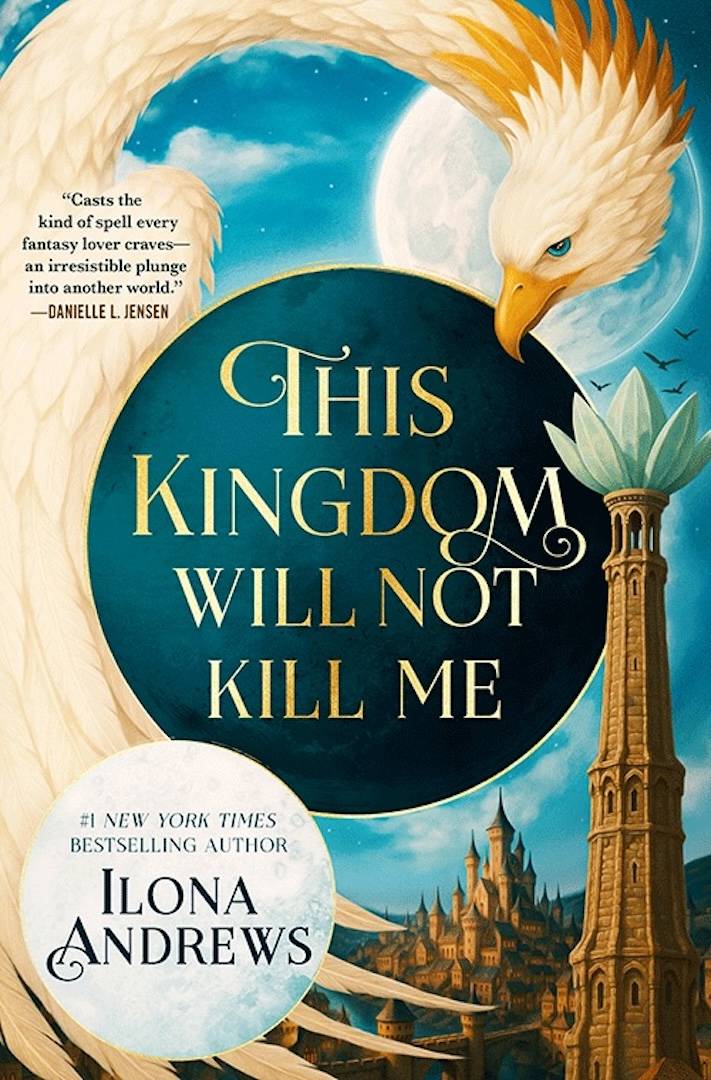
Notably, the cover of This Crown Will Not Rule Me was initially credited to Andrew Davis, the same artist who designed the cover of This Kingdom Will Not Kill Me, the first book in the Maggie the Undying series. It's unclear whether Tor plans to change that book cover for future editions.
How Ilona Andrews Responded To The AI Controversy Surrounding Their Book Cover
In a separate statement on their website, Andrews revealed that fans of the series initially alerted them to the possible generative AI use on the cover shortly after it was posted.
Providing some context for how an AI-generated cover design slipped through undetected, Andrews wrote, “In this case, the cover was commissioned by our publisher, and a sketch was provided to the art department. It looked like a typical cover sketch. We didn’t know enough to see cause for concern.” However, they also said they were “painfully aware that we lack expertise in this area.”
Despite the scandal, the authors encouraged fans not to attack the cover designer on social media. “We don’t know what was going on [in] that person’s life or what led to this unfortunate incident,” wrote Andrews. “This situation is miserable enough already.”
Tor's Controversy Comes Amid A Larger Conversation About AI In Publishing
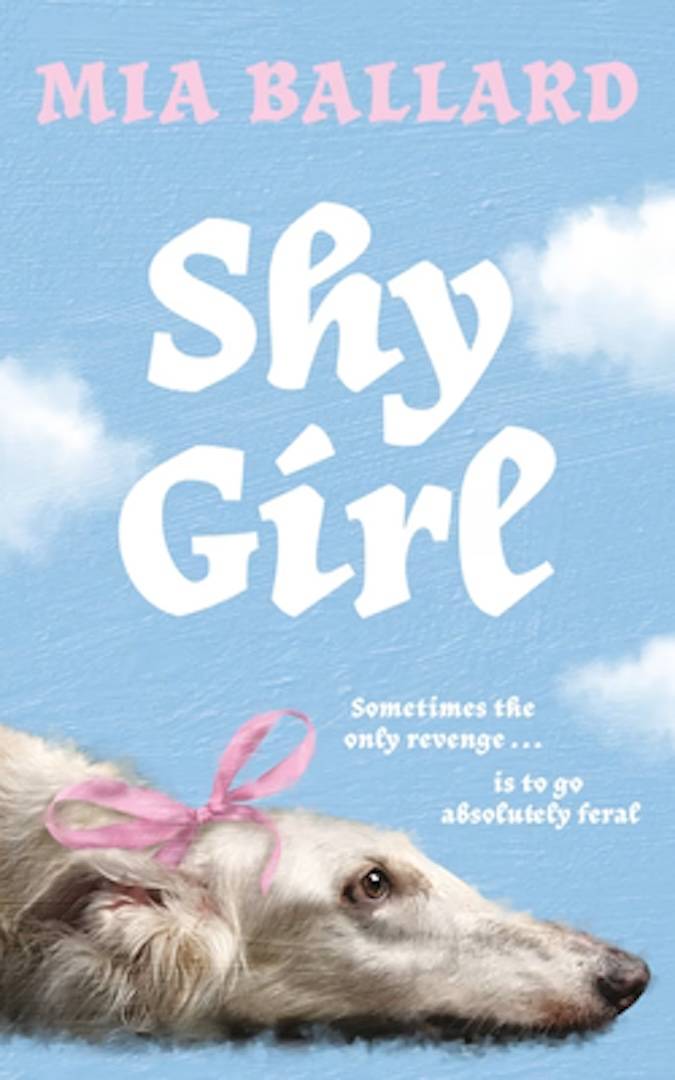
This is far from the first time a major publisher has found itself at the center of a generative AI controversy. In March, Hachette canceled publication of the upcoming horror novel Shy Girl after discovering that its author, Mia Ballard, had used generative AI to write some, if not all, of the book.
Much like the Tor controversy, the Shy Girl scandal also came to light thanks to readers on social media. Rumors that Ballard had used AI to write Shy Girl first grew widespread in January, after book influencer Frankie’s Shelf posted a video essay on YouTube, titled “i’m pretty sure this book is ai slop." In that video, the influencer analyzed an earlier, self-published version of the book, claiming that while Ballard's prose did not seem "100% AI-generated," it bore several hallmarks of AI-assisted writing, including repetitive phrasing, misused adjectives, and awkward metaphors.
The New York Times then ran Shy Girl through AI detection software, finding evidence the book had been written with AI, and approached Hachette with the results. Hachette ultimately discontinued printing Shy Girl in the UK, where it had already been released, and canceled its US release altogether. Ballard later told the Times that the AI-generated passages had been inserted without her knowledge by an unnamed friend whom she had trusted to edit her draft.
Six months later, in August, Minotaur—another Macmillan imprint—killed its $2.4 million two-book deal with author Jerry Falade over suspicions that Falade had used generative AI when writing his crime novel Call Me, I’ll Hide the Body.
Minotaur, which won the rights to Falade’s manuscripts in a 14-way bidding war, ultimately canceled publication of Call Me, I’ll Hide the Body and Falade's planned second novel, killing negotiations for a possible big-screen adaptation. Falade later denied using AI to write the manuscript and claimed he had documentation to prove the book was entirely human-written.
Beyond major publishers, Andrews is also navigating more than one AI-related controversy. In the same blog post that they apologized to fans for the AI cover of This Crown Will Not Rule Me, the duo said they had signed a contract with a production company known for using AI-generated visuals earlier this year to adapt their work as a vertical drama series. Andrews claimed they had "specified no AI and asked that only human actors and writers would be used," and said that the unnamed company had agreed to their terms.
However, Andrews says they have since terminated that contract after realizing “that the generative AI involved in the company’s other productions did not align with our preferences.” In a blog post, Andrews said both incidents “illustrate how new and confusing the creative landscape has become” in the era of generative AI.
KioskNews shows a cleaned-up reading view extracted from the publisher’s page — the original always lives on their site, not ours.