Nearly 30 years after IMF rescue, Thailand faces new economic test
Ekniti Nitithanprapas was a young graduate student in the United States when Thailand devalued the baht in 1997, setting off the Asian financial crisis.
A loan from the International Monetary Fund and a raft of recovery measures helped Thailand find a way out of the economic morass.
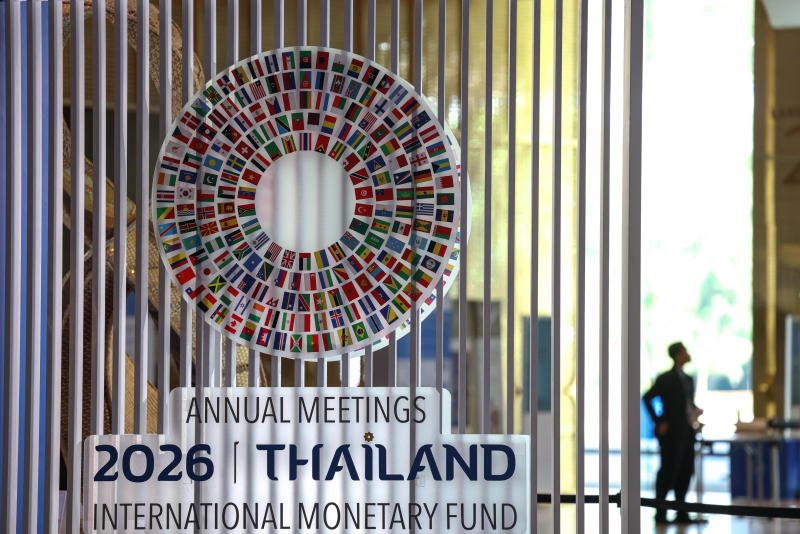
Almost 30 years on, Bangkok will next week host the annual meetings of the IMF and World Bank and Mr Ekniti, now the finance minister, is looking to steer the economy through a new challenge: how to escape years of sluggish growth.
"After the financial crisis, our investment-to-GDP has declined to around 22% to 23% at the moment. So that's why our growth momentum has been so slow," Mr Ekniti told Reuters in an interview.
"After I took the position as finance minister, I put it at the top of my agenda to push investment-led growth policies."
Ahead of the Bangkok meetings, IMF Managing Director Kristalina Georgieva warned the global economy was under threat from persistently high energy prices, record public debt and risks from the AI investment boom — all factors for Thailand, where the public debt-to-GDP ratio is nearing the official ceiling of 70%.
'Holding up better'
Thailand, Southeast Asia's second-largest economy, has grown by an average of only 2.34% a year over the last five years, lagging regional peers that have recovered more swiftly from the pandemic.
Mr Ekniti last month outlined a plan to hit 3% growth within three years by drawing foreign investment into key sectors such as semiconductors, data centres and advanced manufacturing, including electric vehicles.
A net energy importer, the country is also investing in renewables as it seeks to develop such resource-hungry industries.
The Bank of Thailand, however, has a more conservative view, putting the economy's potential growth rate at 2.7%, a level it says could take at least four years to reach.
Despite headwinds, including a thorny household debt problem, sliding tourism arrivals and an unresolved trade deal with Washington, the Thai economy is showing resilience — a far cry from its situation in 1997.
"Thailand's economy is holding up better than expected in the face of the global energy shock, deflationary pressures have receded, and policy predictability has improved following general elections in February 2026," Fitch Ratings said last month, revising Thailand's outlook to "stable" from "negative".
Political ownership
During the turbulence of 1997, as Asian stock markets and currencies plunged, it was Chuan Leekpai's return as prime minister that helped turn the tide, said Anoop Singh, who led the IMF's mission to Thailand during the crisis.
"As soon as that happened, there was political ownership, political recognition and reforms," the now-retired Singh said in an interview.
"All the IMF is trying to do is to understand what the problem is, suggest to the government what they should do, but they have to do it. So the political ownership is the most important."
Thailand has seen prime ministers removed by courts or military coups alongside deadly street protests in the decades since the crisis, but with the re-election of Anutin Charnvirakul in February, the country is now in a period of relative political calm, bringing some relief to the stuttering economy.
Neutral investment destination
In the weeks after the surprise win, analysts cheered the broad coalition Mr Anutin rapidly stitched together and his backing for technocrats such as Mr Ekniti, but questioned the new administration's appetite for overhauling the economy.
Pressed on what he considered the most critical structural reforms required, Mr Ekniti again stressed the need for a shift to renewable energy and upgrading grid infrastructure, building up sectors such as semiconductors and data centres and improving the talent pool for high-tech industries.
At a time of heightened geopolitical strife and trade tensions, Mr Ekniti is also promoting Thailand as a neutral and secure investment destination — a pitch he plans to make at the IMF-World Bank meeting.
"Given global economic situations, we have a fragmented world. We need some countries to link fragmented economies, and Thailand can be a trusted connector," he said.
KioskNews shows a cleaned-up reading view extracted from the publisher’s page — the original always lives on their site, not ours.