Doctor Who's Russell T. Davies Details Every Reason The Disney Era Failed

Once head of Screen Rant's Star Wars coverage and co-lead of Superheroes, Tom Bacon now works with the movies and books teams. He's a lifelong fan of the fantasy and sci-fi genres, and loves franchises such as Doctor Who and Marvel. You can find him on Twitter @TomABacon, on LinkedIn @tabacon, or on Muckrack under tombacon.
Tom has a wide range of interests, and he continues to serve his university as a volunteer chaplain. He's heavily involved with his local church, and anyone who checks him out on Twitter will swiftly learn he's into British politics too.
Sign in to your ScreenRant account
Former Doctor Who showrunner Russell T Davies knows his return wasn't quite the triumph he'd hoped for. One of the UK's most respected creators, Davies was the mastermind behind the show's 2005 revival. In 2021, as Chris Chibnall's tenure as showrunner was coming to an end, the BBC officially announced that Davies — affectionately known as "RTD" — was back for a trio of 60th anniversary specials followed by future seasons. It wasn't long until we learned the scale of the BBC's ambitions, when the national broadcaster entered into an unexpected partnership with Disney+.
The rest is history. That partnership may have regenerated Doctor Who, but it was far from a success, and the Disney+ deal ended after two seasons and a spinoff. The end of Doctor Who Season 15 saw Ncuti Gatwa apparently regenerate into former companion Billie Piper, a strange creative decision that's left the world's longest-running sci-fi TV series up in the air while the BBC put Doctor Who out for tender. But, as the BBC look forward to the future, RTD has now published an autobiography that discusses the past; The Queerest of Folk, available now from retailers like Amazon.
Even Russell T. Davies Believes Doctor Who May Have Had Its time

Davies is a lifelong Doctor Who fan, penning his first script when he was in his 20s (it later became the Season 1 story The Long Game). But even he admits Doctor Who was running out of steam. "I think Doctor Who has simply been part of the landscape for so long," he explains, "and there have been so many Doctors and so many changes of cast, that it’s simply not grabbing people any more. This new version is twenty years old now, so it’s not new at all, and I think the audience feels that in their bones."
As a result, British audiences greeted Doctor Who with indifference — and, as Davies notes, that's the greatest enemy. This perhaps explains why Davies became known for a near-desperation to make conversation on social media, regardless of whether reactions were positive or not. Even now, for example, Davies defends the decision to bring back Billie Piper in that odd regeneration scene:
"And it worked, because everyone paid attention to the show once more. I can’t begin to tell you how many people – in the streets, students here in Manchester, members of my own family – were talking about it. Two days after transmission, I went to Charlotte Moore’s farewell drinks in London. The great and good of television were there, and I couldn’t believe how many people asked me about Billie. Proper, seasoned television professionals who I never would have thought watch Doctor Who, all saying, ‘Billie, Billie, Billie!’"
The Disney+ Regeneration Just Didn't Work For International Audiences

"It just didn't work on Disney+," Davies admits. "Simple as that." The goal was to turn Doctor Who into the Whoniverse, a vast expanding franchise with global appeal (especially for American audiences). "It’s an old show," RTD now reflects. "It’s not particularly well known in America. It’s never been on the level of Star Wars or Star Trek, and maybe it didn’t suit supersizing." Looking back, RTD now seems to believe he was simply too ambitious.
I'm not entirely convinced he's right. Doctor Who had flourished in the United States under Stephen Moffat, although it is true it had diminished during Chris Chibnall's time as showrunner. Rather, I think the problem was one of timing; Christopher Nolan has famously argued Hollywood has moved into a post-franchise era, where stand-alones like Oppenheimer and Barbie are more desired than franchises. Every franchise is struggling right now, and interconnectedness and history are no longer the selling points they were a decade ago.
Doctor Who Simply Didn't Work the Way RTD Wanted
Behind-the-scenes problems left Davies struggling to relaunch Doctor Who properly; with the benefit of hindsight, he admits the first three 60th anniversary specials confused things rather than helping. "It was the sixtieth anniversary, which meant going to a streamer to say this is a brand-new show that’s celebrating sixty years," Davies says. "It’s launching and regenerating at the same time. Quite a difficult concept."
Making matters worse, Fifteenth Doctor Ncuti Gatwa was a hard man to pin down when it came to working on the main seasons. "The dates didn't work for our leading man," Davies admits, "through no fault of our own. And it was absolutely not Ncuti's fault, either."
"I had to write the episodes around him. First of all, I did a Doctor-lite story where he gets written out. And that was ‘73 Yards’, which through sheer invention, actually ended up being one of the most beautiful episodes I’ve ever made. Nonetheless, in a series of only eight episodes, one of them didn’t have our lead actor in it. That was quite a leap. But there was nothing we could have done. We then did a slightly Doctor-lite episode, ‘Dot & Bubble’, which he’s in a lot, but ingeniously, in scenes that only took two days for him to film. So I was dancing like crazy to invent stories in which we could parcel up his filming and still give him weight in the story, and get them shot on a mad schedule."
Davies did a good job with Doctor-lite episodes, but it's worth remembering that these Disney+ seasons were shorter. When Davies' Doctor Who season 3 aired in 2007, the epic story "Blink" was one of thirteen episodes, and David Tennant's Tenth Doctor was already on his second season. Ncuti Gatwa's first season was just eight episodes long, and two of them were Doctor-lites. Viewers didn't really get the right chance to connect to the new Doctor.
Russell T. Davies Felt Doctor Who Leaks Undermined Him

Davies adds one final complication: leaks. "When it comes to science fiction, the problem of leaking online is now so vast and so pernicious it threatens to ruin everything," RTD says. "Every decision we ever made, every single plot twist, every single moment, all the way up to the appearance of Billie in the very last seconds of the last series finale, was leaked. It’s absolutely extraordinary, and I swear, it did a lot to destroy the profile of the show."
In RTD's views, leaks lead to cynicism in the fanbase. They essentially poison the well, because the fans' response to a leak is weariness; "an instant assumption that whatever has leaked won't work. They instantly imagine the worst version of it, and then, when they eventually see it, it inevitably confirms their bias."
From 1963 Junkyard to the Fifteenth Doctor · Eight Questions How Well Do You Know Doctor Who? “Wibbly-wobbly, timey-wimey… stuff.”
🎥The Classic EraHartnell, 1963
👑The TARDISBigger on the inside
👾The EnemiesDaleks & Cybermen
🌏GallifreyHome of the Time Lords
🪄The Modern Era2005–present
01
Doctor Who premiered on BBC One on 23 November 1963 — the day after the Kennedy assassination — with a 25-minute episode titled “An Unearthly Child,” written by Anthony Coburn and overseen by producer Verity Lambert, the BBC’s first female drama producer. The First Doctor was a grumpy, white-haired old man who kidnapped two schoolteachers from a Totter’s Lane junkyard in Shoreditch. Which actor originated the role?
✓ Correct! William Hartnell (1908–1975) — a character actor best known for sergeant-major and tough-guy roles in films like The Army Game and Brighton Rock — played the First Doctor from November 1963 to October 1966 across 134 episodes. By 1966, declining health (undiagnosed arteriosclerosis) made memorising lines difficult, and the BBC’s solution — recasting the lead via the in-universe concept of “renewal,” later codified as regeneration — is arguably the single most important production decision in television history; it allowed Doctor Who to continue indefinitely. Patrick Troughton (option B) is the Second Doctor (1966–69); Jon Pertwee the Third (1970–74); Tom Baker (option D) the Fourth and longest-serving classic-era Doctor (1974–81).
✗ Wrong. The answer is William Hartnell. The traps are all real Doctors in correct order: Troughton (2nd, 1966–69), Pertwee (3rd, 1970–74), Tom Baker (4th, 1974–81). Hartnell originated the role in “An Unearthly Child” on 23 November 1963 and stayed until October 1966, when failing health forced the BBC to invent regeneration to recast the lead — the single most consequential production decision in TV history.
02
The Doctor’s ship — a Type 40 TT capsule with a broken chameleon circuit, which is why it’s permanently stuck looking like a 1960s blue police telephone box — is canonically named in the first episode by the Doctor’s granddaughter Susan, who says she “made up the name from the initials.” What does TARDIS stand for?
✓ Correct! Time And Relative Dimension In Space — though in classic 1960s episodes it’s sometimes pluralised as “Dimensions,” and the show has never been entirely consistent. The chameleon circuit is meant to make a TARDIS blend into its surroundings, but the Doctor’s broke during a 1963 stop in London — freezing it as a Metropolitan Police public-call box of the type used between roughly 1929 and the late 1960s. Time Lord internal architecture means it’s “bigger on the inside” via a kind of dimensionally-transcendental engineering. In “The Doctor’s Wife” (2011, Neil Gaiman), the TARDIS’s consciousness is briefly placed in a human body (Idris) and reveals she chose the Doctor, not the other way around.
✗ Wrong. The answer is Time And Relative Dimension In Space. The other options are plausible-sounding inventions. The acronym is coined in Episode 1 (1963) by Susan, the Doctor’s granddaughter, who tells the schoolteachers she made it up from the initials. The chameleon circuit broke in 1963 London, freezing the ship’s outer shell as a Metropolitan Police box — permanently.
03
The Doctor’s home planet — first named on-screen in 1973’s “The Time Warrior” (Jon Pertwee’s penultimate season), located in the constellation of Kasterborous, ruled by an oligarchy of Time Lords from the Citadel, the Capitol, and the academy at Prydonian Chapter, and famously double-time-locked at the end of the Last Great Time War — is called what?
✓ Correct! Gallifrey — a class M planet with burnt-orange skies, silver-leafed trees, and twin suns, in the constellation of Kasterborous (approximate galactic coordinates 10-0-11-0-0 by 0-2 from galactic zero centre, per “Pyramids of Mars,” 1975). The ruling Time Lord society is divided into Prydonian, Arcalian and Patrexes chapters; the Doctor was famously expelled from the Prydonian Academy. In the new series, Russell T. Davies time-locked Gallifrey at the climax of the Last Great Time War (revealed in “The End of Time,” 2010), then Steven Moffat saved it in “The Day of the Doctor” (2013, 50th anniversary). The traps are all real Who planets: Skaro is the Daleks’ homeworld; Trenzalore is where the Doctor’s grave (and burial site) lies; Mondas is the Cybermen’s origin world.
✗ Wrong. The answer is Gallifrey — burnt-orange sky, silver-leafed trees, twin suns, Kasterborous constellation, ruled by Time Lords from the Citadel. The traps are all genuine Who planets: Skaro = Daleks; Trenzalore = the Doctor’s grave; Mondas = the Cybermen’s home. Gallifrey was named on-screen in 1973’s “The Time Warrior,” time-locked in the Time War, and rescued in “The Day of the Doctor” (2013).
04
In classic-era lore established in 1976’s “The Deadly Assassin,” a Time Lord is given a fixed natural limit on how many regenerations they can undergo — the cap that drove the plot of the 1976 story (and gave Anthony Ainley’s Master his motivation for body-stealing). How many regenerations does a Time Lord normally have, giving them how many lives in total?
✓ Correct! 12 regenerations, 13 lives total — established in Robert Holmes’s “The Deadly Assassin” (1976), where the Master, near the end of his cycle, tries to steal a new body. The new series confronted this directly in 2013’s “The Time of the Doctor”: Matt Smith’s Eleventh was supposed to be the last incarnation (counting Tennant’s aborted regeneration in “Journey’s End” and John Hurt’s War Doctor as separate uses). The Time Lords, restored from Gallifrey’s pocket-universe limbo, granted him a whole new cycle through the crack in the wall on Trenzalore — allowing Peter Capaldi’s Twelfth through Ncuti Gatwa’s Fifteenth, and beyond. Option D (unlimited) is what the Master tried to be in the 2007 finale “Last of the Time Lords.”
✗ Wrong. The answer is 12 regenerations, 13 lives — established in “The Deadly Assassin” (1976) and central to the Master’s body-stealing plots. The new series confronted the limit head-on in “The Time of the Doctor” (2013), where the Time Lords granted Matt Smith’s Eleventh Doctor a whole new regeneration cycle through the crack in Trenzalore — opening the door to Capaldi (12), Whittaker (13), Tennant again (14), and Gatwa (15).
05
The Daleks — pepper-pot-shaped mutants in armoured travel-machines, the show’s most iconic villains since their 1963 debut in “The Daleks” (Terry Nation, real-world creator) — were given a definitive in-universe origin story in 1975’s six-part Tom Baker serial “Genesis of the Daleks.” Their creator was a wheelchair-bound, half-cybernetic Kaled scientist, working in the bunkers of the planet Skaro during the thousand-year war with the Thals. Name him.
✓ Correct! Davros — chief scientist of the Kaled race, who, foreseeing his species’ mutation from radiation and chemical weapons, engineered the Daleks as the “final form” of Kaled-kind, stripping out compassion as a deliberate design choice. Played originally by Michael Wisher (1975), later by Terry Molloy (classic era), Julian Bleach (new series, 2008–2020), and others. The traps are all real Time Lord historical figures: Rassilon and Omega are the co-founders of Time Lord civilisation (Rassilon stole the Eye of Harmony, Omega became trapped in an antimatter universe sacrificing himself for time travel); the Master is the Doctor’s renegade Time Lord nemesis. Davros is not a Time Lord at all — he’s Kaled, the Daleks’ original humanoid stock.
✗ Wrong. The answer is Davros. Rassilon and Omega are Time Lord founders (Rassilon stole the Eye of Harmony; Omega sacrificed himself for time travel). The Master is the Doctor’s rogue Time Lord nemesis. Davros is something different: a Kaled scientist from Skaro who engineered the Daleks in “Genesis of the Daleks” (1975), stripping out compassion by design.
06
After 16 years off air (1989 cancellation, 1996 Paul McGann TV movie aside), Doctor Who returned to BBC One on 26 March 2005, in a revival showrun by Russell T. Davies and opening with the episode “Rose,” co-starring Billie Piper. The Ninth Doctor — a leather-jacketed, Northern-accented, war-traumatised iteration who lasted only one season — was played by which actor?
✓ Correct! Christopher Eccleston — the Salford-born, Royal Court-trained actor best known at the time for Cracker, Our Friends in the North, 28 Days Later (2002) and a long resumé of intense character work. Davies’s casting of a serious dramatic actor signalled the revival was not aiming at camp. Eccleston played the Ninth Doctor for one season (March–June 2005, 13 episodes), regenerating into Tennant in the finale “The Parting of the Ways.” He left after one year citing tensions with the production, and didn’t reconcile with the BBC for over a decade. Paul McGann (option C) is the Eighth Doctor — the 1996 TV-movie incarnation, fleshed out across audio dramas and finally given a regeneration scene in the 2013 minisode “The Night of the Doctor.”
✗ Wrong. The answer is Christopher Eccleston (Ninth Doctor, 2005). David Tennant is the Tenth (2005–2010, and again the Fourteenth in 2023). Paul McGann is the Eighth (1996 TV movie, plus audio dramas). Matt Smith is the Eleventh (2010–2013). Eccleston’s leather-jacketed Northern Ninth lasted only one season — March to June 2005 — before regenerating into Tennant.
07
In July 2017, the BBC announced that the Thirteenth Doctor — succeeding Peter Capaldi’s Twelfth in the 2017 Christmas special “Twice Upon a Time” — would be the first woman cast in the lead role in the show’s history. She had previously worked with incoming showrunner Chris Chibnall on ITV’s Broadchurch (2013–17), where she played the small-town mother of a murdered child. Name her.
✓ Correct! Jodie Whittaker — the Huddersfield-born actress whose breakout was Attack the Block (2011) and whose career-defining role before Doctor Who was Beth Latimer in Broadchurch (2013–17), Chris Chibnall’s ITV drama about a murdered 11-year-old in a small Dorset town. Chibnall took over as Doctor Who showrunner from Steven Moffat and brought Whittaker with him. She played the Thirteenth from October 2018 to October 2022, regenerating into the “Fourteenth” David Tennant in “The Power of the Doctor.” The traps: Olivia Colman is also Broadchurch (DS Ellie Miller, opposite Tennant) and would have been a natural pick but went to The Crown and Oscar-winning film work. Karen Gillan is companion Amy Pond (2010–2012). Jenna Coleman is companion Clara Oswald (2012–2015).
✗ Wrong. The answer is Jodie Whittaker. Olivia Colman is also Broadchurch (DS Ellie Miller) and a plausible distractor. Karen Gillan is companion Amy Pond (2010–12); Jenna Coleman is companion Clara Oswald (2012–15). Whittaker was Beth Latimer in Chibnall’s Broadchurch; he brought her with him when he took over as Doctor Who showrunner, casting her as the first female Doctor from 2018 to 2022.
08
The current incarnation — introduced in the November 2023 60th-anniversary special “The Giggle,” through the show’s first “bi-generation” (David Tennant’s Fourteenth and the new Doctor split into co-existing bodies) — is the first Black actor and first openly queer actor to play the lead. He was previously best known as Eric Effiong in Netflix’s Sex Education and as Ken in Greta Gerwig’s Barbie (2023). Name him.
✓ Correct! Ncuti Gatwa (pronounced SHOO-tee) — Rwandan-Scottish, born in Kigali in 1992, raised in Edinburgh after his family fled the 1994 genocide. He broke through internationally as Eric Effiong in Sex Education (Netflix, 2019–23) and was one of the ensemble of Kens in Barbie (2023). Russell T. Davies’s return as showrunner brought Gatwa in for the 2023 anniversary specials and his solo run from May 2024 (“Space Babies”). The “bi-generation” in “The Giggle” (Dec 2023) is a Davies invention that lets Tennant’s Fourteenth retire to live with the Nobles while Gatwa’s Fifteenth takes a fresh TARDIS off into the new era. Gatwa’s last full series aired in 2025 before he handed over to the next Doctor; he’s also the youngest actor cast in the role since Matt Smith.
✗ Wrong. The answer is Ncuti Gatwa — Rwandan-Scottish, Eric Effiong in Sex Education, Ken in Barbie (2023). The Fifteenth Doctor was introduced in “The Giggle” (November 2023) through the show’s first “bi-generation,” with David Tennant’s Fourteenth retiring to live with the Nobles while Gatwa takes a fresh TARDIS into Russell T. Davies’s new era.
Vortex · Final Scorecard Your Time Lord Standing
👑
/ 8
A seasoned Time Lord — or still finding the chameleon circuit?
Davies does have a point; every production struggles with leaks now. And yet, I'm not entirely convinced by his argument; I remember covering Avengers: Endgame, where pretty much the entire plot leaked on social media, and that certainly wasn't received with cynicism. That kind of reaction speaks more to an unhealthy relationship with the fanbase, perhaps a misreading of them in the first place, and may mean ideas like bringing back Sutekh weren't good ones in the first place.
This is the hard truth behind Davies' second Doctor Who run: however hard he argues his case, it simply didn't work. The Whoniverse didn't land well, Ncuti Gatwa's Doctor didn't have the chance he needed to flourish, and the storytelling didn't enthuse the fanbase. The Queerest of Folk presents RTD's perspective on this, and his every decision was understandable. He has a lot to be proud of, including some phenomenal episodes like "73 Yards" and "Rogue," but this era is one his successors will need to learn from if they are to course-correct.
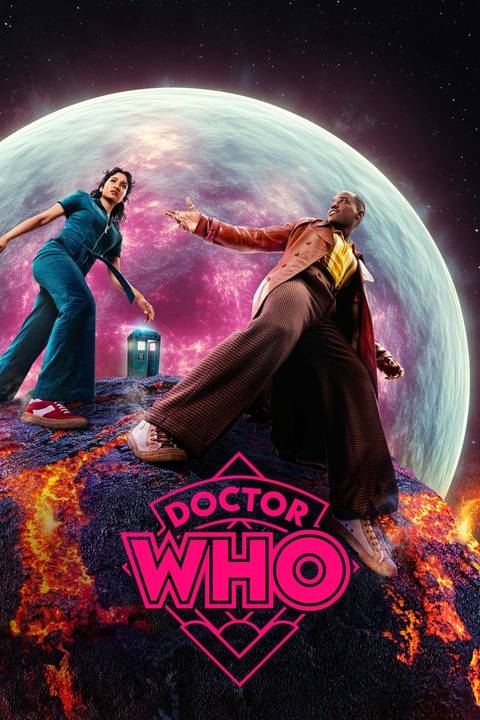
- Release Date
- 2024 - 2025-00-00
- Network
- BBC One
- Directors
- Alex Pillai, Peter Hoar, Ben Chessell, Julie Anne Robinson, Jamie Donoughue, Amanda Brotchie, Dylan Holmes Williams
- Writers
- Steven Moffat, Pete McTighe, Kate Herron, Inua Ellams, Juno Dawson
- Franchise(s)
- Doctor Who / Whoniverse
KioskNews shows a cleaned-up reading view extracted from the publisher’s page — the original always lives on their site, not ours.