Israel election 2026 today: Will Netanyahu’s win or defeat affect India ties?
Israel elections 2026: As Israelis head to elect the 120 members of the 26th Knesset, or Parliament Tuesday, October 27, New Delhi is closely tracking the political developments there. For India, the key question is whether a change of regime in Jerusalem would impact New Delhi’s ties with Israel.
Israeli Prime Minister Benjamin Netanyahu faces a tough fight from his closest rival, former army chief Gadi Eisenkot, and former premier Naftali Bennett, among others. Most pre-election surveys predicted a hung Parliament, with no party likely to secure a clear majority.
However, defence, technology, and economic cooperation are expected to keep the partnership between India and Israel going.
Speaking to news agency ANI on Monday, Mishelle Sirota, spokesperson for the Embassy of Israel in India, said, “India and Israel’s relationship will not change, even for the slightest, no matter who is going to be chosen.”
She added that the embassy will support whichever party is elected to form the next government.
Israeli author and political analyst Alec Pollard, speaking with PTI Videos, said, “Whoever wins the election, Israel and India will continue to be good friends and to be close.” He added that the relationship is highly valued by Israel.
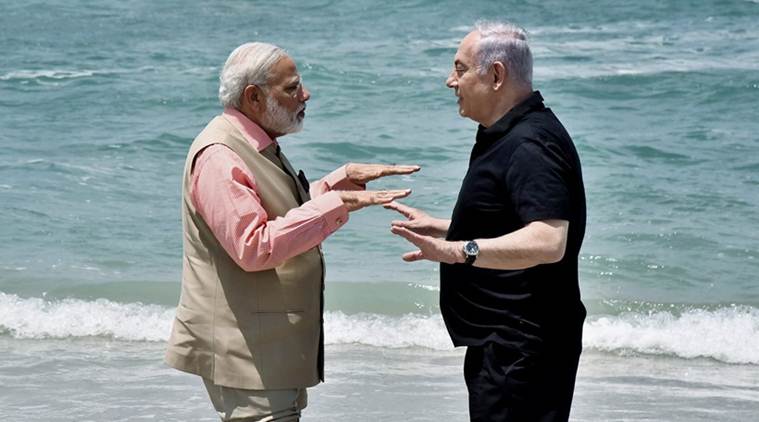
Pollard further said that a change in leadership could, however, bring a new dimension to bilateral relations, with a new prime minister’s ability to establish a rapport with Prime Minister Narendra Modi remaining a key factor.
Story continues below this ad
Israel Elections 2026 · Face-off
Netanyahu vs opposition: Where do they stand?
 AP
Benjamin NetanyahuPrime minister, Likud
REUTERS
Gadi EisenkotYashar leader, ex-army chief
VS
1. Pick an issue
2. Show
NetanyahuDOCUMENTEDWent to war with Iran, twice12-day war in June 2025; joint US strikes on Feb 28, 2026, in which Khamenei was killed.NPR
EisenkotDOCUMENTEDRan a covert air war on Iran in SyriaAs army chief (2015–19), struck thousands of targets, disclosed in 2019.Ynet
NetanyahuCAMPAIGN“Break Iran’s murderous regime”Wants the threat removed and “multiple peace treaties”.Jerusalem Post interview, Oct 21
EisenkotCAMPAIGNA US “kill zone” around Iran’s uraniumNo deal that only delays the threat; more covert Mossad operations.As reported by The Jerusalem Post
NetanyahuDOCUMENTEDSigned on to Trump’s ceasefireAgreed to the US-brokered Gaza truce in October 2025.The Jerusalem Post
EisenkotDOCUMENTEDQuit the war cabinetLeft in June 2024, saying “politics infiltrated” its decisions.Resignation letter to Netanyahu
NetanyahuCAMPAIGN“Absolute victory” over HamasRebuilding only after Hamas fully disarms.The Jerusalem Post
EisenkotCAMPAIGNPartial rebuilding for partial disarmamentWould accept the Palestinian Authority in Gaza if Hamas is kept out.The Jerusalem Post
NetanyahuDOCUMENTEDCoalition voted against a Palestinian stateKnesset resolution, July 2024: passed 68–9.Knesset vote, July 18, 2024
EisenkotDOCUMENTEDHis then-party backed the same voteNational Unity supported it; its MK Ze’ev Elkin sponsored it.Knesset vote, July 18, 2024
NetanyahuCAMPAIGN“No Palestinian state, period.”His “first principle” for any government he forms.Jerusalem Post interview, Oct 21
EisenkotCAMPAIGN“Two states… is a mistake”No move towards a state, “certainly not during a first term”.Al Jazeera; The Jerusalem Post
NetanyahuDOCUMENTEDDropped detention orders for Jewish extremistsEnded in January 2025; 100+ West Bank farms allowed.The Jerusalem Post
EisenkotDOCUMENTEDIsrael’s army chief, 2015–19Earlier headed the army’s Northern Command.The Jerusalem Post
NetanyahuCAMPAIGNKeep the full buffer zonesLebanon zone deeper than 10 km in places.The Jerusalem Post
EisenkotCAMPAIGNA state inquiry into October 7“Netanyahu was warned and did not act.” Also: draft the Haredim.Al Jazeera
Where they overlap
No Palestinian state nowEnd Hamas rule in GazaSecurity zones in Lebanon & Syria
The Jerusalem Post analysis, Oct 19; Al Jazeera
Sources: The Jerusalem Post; Al Jazeera; NPR; Ynet. Photos: AP (Netanyahu), Reuters (Eisenkot).
Created by Aniruddha Dhar
Defence and technology remain key pillars
India and Israel signed a memorandum of understanding on defence cooperation on November 4, 2025. During Modi’s visit to Israel in February 2026, the countries elevated their relationship to a “Special Strategic Partnership for Peace, Innovation and Prosperity” and committed to deeper cooperation in defence, artificial intelligence, cybersecurity, semiconductors, quantum computing, agriculture, water management and space.
The pacts provide an institutional foundation for continuity, although the next government’s policies will determine how individual projects progress.
Trade and regional connectivity
Bilateral trade, investment and negotiations for a proposed free trade agreement are further areas to watch. India and Israel are also involved in regional initiatives such as the I2U2 grouping – India, Israel, the United States and the United Arab Emirates – and the proposed India-Middle East-Europe Economic Corridor (IMEC).
A change of leadership could influence diplomatic priorities and the tone of engagement, particularly amid wider tensions in West Asia. But existing agreements and shared interests offer a basis for continued cooperation.
Story continues below this ad
The election, therefore, may change the political dynamic between Modi and Israel’s next prime minister, without necessarily bringing a fundamental reset in bilateral ties.
What if Netanyahu wins
Netanyahu, Israel’s longest-serving prime minister, has built close ties with Modi. A Netanyahu victory would preserve the familiar leadership channel between New Delhi and Jerusalem, although the future course of bilateral ties would also depend on policy decisions and regional developments.
For India, renewed conflict with Iran and its allies could raise concerns about energy supplies, regional trade and connectivity. New Delhi would have to balance its defence partnership with Israel against its broader economic and strategic interests in the Gulf and West Asia.
KioskNews shows a cleaned-up reading view extracted from the publisher’s page — the original always lives on their site, not ours.