‘How much do I need to walk to lose 1 kg’?
Walking is one of the simplest ways to stay physically active and support weight management, but how much walking is needed to lose a kilogram of body fat depends on several factors, including body weight, walking speed, age, and metabolism. A user on Quora also raised the same concern: “How much do I need to walk to lose 1 kg?”
According to Shalini Bliss, Head of Dietetics at PSRI Hospital, New Delhi, losing 1 kg of body fat requires the body to burn about 7,700 more calories than it consumes.
“For example, a person weighing around 70 kg may burn approximately 200–250 calories by walking briskly for one hour. This means they may need around 30–38 hours of brisk walking to burn the equivalent of 1 kg of body fat, assuming their food intake and other daily activities remain unchanged,” she explains.
DISCLAIMER: This article is based on information from the public domain and/or the experts we spoke to. Always consult your health practitioner before starting any routine
Is walking alone enough to lose 1 kg?
Walking can help create a calorie deficit, but relying on it alone may not always deliver the desired fat loss. According to Bliss, combining regular walking with balanced eating habits and strength training can make weight management more effective.
“Even if someone walks for an hour every day, eating more calories than the body uses can make weight loss difficult,” she says.
This does not mean starving yourself or skipping meals. Instead, simple dietary changes, such as reducing fried foods, sugary drinks and packaged snacks, controlling portion sizes and including more fruits, vegetables and protein, can support the process.
Story continues below this ad
Strength training is equally important because the body can lose muscle along with fat during weight loss. “Exercises such as squats, lunges and lifting weights help maintain muscle strength and prevent excessive muscle loss,” Bliss explains.
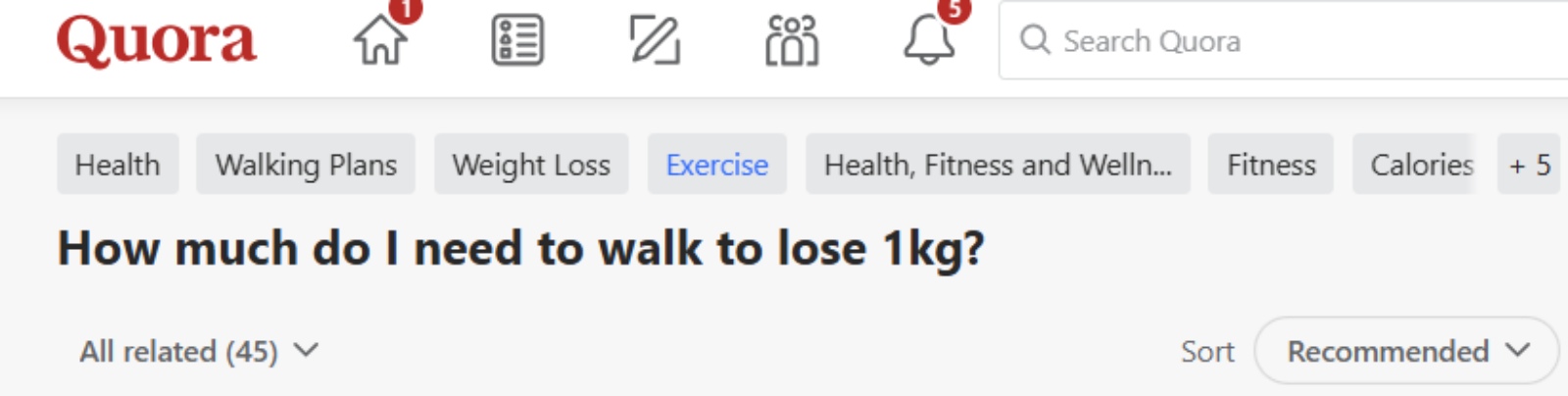 How much do I need to walk to lose 1kg? (Photo: Screengrab of the query/Quora.com)
Does walking speed or incline make a difference?
The intensity and terrain of your walk can influence how many calories you burn. Brisk walking generally burns more calories than walking slowly because it requires greater physical effort.
“A simple way to identify brisk walking is that you should be able to talk while walking, but singing or speaking continuously should feel difficult,” says Bliss.
Walking uphill or on an incline also requires greater muscular effort and burns more calories than walking on a flat surface at the same speed. However, beginners should increase the incline gradually to avoid putting unnecessary pressure on their knees and joints.
Story continues below this ad
Walking after meals offers another benefit. A 10–15-minute walk after lunch or dinner can help control the rise in blood sugar levels after eating and reduce prolonged periods of sitting. However, Bliss points out that post-meal walking alone will not lead to significant fat loss.
How much should you walk every day to lose weight?
For someone looking to lose weight, walking for 30–45 minutes on most days of the week is a reasonable starting target. Gradually, this can be increased to 45–60 minutes, depending on fitness levels. A daily target of 7,000–10,000 steps can also be useful, although not everyone needs to achieve the same number.
“People who are not used to exercising should start with 15–20 minutes of walking and gradually increase the duration. The key is to remain consistent rather than push the body too hard,” Bliss advises.
DISCLAIMER: This article is based on information from the public domain and/or the experts we spoke to. Always consult your health practitioner before starting any routine
KioskNews shows a cleaned-up reading view extracted from the publisher’s page — the original always lives on their site, not ours.